
You are currently browsing the category archive for the ‘Prophet sallaAllahu alayhi wasalam’ category.
“And We have not sent you except as a mercy to all the worlds.” (Quran: 21:107) ”
‘Verily, Allah and His Angels send blessings on the Prophet: O you who believe! Send blessings on him, and salute him with a worthy salutation.’ Qur’an 33:56
O Allah! Bless our Master Muhammad and his family just as You blessed our master Abraham and sanctify our master Muhammad and his wives and descendants just as You sanctified our master Abraham, for You are the Praiseworthy, the Mighty!
O Allah! Unite us with him for we have believed in him without seeing him, do not separate us from him until the day you cause us to enter into his entrance hall, water us at his pool, and put us in his company along with those favored ones, and what a beautiful company that is!
And praise be to Allah, the Lord of the Worlds!
~ Dala’il al-Khayrat
Amin!
As-salaatu wasalaamu alaika Yaa Habib Allah sallallahu alaihi wasallam.
Rabi al-Awwal Mubarak!!
I envy the sand that met his feet
I’m jealous of honey he tasted sweet
Of birds that hovered above his head
Of spiders who spun their sacred web
To save him from his enemies
I envy clouds formed from the seas
That gave him cover from the heat
Of a sun whose light could not compete
With his, whose face did shine so bright
That all was clear in blinding night
I envy sightless trees that gazed
Upon his form completely dazed
Not knowing if the sun had risen
But felt themselves in unison
With those who prayed, and fasted too
Simply because he told them to
With truth and kindness, charity
From God who gave such clarity
His mercy comes in one He sent
To mold our hearts more heaven bent
I envy all there at his side
Who watched the turning of the tide
As truth prevailed and falsehood fled
And hope restored life to the dead
Men and Women through him found grace
To seek together God’s noble face
I envy the cup that gave him drink
His thoughts that helped us all to think
To be one thought that passed his mind
Inspiring him to act so kind
For me this world is not one jot
If I could simply be a thought
From him to God throughout the ages
As revelation came in stages
I pity all who think it odd
To hear him say there is one God
Or he was sent by God to men
To hone their spirits’ acumen
It’s pride that blinds us from the sight
That helps good men to see his light
He taught us all to be God’s slaves
And he will be the one who saves
Humanity from sinful pride
Muhammad has God on his side
So on this day be blessed and sing
For he was born to grace our Spring
With lilies, flowers, life’s rebirth
In a dome of green like his on earth

I had always wanted to visit Konya, just so I could visit the blessed tomb of Mevlana Jalāl ad-Dīn Rumi, one of the greatest mystical poets of all times. I had been to Istanbul a couple of times before, but for one reason or another, I never got the chance to visit Konya; however this time, I was determined to make that extra journey and go spend a day in Konya. So, on the 28th December 2009, I got a flight from Istanbul to Konya. I had no knowledge of what Konya was like, nor did I bother to read up about the city, and to be very honest, I didn’t really care because my prime aim and purpose of the trip was just to visit the blessed tomb of Mevlana.
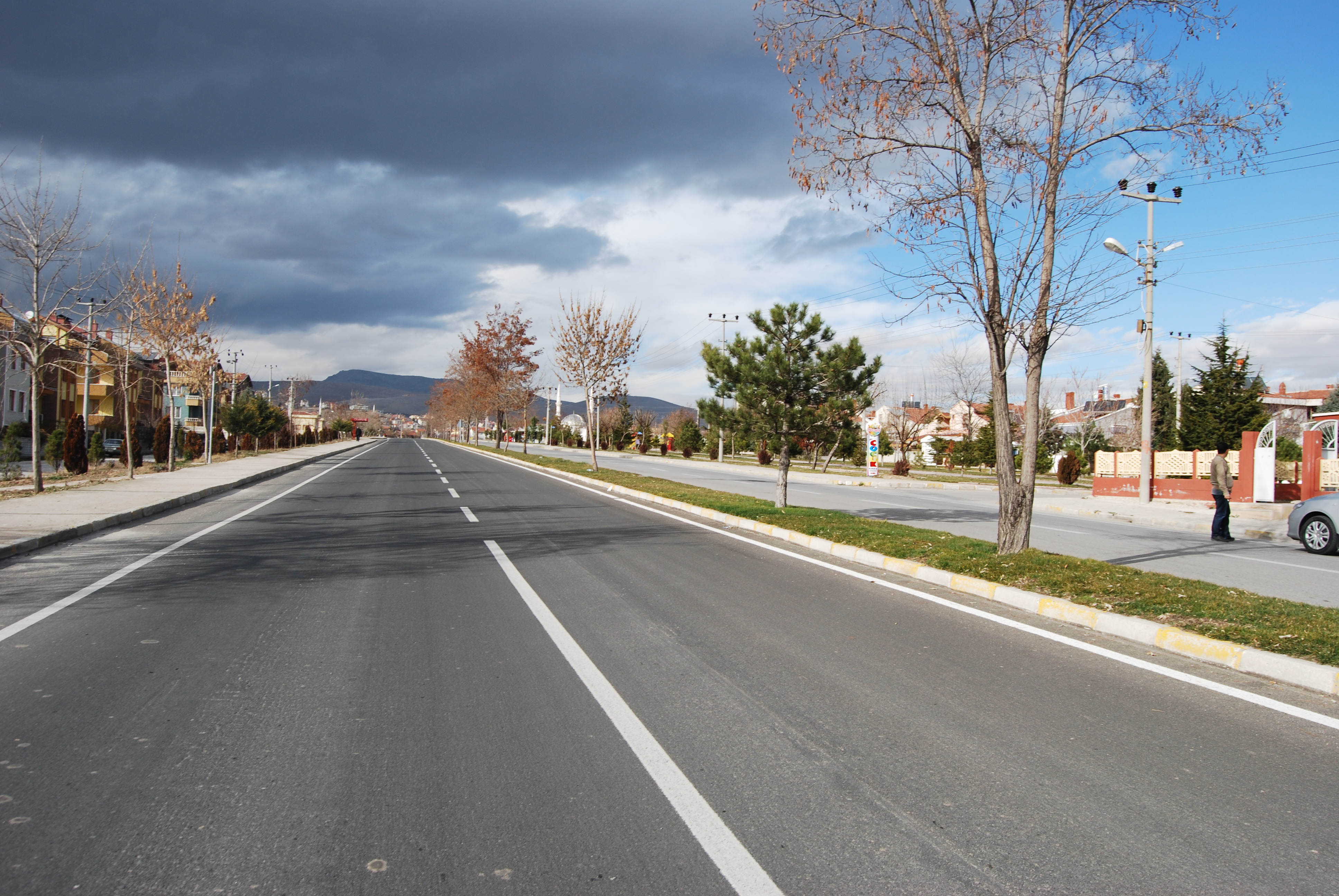
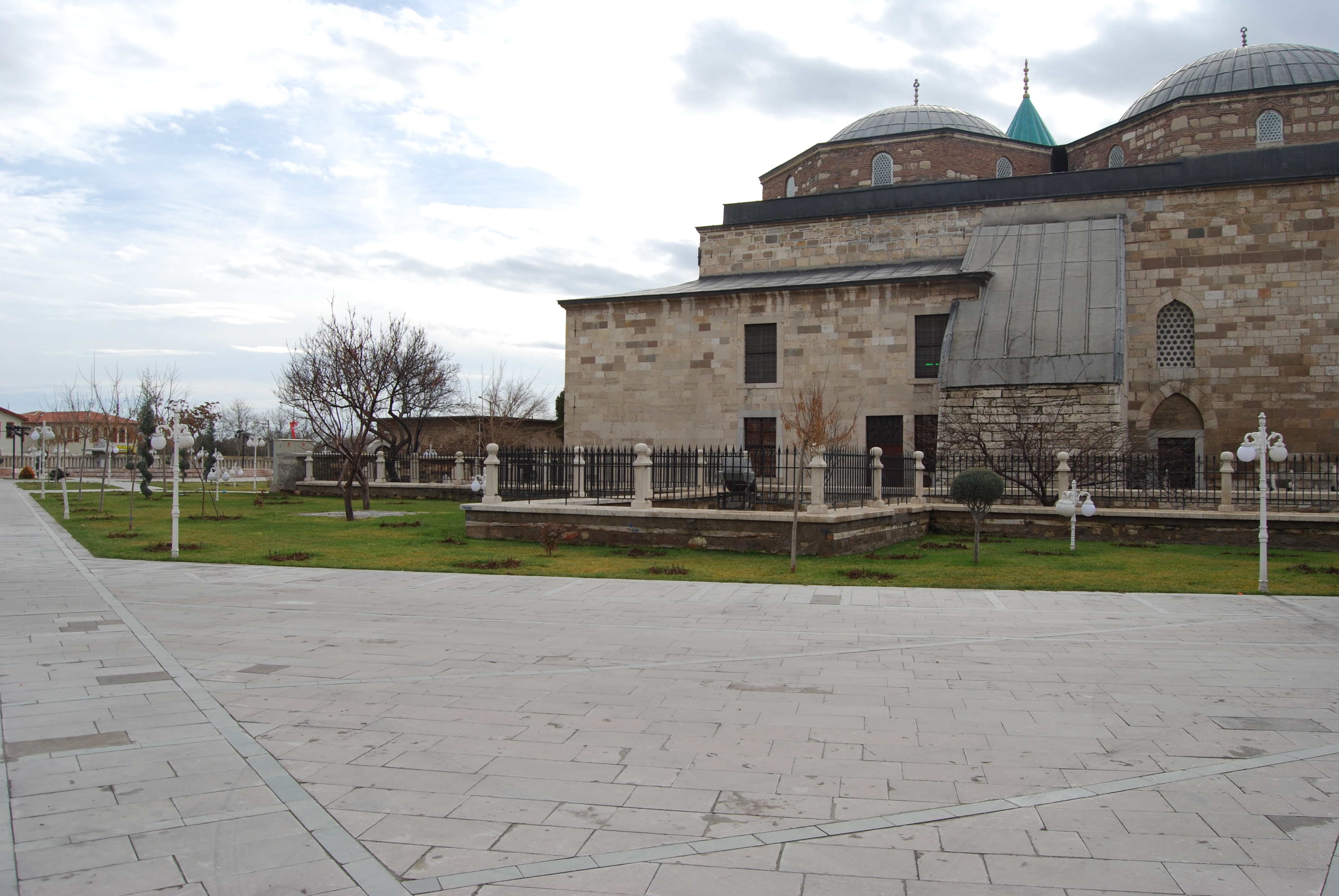
I arrived at Konya airport at 8am, and my tour guide was waiting outside for me. We headed straight to Mevlana’s Mausoleum first. Whilst driving up to the Mausoleum, I sensed a completely different atmosphere; the roads were empty and quiet, hardly could see people out and about, there were not that many mosques in sight, everything seemed a bit dull to me, it was totally different to Istanbul!
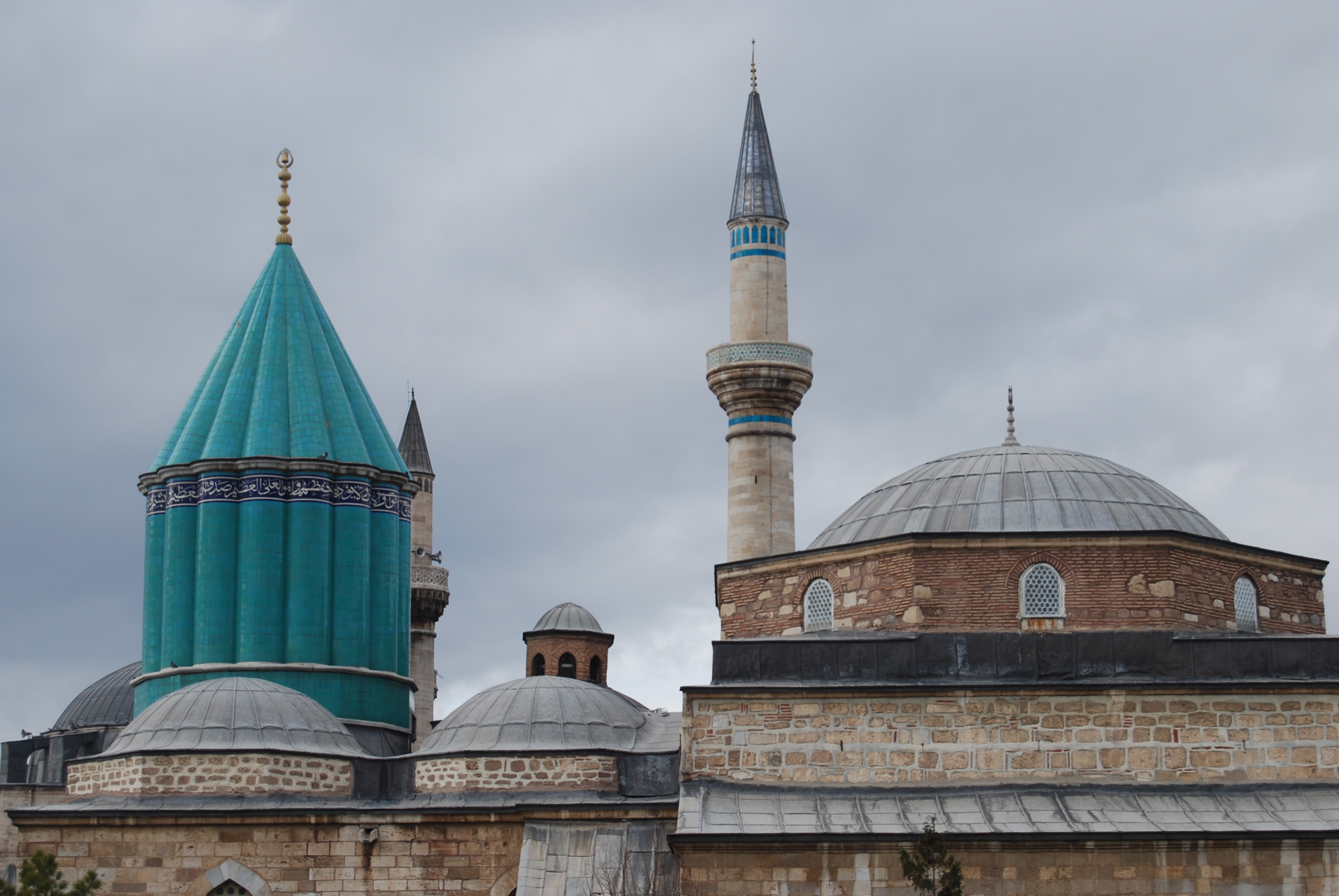
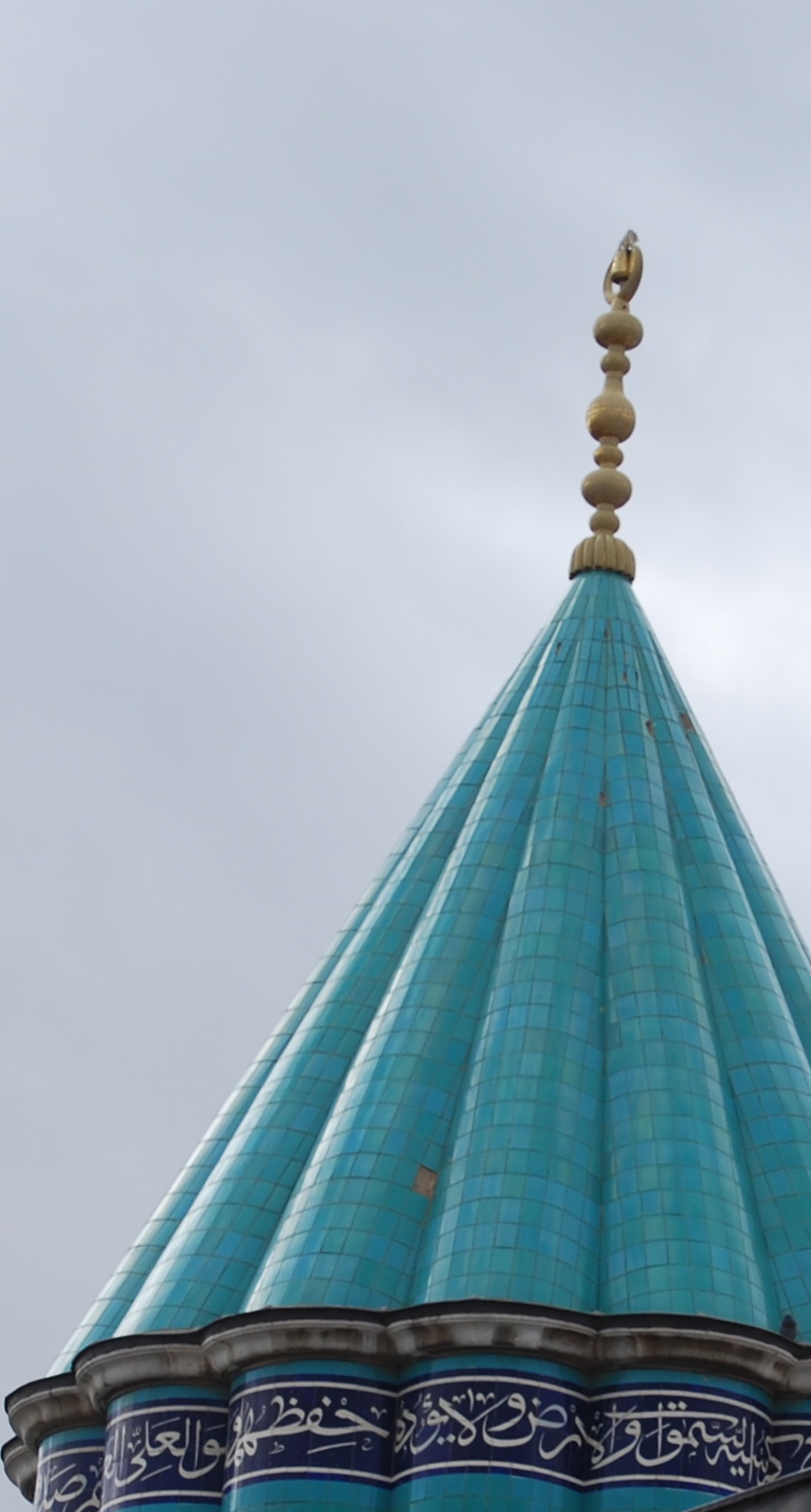
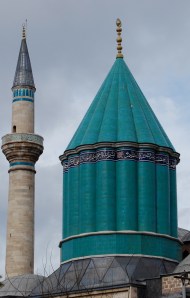 The weather that day was cold and cloudy, which didn’t exactly uplift my mood, but then my gaze fell upon the beautiful green done…..
“Come, Come, Whoever you Are
Wonderer, worshipper, lover of leaving.
It doesn’t matter.
Ours is not a caravan of despair.
Come, even if you have broken your vow
a thousand times
Come, yet again, come, come.”
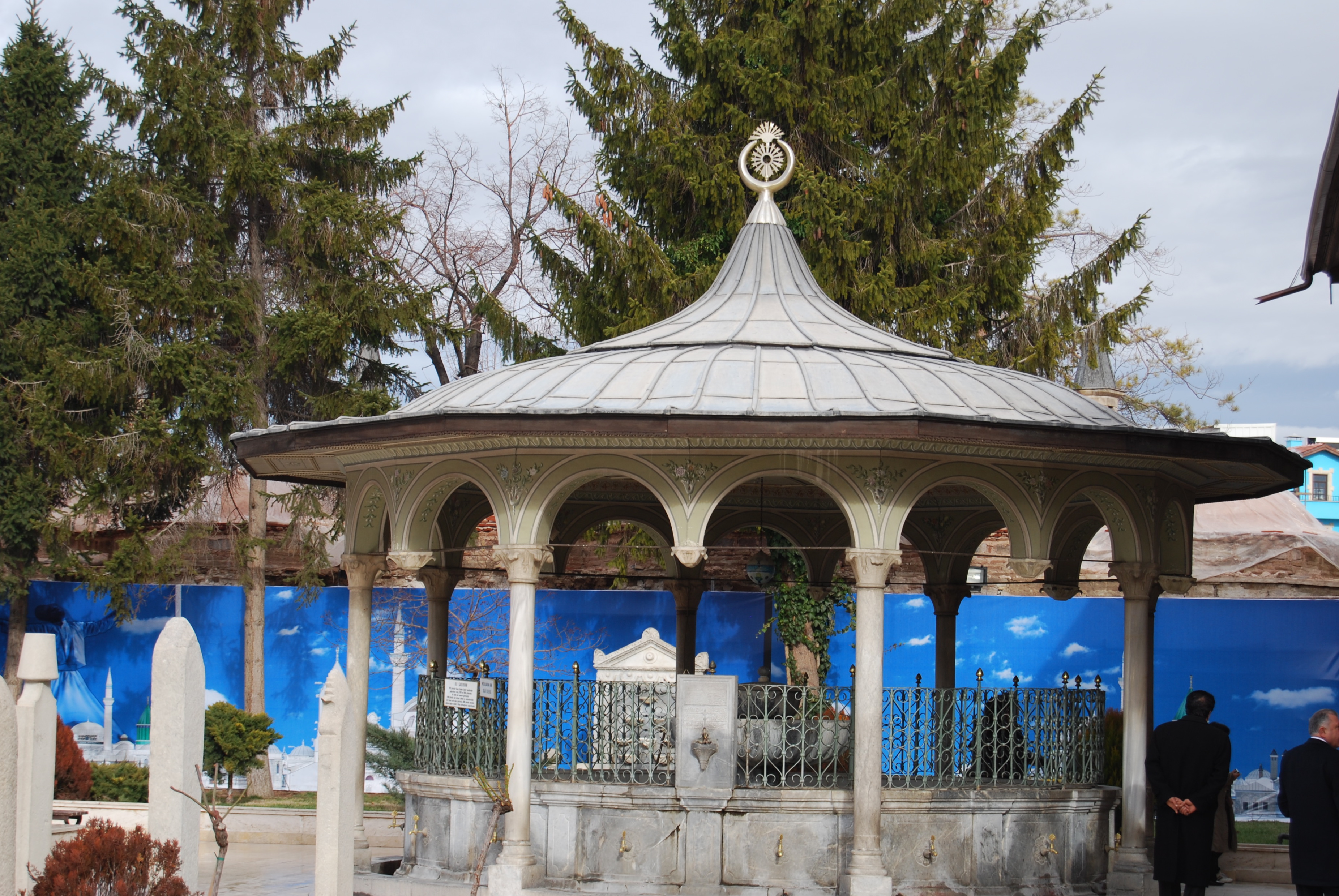
The courtyard of the Mausoleum, which leads to the resting place of Mevlana…..
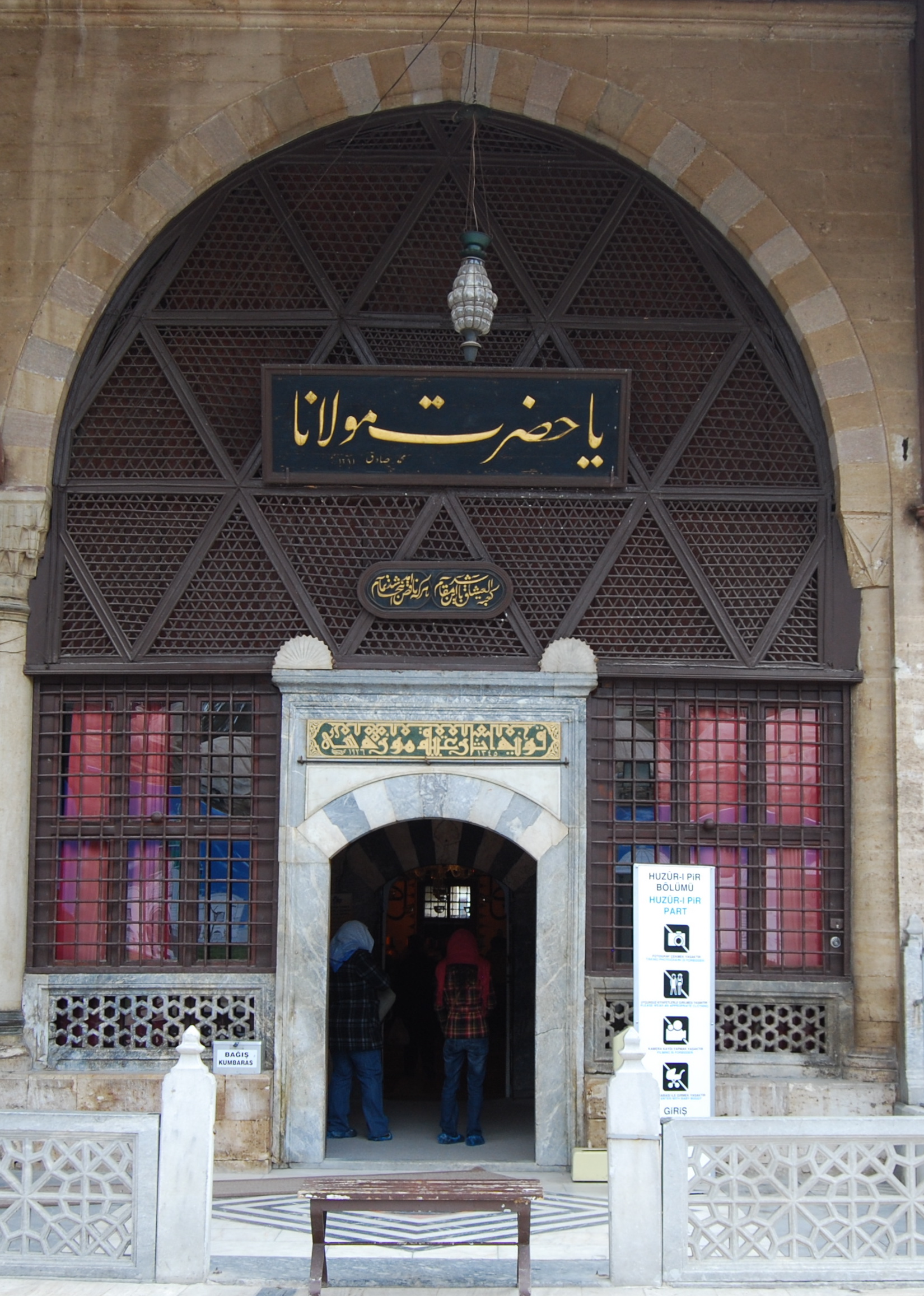
This is the main entrance of the Mausoleum, inside here are the tombs of Rumi’s family and descendants. The headstones for the male graves have either a green or white turban; the green represents the fact that the person is from the family of Prophet Muhammad salla’Allahu ‘alayhi wasalam, and the white represents that the person is just a descendant of Mevlana. The female graves obviously have no turbans on them, so you could easily identify them. At the corner, right beneath the green dome, is the tomb of Mevlana Rumi. Unfortunately, they do not allow you to take pictures inside the Mausoleum, especially of the tombs, therefore I do not have any to share, but at that point, taking pictures was the last thing on my mind anyway because I was feeling a bit overwhelmed…..
I stood there in awe, unable to hold back my tears, and still couldn’t believe I was standing at the grave of this great person who has moved, transformed, cured and healed many hearts and minds through his poetry, and guiding people to Divine Love. I first came across Mevlana Rumi about 5 years ago, when I didn’t really have any interest in poetry, or even Sufism at that point in my life! But something about Mevlana’s words had an impact on me, and I started reading more of his poems and quotes. I’ve often found great solace, and many answers to my problems/issues in his poetry and advice, therefore for me to visit his blessed grave was something very special and personal. I stood there giving salams on behalf of all those who had asked me to, and then made du’a. I cannot fully describe the feeling I got whilst standing there, one really has to visit and experience it themselves in order to understand.
Beyond Rumi’s tomb, there was another room which was used for the Sema (whirling dance) ceremony once upon a time, but is now used to exhibit old manuscripts (Rumi’s own poetry collection like Mesnavi, Divan etc), various types of Qu’rans, some were small as the palm of a normal person’s hand! They were extraordinary to see, especially since they had been handwritten! Also, to view were instruments such as the Ney, clothes, tasbihs etc. There was also a display with a small box which had the blessed hair of the beloved Prophet Muhammad salla’Allahu ‘alayhi wasalam.
‘Your task is not to seek for love, but merely to seek and find all the barriers within yourself that you have built against it.”
“The minute I heard my first love story I started looking for you, not knowing how blind that was. Lovers don’t finally meet somewhere. They’re in each other all along.”
“Sometimes, in order to help, He makes us miserable; but heartache for His sake brings happiness. Laughter will come after tears. Whoever foresees this is a servant blessed by God. Wherever water flows, life flourishes: wherever tears fall, Divine mercy is shown.”
My tour guide then took me around Konya. Here are some pictures I took:
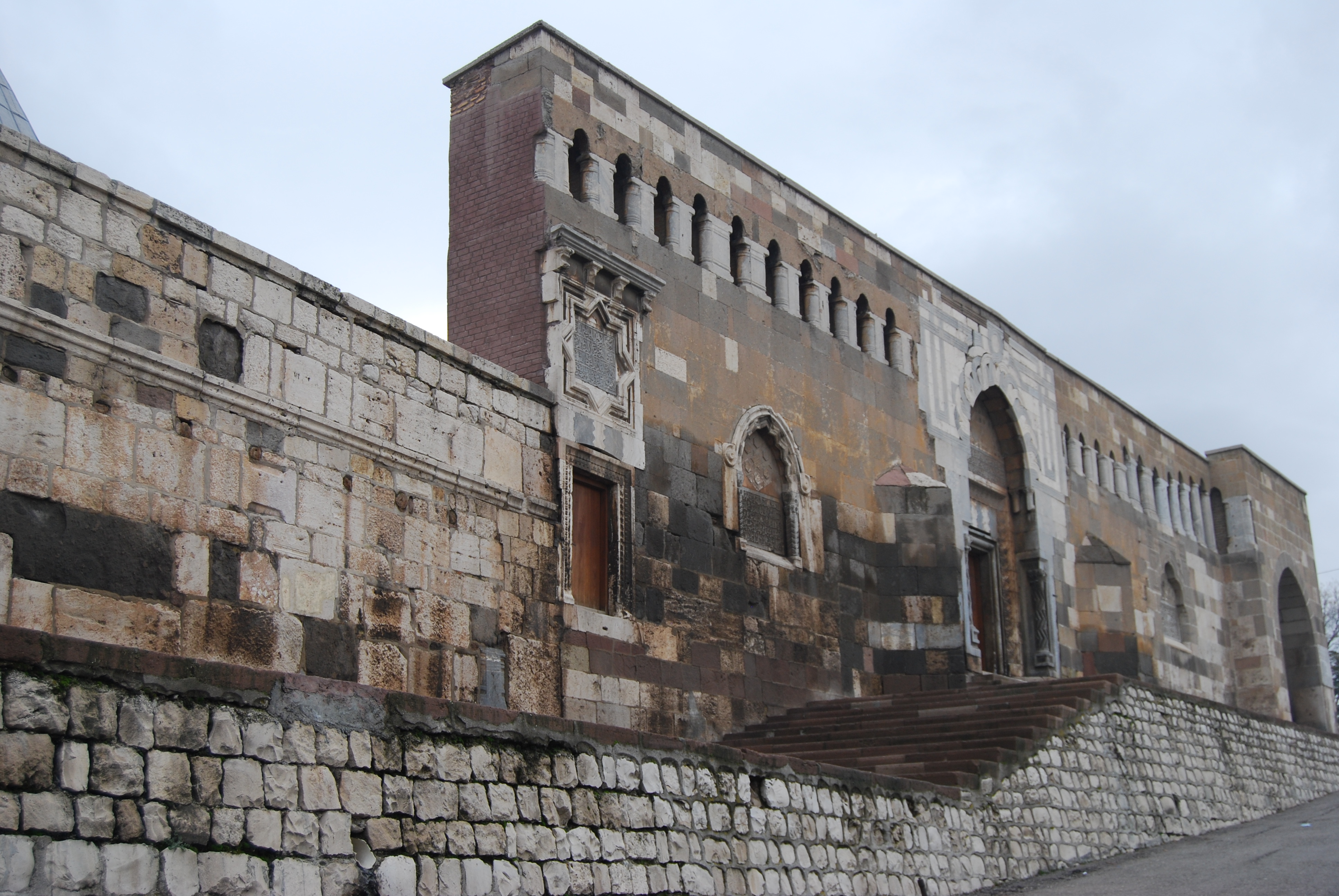
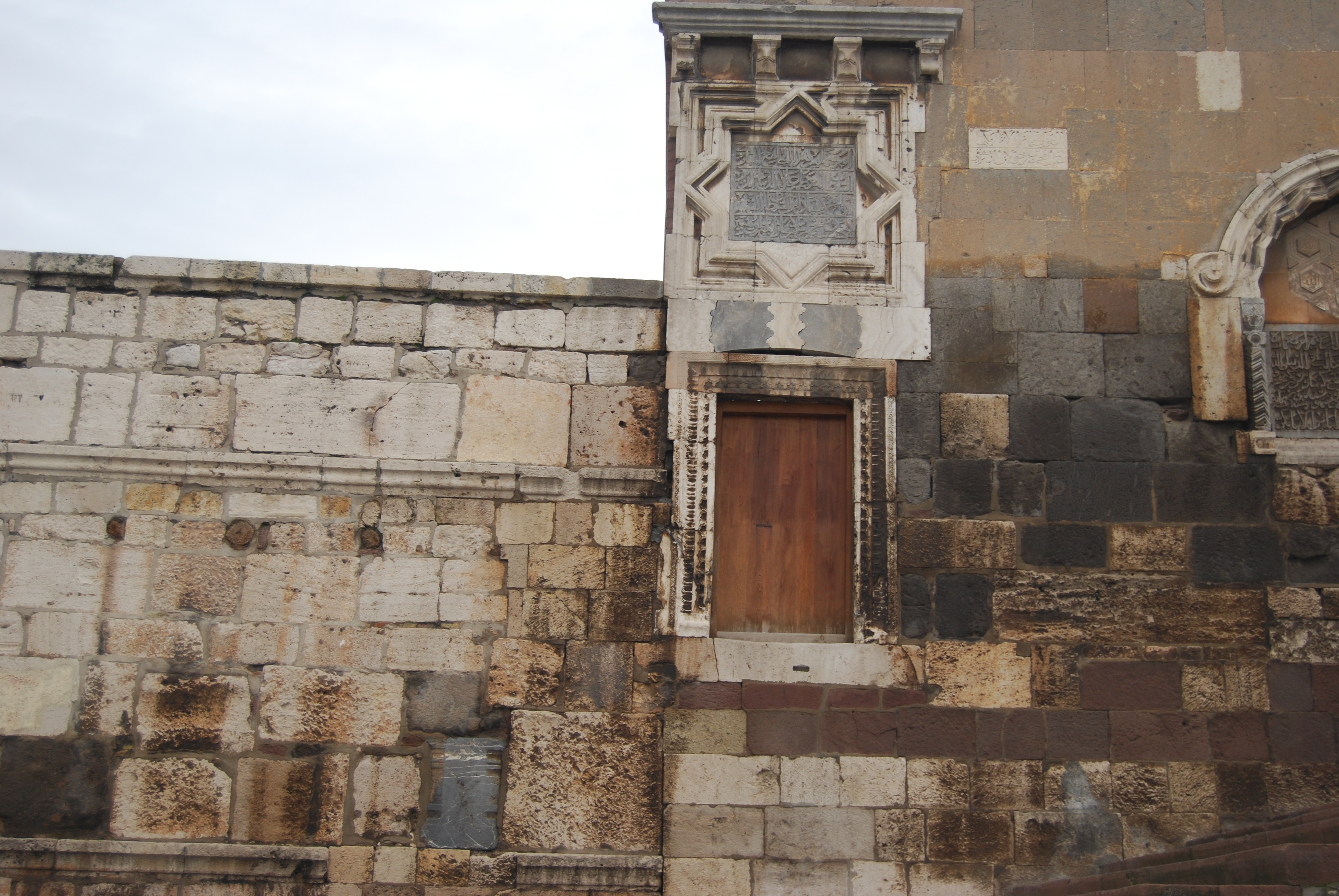
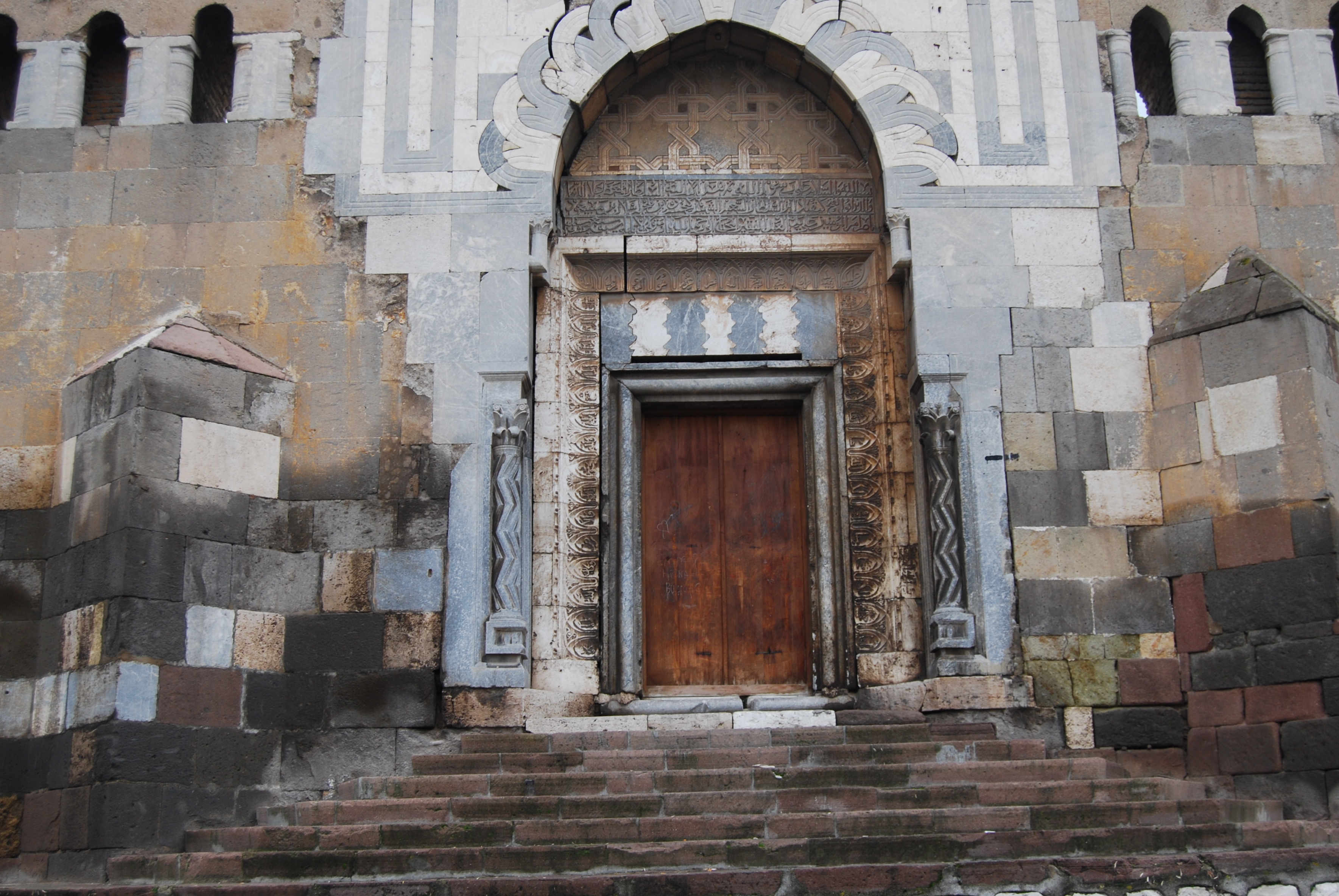
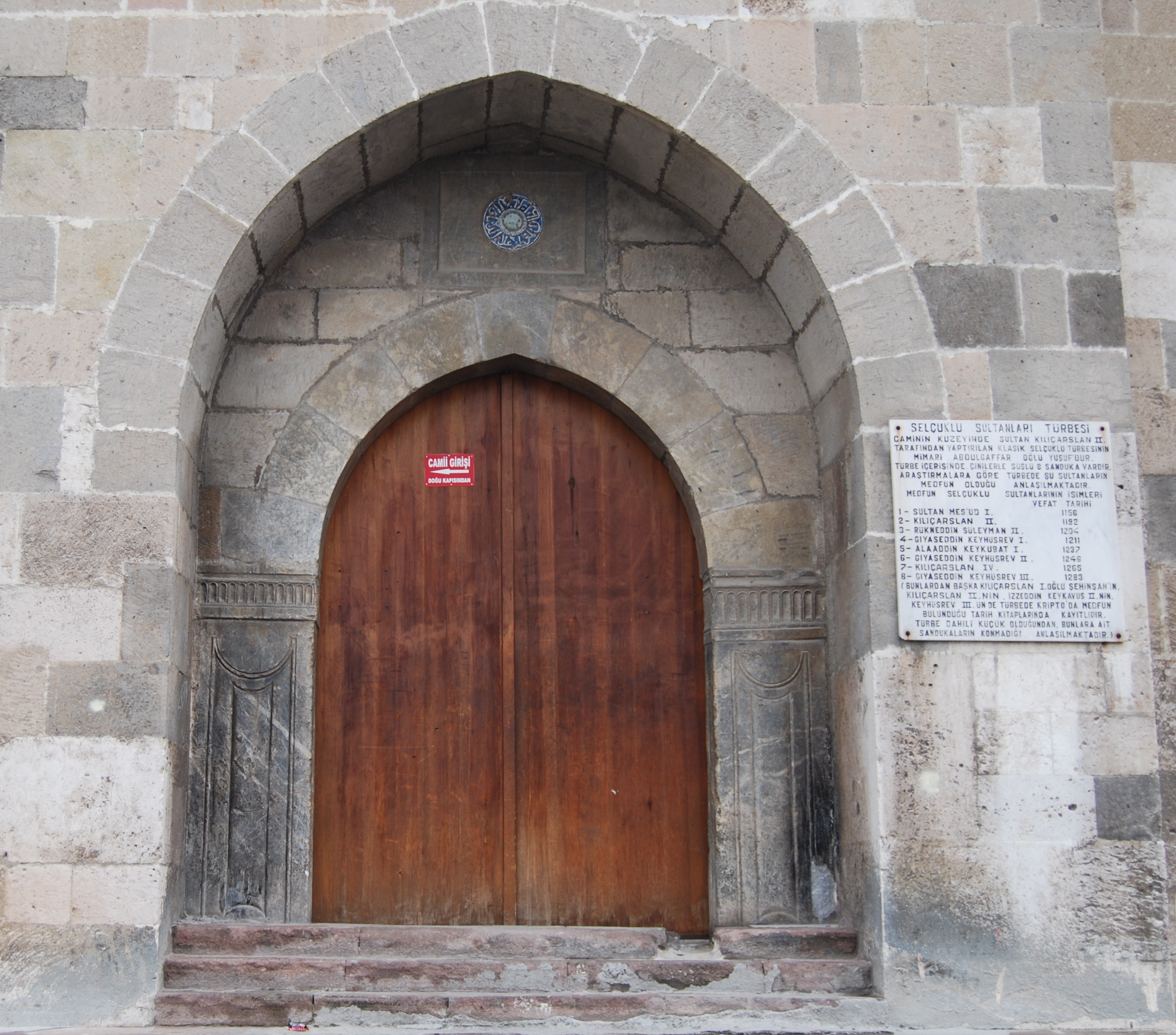
Alaeddin Camii (Mosque)
The Alaeddin Mosque is the largest and oldest mosque in Konya, in fact, it was the first mosque made in Konya.

We then went to the top of the highest building in Konya (sorry folks, forgot the name!), just to get a birds-eye view of Konya:


Next on the sightseeing list was Shems Tebrizi Cami (Mosque)


All that sightseeing, made us a little hungry so we stopped at a restaurant to eat “Etliekmek”, the traditional dish of Konya. It’s basically a very long piece of bread with meat.
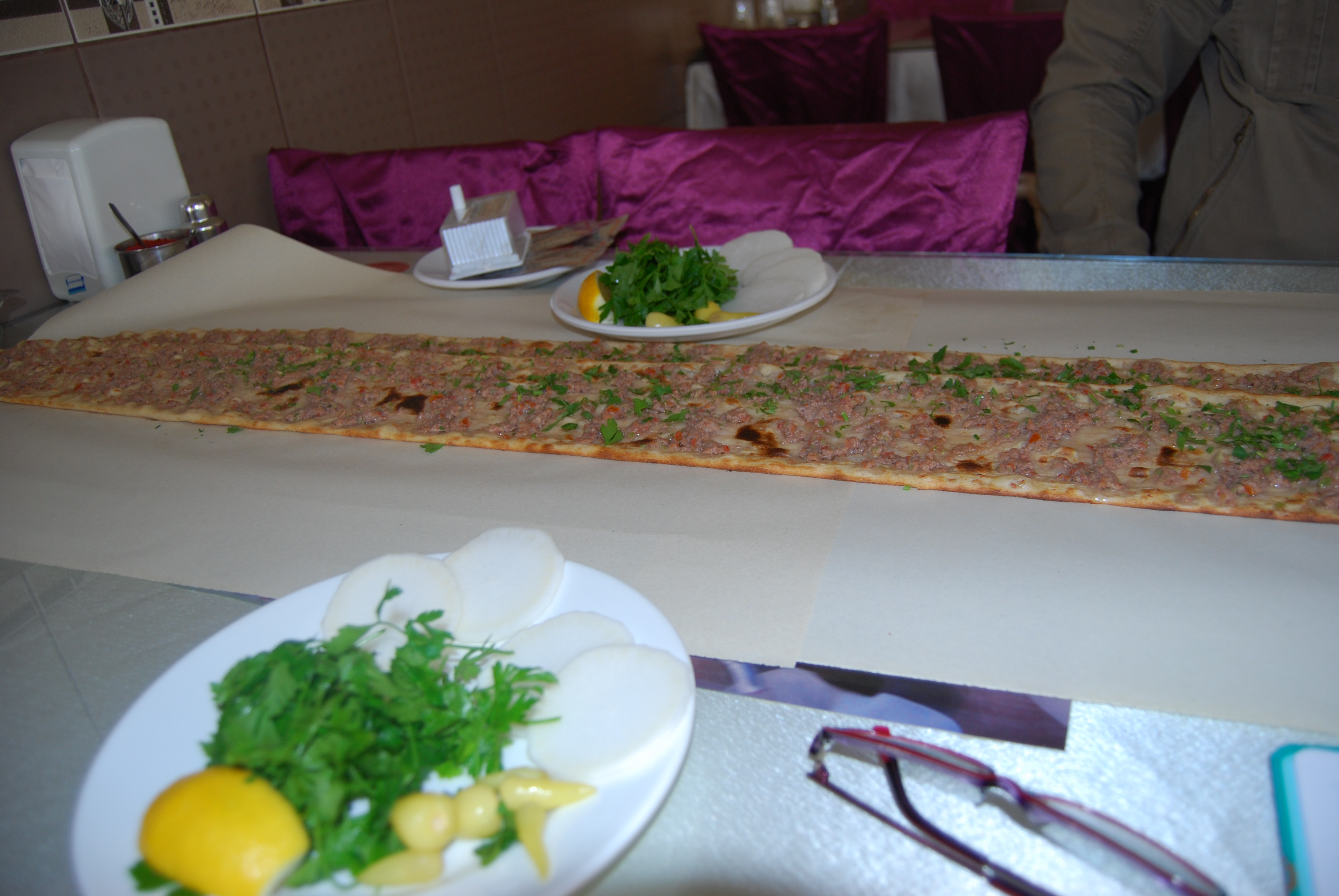
I was reluctant to try this because it didn’t look too appetizing, plus I’m not a huge fan of meat, especially not mince meat! However, I wanted to experience the complete culture and tradition of Konya, therefore felt I had to try it. I was actually surprised at how good it tasted, it’s quite similar to Lahmacun (Turkish equivalent of pizza), but slightly better in my opinion.
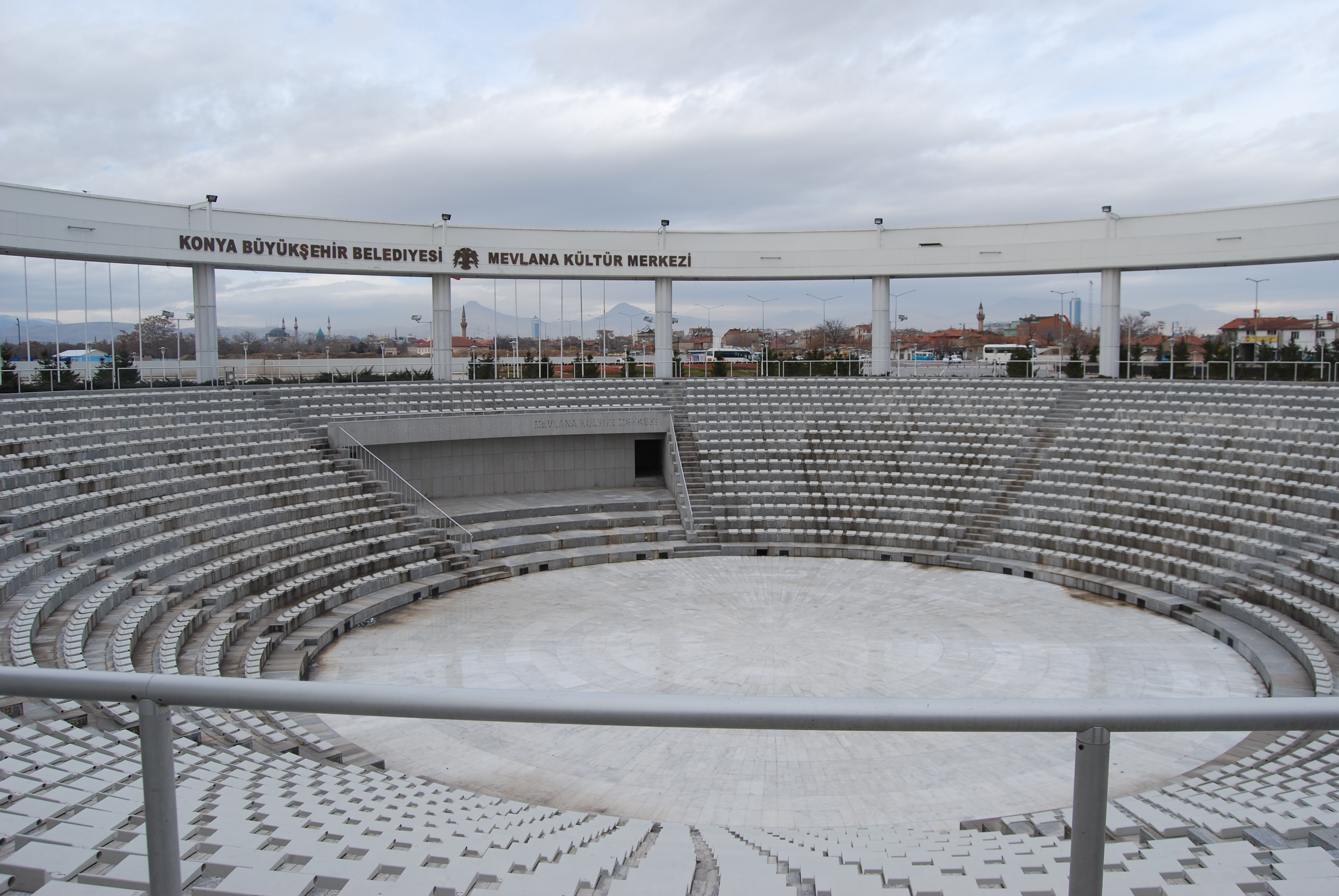
We then visited Mevlana Cultural Centre, where the Sema (whirling dance) takes place every Saturday evening:
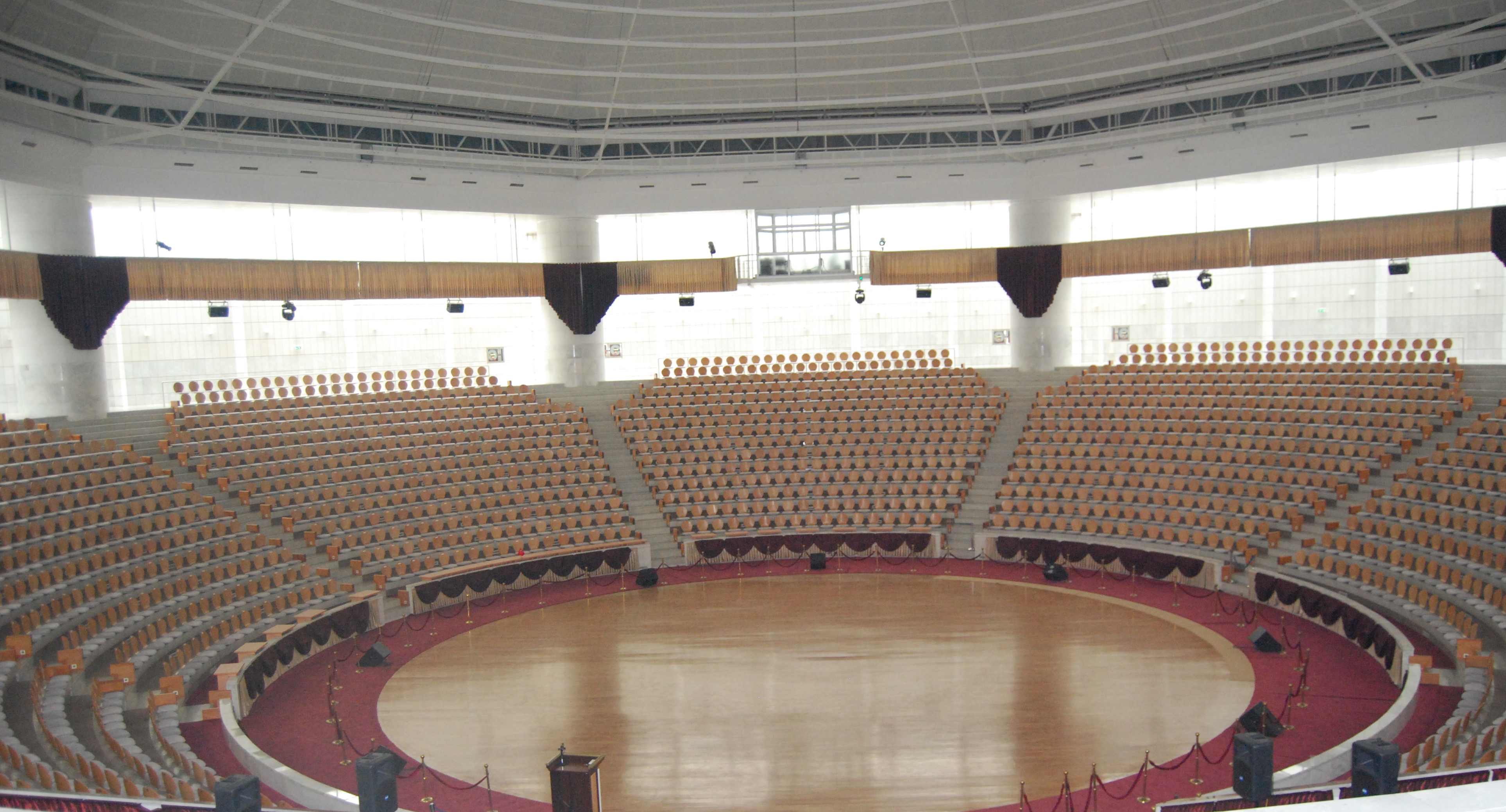
In the winter, the Sema takes place in this hall which is inside the actual Mevlana Cultural Centre……..
And in the summer, the Sema takes place outside……
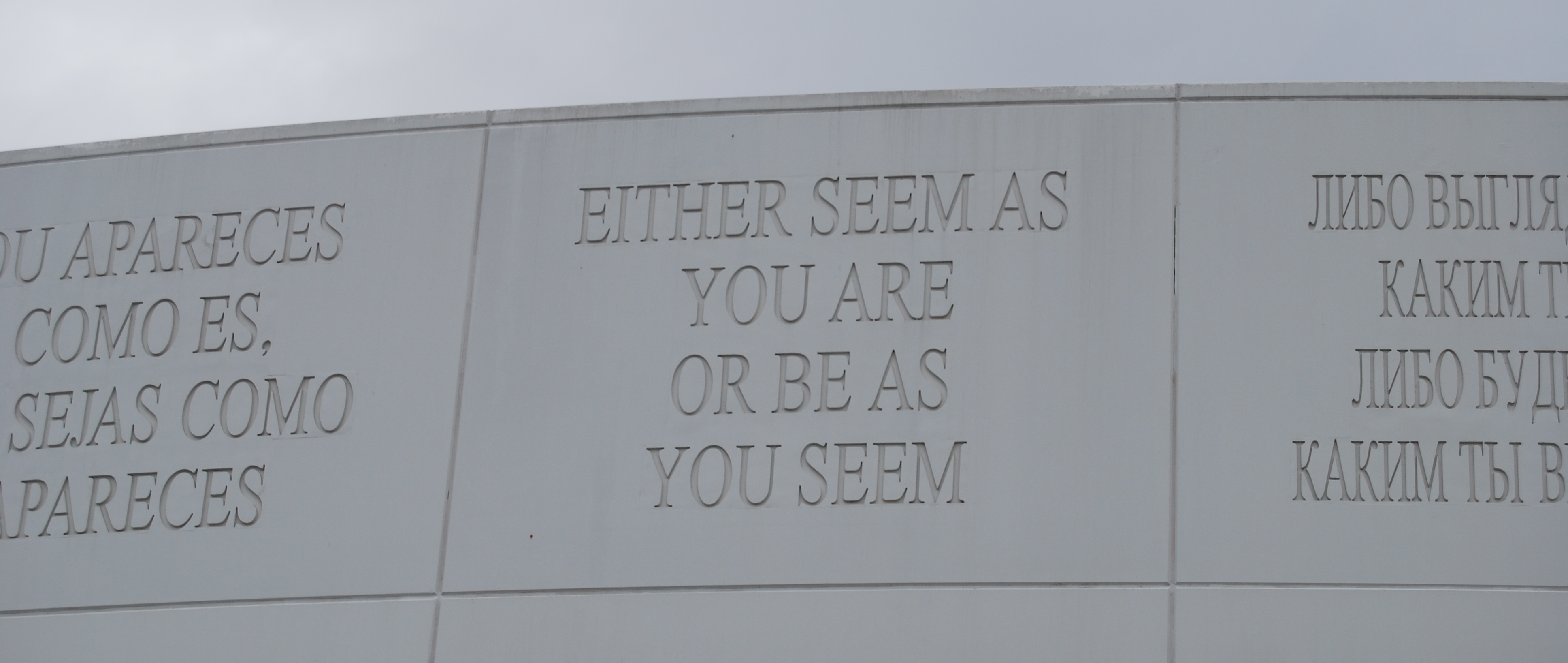
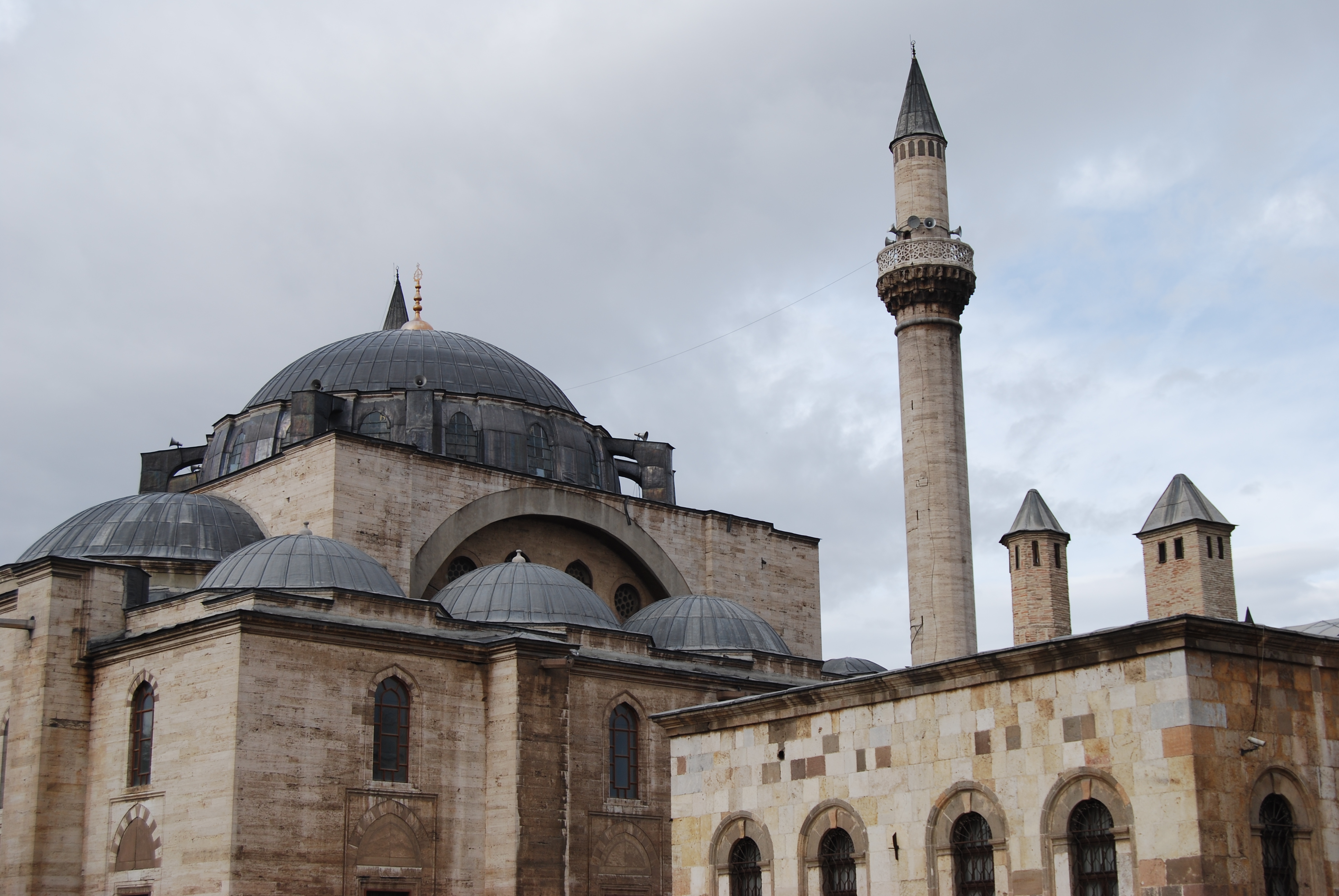
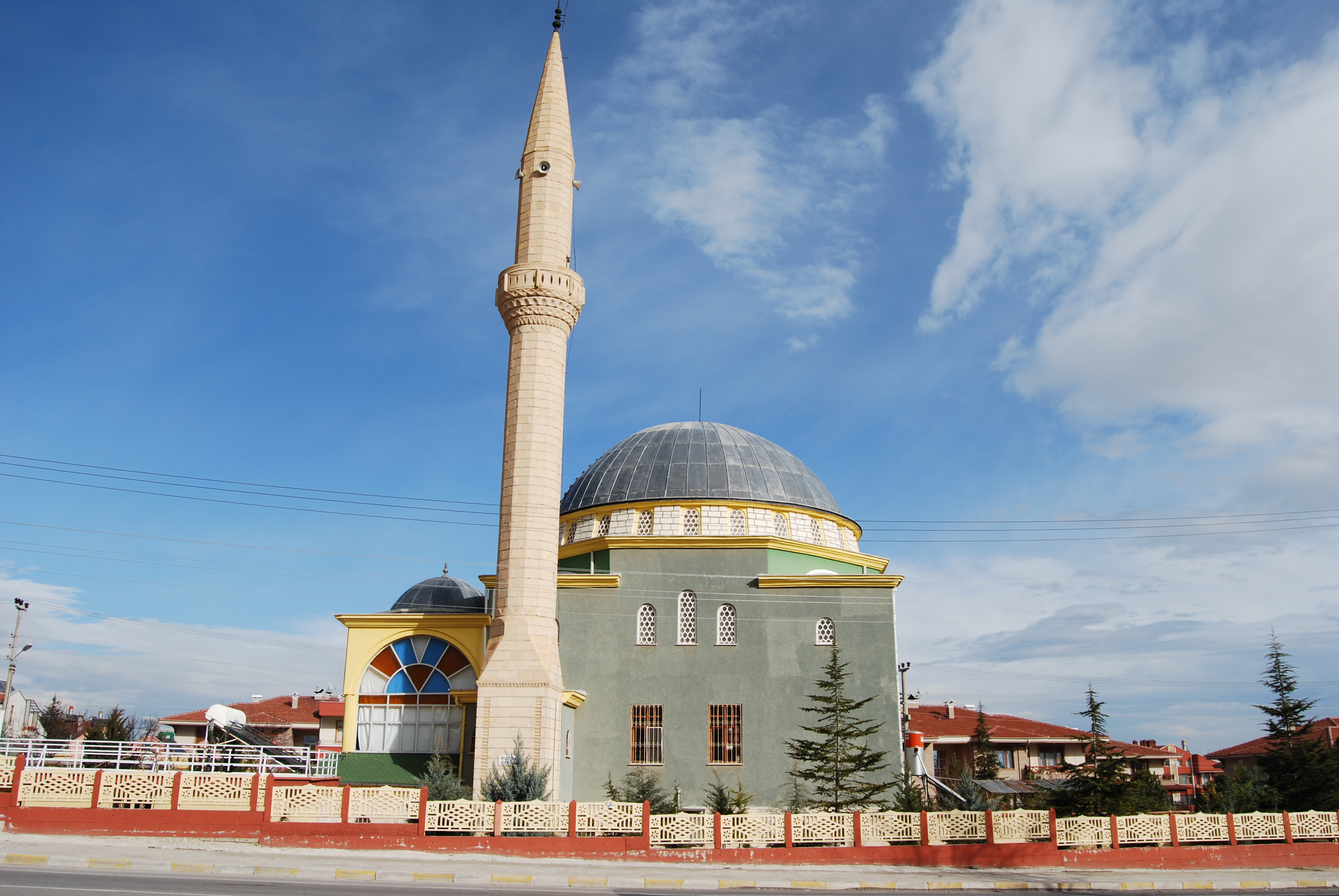
As the day went on, the grey clouds disappeared, the sun came out, and the sky looked brighter than it had when I first arrived in Konya. We then visited a few more mosques, and here are some of the photographs I took:


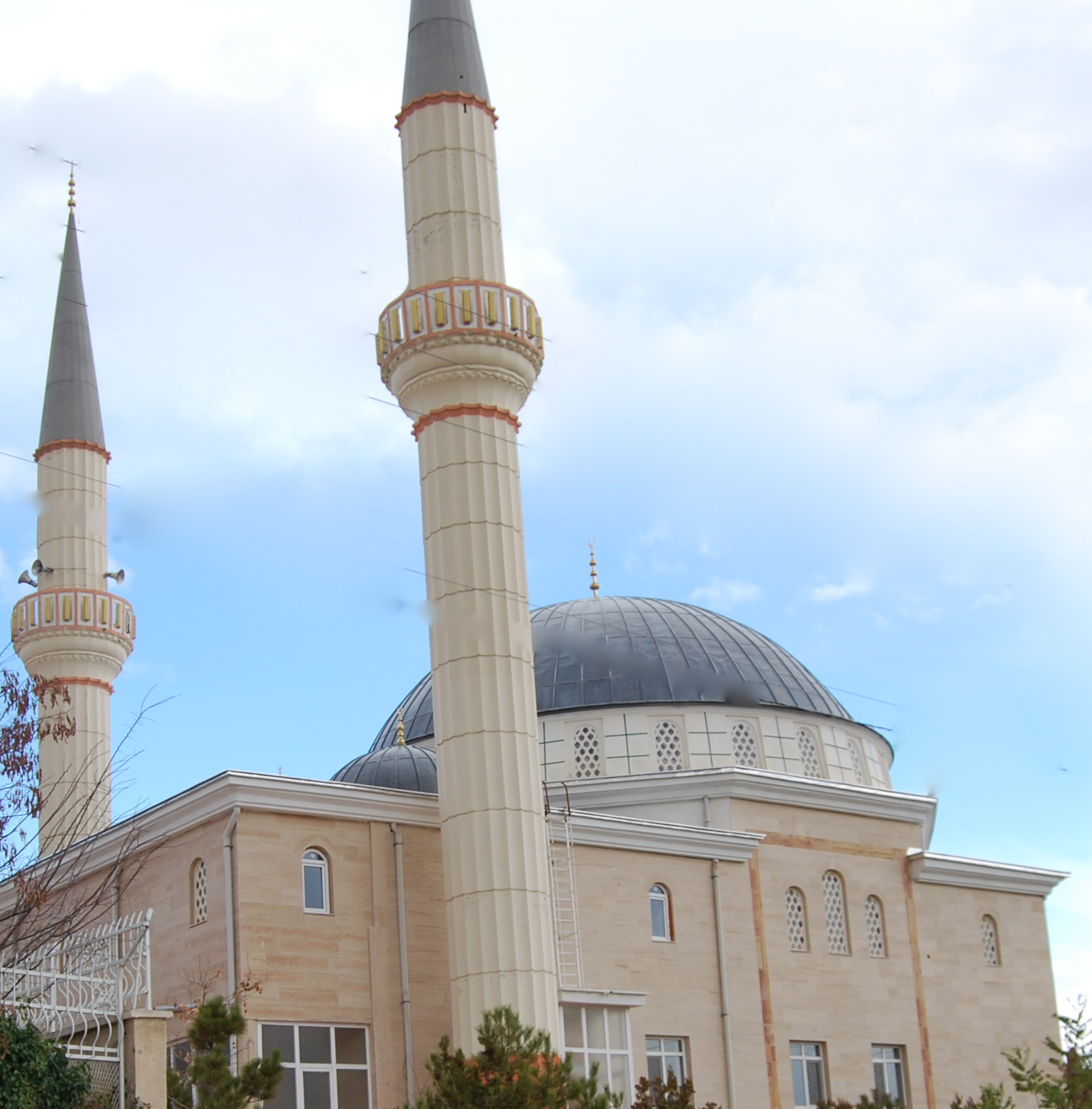
We then went to the outskirts of Konya, and here are a couple of pictures of some of the ruins we saw as we drove past…….


By 3pm, I had pretty much seen most of Konya, well most of the touristy places for sure. My flight back to Istanbul wasn’t until 8pm, and there was nothing else I really wanted to do or see, so I asked my tour guide to take me back to Mevlana Rumi’s Mausoleum because that is where I really wanted to be. The security man at the Mausoleum said that I could sit near the grave until the Mausoleum closed at 5pm. I had 1 hour 45 mins approx, so I found a corner where I sat and read Mevlana’s poems, and just contemplated. The Ney was being played in the background, I felt really relaxed and peaceful. Then the Magrib adhan was called out by the muezzin, it was so clear and beautiful that I wanted the muezzin to continue doing the adhan over and over again. By this time the Mausoleum was empty, I was the only one there. The security man came and said he’ll let me have a few more minutes just to say goodbye to Mevlana, so I tried to make the most of my last moments there….
Still had a couple of hours left before my flight, so I went around some gift shops- the usual stuff tourists do!
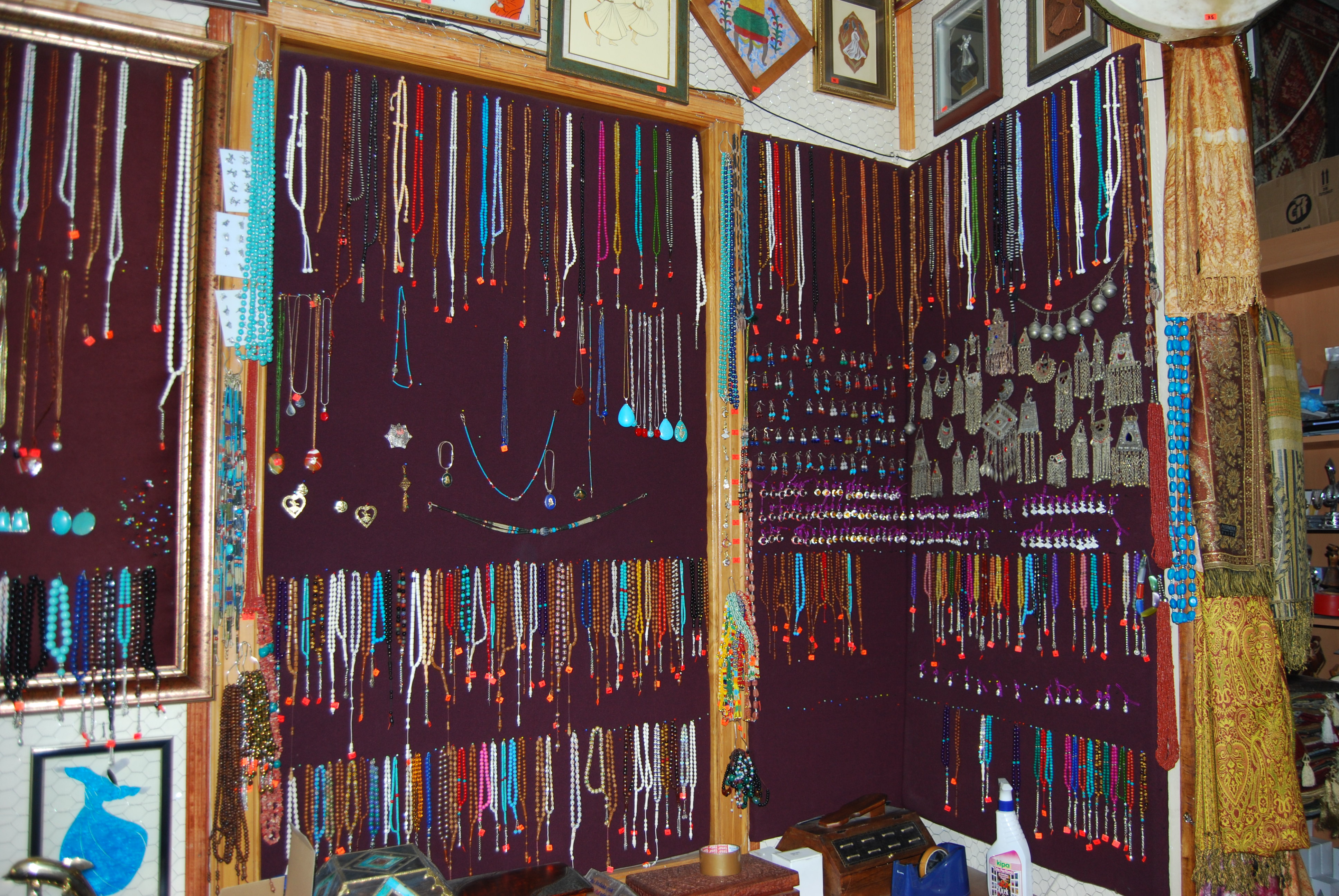 Prayer beads anyone?!
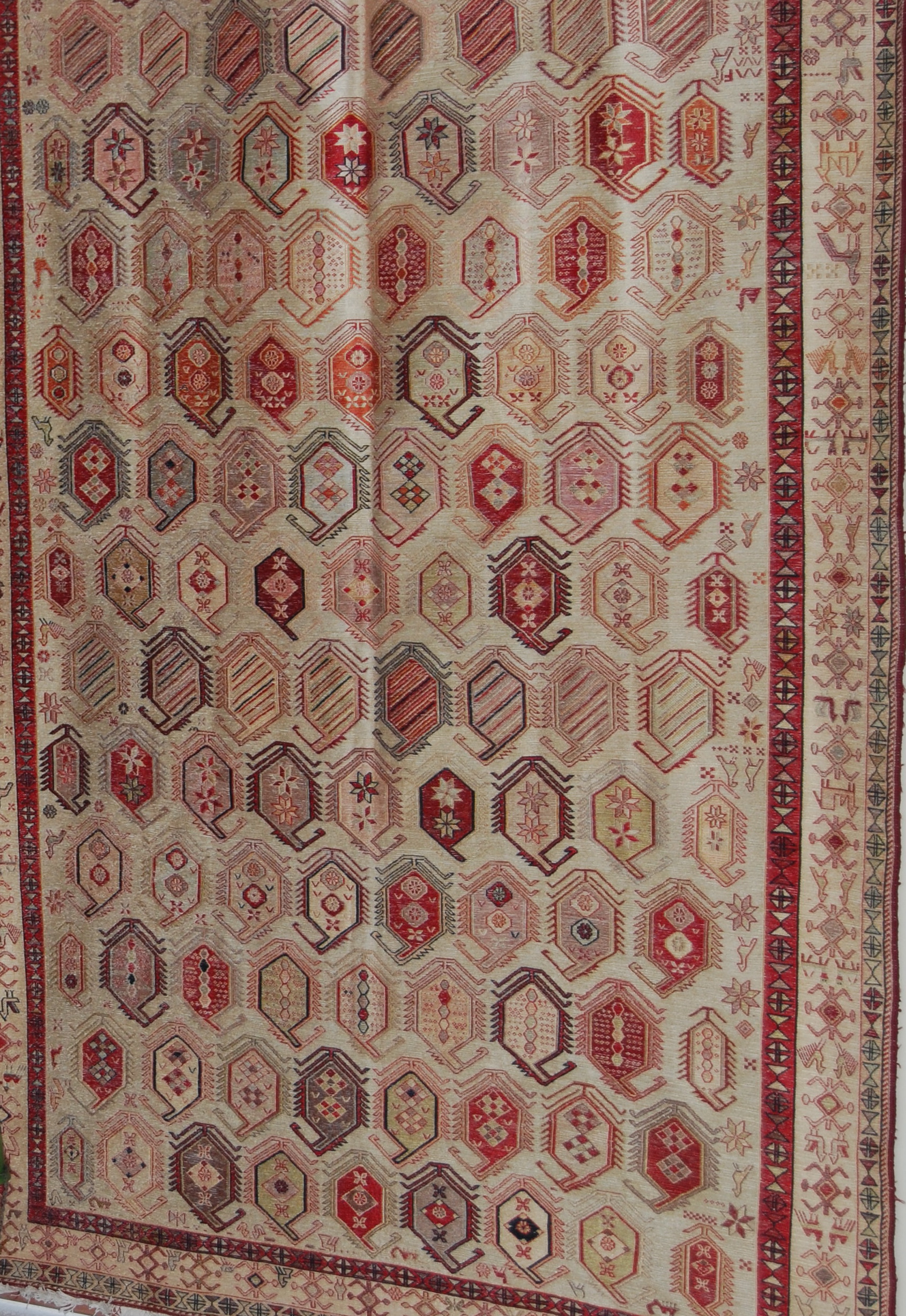 Handmade rugs
Before I left the UK, I remember a friend telling me that Konya is very industrial, ugly, and the only amazing thing to see is Mevlana’s zawiyya. I didn’t take much notice of his words at the time, but having seen Konya myself, I can somewhat agree with my friend. I wouldn’t go to the extreme of calling Konya ‘ugly’, but I felt that it didn’t steal my heart like Istanbul has, apart from the beautiful Mausoleum of Mevlana which has secured a special place in my heart.
I would encourage everyone to take the opportunity to visit Konya, simply just to visit Mevlana Rumi’s tomb, you won’t regret it! Feel free to contact me if you need any tips.
“Let the beauty of what you love be what you do.”
“Patience is the key to joy.”
Please be aware that these are my notes; I was unable to write down everything, but what I have, I pray it’s of some benefit to the readers. Any mistakes, errors or misinterpretations of words are from me alone, so please do forgive and overlook my shortcomings!
May Allah reward all those who were involved in organising and facilitating this blessed course, and may Allah elevate the rank of Shaykh Yahya, bless his family are teachers. Amin!
“The Wonders of the Heart” by Imam al- Ghazali
Taught by Shaykh Yahya Rhodus (USA/Yemen) on 19th December 2009, Woodlands Road Mosque, Birmingham (UK)
Shaykh Yahya began by introducing the Ihya’ ‘ulum al-din (Revival of Religious Sciences). He said that it’s the most important text Imam al-Ghazali wrote. The Ihya is divided into 4 parts, each part consisting of 10 chapters thus 40 parts in total. Shaykh Yahya briefly spoke about how 40 is a special number for various reasons. For example, each Prophet received prophecy at the age of 40; if you do something for 40 days, it becomes a habit and so on. That is one of the reasons why the Ihya is divided into 40 parts.
- If Allah is remembered, shaytan is withdrawn from that gathering- prophetic hadith.
- Shaytan can only have power as much as you give him power.
- People have lost the ability to see things holistically like the scholars did.
- Every single verse in the Qur’an has 60,000 ways to understand it!
- Any knowledge that doesn’t lead you to the presence of Allah has no benefit in it.
- Allah is Infinite, anything you put over infinity is zero!
- Who knows what is hidden in the hearts? Who knows what the human beings conceal in their hearts? Allah sees everything in your heart!
- The “Wonders of the Heart”- its something internal without our hearts. If you deny there is such a thing as a ‘heart’, how will you experience these wonders? Experience these jewels?
- Anyone can build outwardly- but what about building the inner?
- The outward heart is a vascular system, spreading the blood around the body etc- that’s the outward ‘wonders’ of the heart. The inward wonders of the heart is the spiritual heart, which has more ‘wonders’ but you might not even know what is there! For example, when you clean the house, you might clean it well, but may not see the dust. Then you might do a ‘deep clean’ of the house and see things you do not normally see, like the dust. This is the case of the heart, you need a deep cleansing of it. We have regular cleansing of it like in Ramadan when we fast, pray tarawih etc. The ‘deep cleansing’ is like hajj- when you come back, you are all purified and ready to meet your Lord.
- The Prophet sallaAllahi ‘alayhi wasalam said that religion started strange and will end strange. If you are considered as ‘strange’, then that is a good sign. Nowadays, if you have a beard, don’t drink alcohol etc, you are considered as ‘strange’. The Prophet sallaAllahu ‘alayhi wasalam said glad tidings to the strangers- you are entering the ‘bisharah’ (glad tidings)
- The honour and excellence of man (humankind) which he surpasses all other creatures is to know Allah- ability to have Marifah. This knowledge is man’s duty.
- Every human being wants glory, perfection, beauty etc. Despite how you look outwardly, it doesn’t really matter, it all depends on your ability to know your Lord. Your knowledge of Allah is storing up your provision in the next world.
- The way that you prepare yourself to have this knowledge is through your heart. It is the heart that knows Allah, the heart that works, strives for Allah, and it’s the heart that has secrets unveiled to it.
- We get distinguished from the rest of creation because of the heart.
- Its at the level of the heart that received unveiling, and feels the intimacy with Allah.
- It is the heart that is accepted in the presence of Allah.
- There are people in this world who can be walking outwardly in this world, but their hearts are connected to the celestial realm. It is important that you are mentioned in the higher realm.
- There is a hadith which goes along the lines that if Allah comes to love a servant, He calls Gibreel alayhi salam to love them. When you are beloved to Allah, Allah announces it to Gibreel alayhi salam, who then announces it to the rest of the angels and then the creation becomes inclined to you.
- If you are sincere, you will always be tested by Allah.
- It is the heart that is veiled from Allah.
- Every container pours out what is in it. If your heart is good, it will only pour out khair- goodness.
- If the human being comes to know the heart, he comes to know who he is, and then he comes to know his Lord. If they are ignorant about themselves, then they are ignorant about their Lord. If you are ignorant of yourself, how can you know anything else? Allah says in the Qur’an how those who have forgotten Allah, He has caused them to forget themselves. These are the people who will not be able to do anything good.
- The human being must know their place in the hierarchy of existence. If we don’t know where we are, how will we get to where we want?
- The intellect is never enough; knowledge, information is not enough itself. You need belief in Allah and the love for RasulAllah sallaAllahu ‘alayhi wasalam
- If you forget Allah, He will make you forget yourself. If you forget yourself, how can you know anything?
- The knowledge of the heart, its true nature, its qualities is the foundation of the deen. If you want to be firm, you need to know this!
- To speak about the ‘Wonders of the Heart’ is from the unseen, most peoples’ hearts can’t comprehend this. There is a whole realm with the heart which we do not perceive.
Qalb- Heart
2 meanings:
1. The pine shaped organ located in the left; it’s a flesh of a particular sort. This is the physical heart. It’s a piece of flesh which is from the seen world and doesn’t have much worth.
2. The spiritual heart, it’s a latifa, subtlety. The spiritual heart can be killed, can die, just like the physical heart. The spiritual heart is from the unseen, but has a connection to the physical heart. Majority of people are bewildered in perceiving its connection.
Ruh- Spirit
This also has 2 meanings:
1. The subtle body- connection to the physical heart.
2. The subtle thing which knows and perceives.
As long as the spirit in your body is there, you are alive
Nafs- Soul
It’s essentially who you are.
Aql- Intellect
2 types:
1. Lower intellect, which is the brain
2. Higher intellect, which is located in the heart
In summary:
Heart- Place which we know Allah
Soul- Who we are
Spirit- The tool in which we love Allah
Aql- That what we know
All actions come from the heart, and all actions come from thought:
Thought- Heart- Action
1. The first thing that comes to the heart is a thought.
2. The second thing that comes to the heart is the natural inclination towards that particular thing.
3. The third thing is the judgement of the heart- if you should do it or not
4. The fourth is having firm resolution and actually having the intention of doing it.
In the 1st, 2nd, and 3rd stages, you are not taken into account for it, its only when you get to the 4th stage, you are taken into account for. For example, a thought of stealing something comes to your heart, it then moves onto the next stage which is the inclination of the heart about stealing, then it moves onto the 3rd stage where you judge whether to steal or not, then the last stage is when you actually intend to steal, or don’t intend to steal. And its only at the 4th stage, when you have made that intention to do it, you are held accountable. You can’t control the thoughts that come to your heart. Sometimes they come even if you do not want them to. No matter how many thoughts that come to your heart, you are not accountable as long as you do not intend to do it. With the stealing example, you will only be held accountable if you actually reach the 4th stage and intend on stealing. You can have all the thoughts and inclinations, but its only when you actually intend on stealing, you are held accountable for it.
- If you want strong ‘Yakeen’ (Certainty), then give charity, give your wealth.
- The people who were around the Prophet sallallahu ‘alayhi wasalam were saturated, wrapped in his light. The Prophet sallaAllahu ‘alayhi wasalam is your door to Allah.
- People have forgotten Rahma. Where is the Rahma in your heart? The Prophet sallaAllahu ‘alayhi wasalam had Rahma in his heart for everyone, even when he made du’a against people, it was out of Rahma for them.
- Different people get tested in different ways- Allah is Just, He will only try you with what you can bear.
- Allow people to better themselves- we should want people to change, better themselves and get out of these lower stages.
- You get certainty if you open your heart to it- polish it, and you will get certainty, Yakeen!
- The heart has a homeland, you are either travelling to your destination or away from it.
- The heart is the place of knowledge.
- Every known thing has a reality.
- We have to remove obstacles from our heart to obtain what we set to obtain.
Jaza ‘Llahu anna Sayyidina Muhammadan sallaAllahu alayhi wasalam ma huwa ahluhu
Jaza ‘Llahu anna Sayyidina Muhammadan sallaAllahu alayhi wasalam ma huwa ahluhu
Jaza ‘Llahu anna Sayyidina Muhammadan sallaAllahu alayhi wasalam ma huwa ahluhu
Subhana Rabbika Rabbi l’izzati amma yasifun, wa salamun ala l’mursalin, wal-humdulillahi Rabbi l’alamin.
Friends are a tremendous blessing from Allah subhanahu wa’tala…..
……We may not always appreciate those people who Allah brings into our lives as friends/companions, and vice versa, they may not always appreciate us either….
…..But we must learn that each individual has their unique way of expressing themselves and how much they value us as individuals and the overall friendship…….. Allah subhanahu wa’tala has created everyone differently……
…..Regardless of who we currently have in our lives, who we lost, or who will come back into our lives tomorrow, we know that Allah is the most Generous, and has blessed this world with so many different, unique and beautiful people to help us through this world…….They might not necessary be like us, but will be brought to us in order to complement our characters and personalities….. Maybe to help us through a particular stage in our lives…. Or perhaps to stay with us throughout this life and the next….. We just don’t know…But it’s all part of His subhanahu wa’tala’s plan for us…..
A few of my favourite quotes:
“The likeness of a righteous friend and an evil friend, is the likeness of a (musk) perfume seller and a blacksmith. As for the perfume seller, he may either bestow something on you, or you may purchase something from him, or you may benefit from his sweet smell. And as for the blacksmith, he may either burn your clothes, or you may be exposed to his awful smell.” [Bukhari and Muslim]
“A friend cannot be considered a friend until he is tested in three occasions: in time of need, behind your back, and after your death.”[Ali ibn Abi Talib]
“No one is a friend of yours except the one who, while knowing your defects, is your companion.”
“We have to understand how to be friends. We wish to know Allah, but we don’t know ourselves. We must begin to see in a way that we can learn about ourselves. Learn about this blessing that Allah has given us. Because we are, each of us, a blessing. Allah has placed a part of His beauty in each of us. And what He has not given to one He’s given to another.” [Mevlana Rumi]
Hold a true friend with both your hands. ~ Nigerian Proverb
“A friend is someone who understands your past, believes in your future, and accepts you just the way you are.” ~ Unknown
Who seeks a faultless friend remains friendless. ~ Turkish Proverb
Title : You Are With Those Whom You Love
Date/Location: July 2007 – Talk delivered in Rochdale, Jamia Chistia
Speaker: Shaykh Muhammad Ibn Yahya Al Ninowy
NoteTaker: Anonymous (itb075@hotmail.com)
The shaykh talked about the very famous Ayah in the quran:
“Say: If your fathers, your sons, your brothers, your mates, or your kindred; the wealth that ye have gained; the commerce in which you fear a decline: or the dwellings in which you delight – are dearer to you than Allah, or His Messenger, or the striving in His cause;- then wait until Allah brings about His punishment: and Allah does not guide the fasiqeen.” [Surah At-Tauba Verse 24]
If we are to summarise this religion of Islam, then we can say that it is a religion of love.
Allah (subhanahu wa’tala) encourages us through the Quran to love our parents and informs us not to even say ‘uff’ to them [Surah Al Israa].
The Prophet (sallaAllahu ‘alayhi wasalam) informs us about love of the family, where he says “The best amongst you is he who is best to his family and I am best to my family”. He (sallaAllahu ‘alayhi wasalam) also teaches us about loving our daughters, when he says “Fatima is part of me”, showing his deep love and affection for her. He also expresses his love for Imam Hassan and Husayn (Radiallahu Anhum) ,when they are on his shoulders and he is kissing them and a man comes and says , “Do you love them? I have 10 sons, I don’t kiss any of them.” The Prophet (SallaAllahu ‘alayhi wasalam) replied “What can I do if Allah has taken away mercy from your heart?”.
He also teaches us love for our neighbours, where he says “Gibreel keeps coming to me and keeps saying neighbours, neighbours, as though he is inheriting from the neighbours”.
Allah (subhanahu wa’tala) orders us Ihsaan (be good) towards our society by saying in the Quran… “Allah orders you to be just and to do Ihsaan …” We should be positive contributors to society, because our beloved (sallaAllahu ‘alayhi wasalam) came as a mercy to the entire worlds, therefore we should be an extension of his mercy to the entire creation of Allah.
The more you learn about his beautiful qualities (sallaAllahu ‘alayhi wasalam), the more hostage you become to his love and his beautiful qualities…
Furthermore, the Prophet (sallaAllahu ‘alayhi wasalam) also taught us about love of his companions. Loving the family of Prophet (sallaAllahu ‘alayhi wasalam) is also talked about in the Quran where Allah says “Tell them , I am not asking of you any reward in return, expect that you are kind to my offspring”. This is the wasiyah of the beloved, so don’t neglect it. There are Hadith that also emphasize this.
The Quran also teaches us to love the mothers of the believers… One should love their mother. The Quran also teaches of love of Allah (Subhanahu Wa Ta Alaa) and his Prophet (sallaAllahu ‘alayhi wasalam) . This is all contrary to the saying of those who say that Islam is a religion of violence and hatred, but in reality, it’s a religion of love and forgiveness.
Note that the verse which is the theme of the talk says “That if you do not love Allah and his Prophet more than your family, your parents etc…” you shall await the punishment of Allah. This is actually waajib and fard upon you. Allah finishes the ayah by saying “Allah does not love the Fasiqeen”. Fisq from a Fiqh point of view is a “major sin” not a minor sin…
We need to ask ourselves the question “What number on the list of your priorities is the Prophet (sallaAllahu ‘alayhi wasalam)?” If he is not number one , then make him number one!
If you have hardships in life, in your marriage, in your work, in your rizk, then take a look at where the Prophet (sallaAllahu ‘alayhi wasalam) is in your list of priorities..
Allah says in the Quran “whoever avoids my Dhikr , then we will fill their life with difficulties… and in the akhira they will be assembled blind…” The person shall ask “I had my vision in the duniya? “. Allah will say, “Our ayahs came to you , you forgot them, so today you shall be forgotten”.
Dhikr is amongst the name of the Prophet (sallaAllahu ‘alayhi wasalam) as Allah says in the Quran “Zikran Rasoolan”…
Allah also puts his own name with the name of the Prophet (sallaAllahu ‘alayhi wasalam), in the same verse that we are talking about, therefore, Allah is glorifying the Prophet (sallaAllahu ‘alayhi wasalam). If you put the love of the Prophet second, that’s not good enough, because in a race, the one that comes number two, is the first looser followed by many others.
There is usually a sign for everything, similarly, there is a sign for his love. One of the signs for his love is “Shauk (yearning) ” which we will focus on today….
When you hear his name (sallaAllahu ‘alayhi wasalam), your heart moves, you think about him, you dream about him, he is in your heart, your mind, your thoughts all the time….
A poet says “If you are far away in distances to me, you are in my heart, present and with me. Your image is in my head, your dhikr is always on my tongue, your dhikr is in my heart, where will you go?” We need to check our hearts to see if we have the yearning for the beloved (sallaAllahu ‘alayhi wasalam).
The Prophet (sallaAllahu ‘alayhi wasalam) said “By the one who has the Nafs of Muhammad, there will be a time when one of you will not see me, then one of you will wish that you will give your whole family and everything you own , just to see me” [Sahih Muslim]
Lets look at some examples of Shauk, so that we can see the love of the Companions (Radiallahu Anhum) towards the Prophet (sallaAllahu ‘alayhi wasalam).
In one of the battle, a woman was waiting, a man came to her and told her “Your husband was next to me in the battle, and he was martyred”… She asks about the Prophet (sallaAllahu ‘alayhi wasalam) instead and asked “How is he?”
Another man came and said to her “I was next to your son and husband, both are marytred”… She asked “How is Rasoolullah? ”
Another man walked by and told her that her brother is also martyred. She just marched on and looked for the Prophet (sallaAllahu ‘alayhi wasalam), and when she saw him eventually, she said “Every calamity happening to other than you is insignificant”.
When Bilal (Radiallahu Anhu) was on his death bed and his family was next to him crying saying “how sad will we be when you are gone”. Bilal (Radiallahu Anhu) said “I have been waiting for this day for a long time, tomorrow I will be with Muhammad and his companions”.
A man from the Shawk of the Prophet (sallaAllahu ‘alayhi wasalam) every night before he went to bed, he repeated all the names of the Sahaba and then said the name of the Prophet (sallaAllahu ‘alayhi wasalam). He then said “Those are my origin, oh Allah my heart falls for them, do not make me leave without seeing them .”
Abdullah Bin Zain (Radiallahu Anhu) was told that the Prophet (sallaAllahu ‘alayhi wasalam) passed away and he then made Sujood to Allah and said, “The last thing i saw was your Prophet, take my vision away, so i don’t see anyone other than him”… and Allah accepted his dua…
If there is no Shawk, then the heart does not move when you hear the name of the beloved sallaAllahu ‘alayhi wasalam, then it’s time for resuscitation of the heart, otherwise it’s a sign of Fisq..
Why should we love him ?
1) You should love him because he loves you as Allah mentions in the Quran.
2) He guided us to the path of success, without him we would be perished. He did not leave a good single thing, but showed us how to do it and he did not leave a single bad thing, but showed us how to avoid it.
3) The Prophet recited the verses that Ibrahim (Alaihis Salam) recited and he cried “Oh my lord, my ummah , my ummah”… Allah sent Gibreel to ask him why he was crying after sending his Salams… Allah informed Gibreel “Go and tell Muhammad, that we will give you until you are pleased (Surah Ad-Duhaa) ” . Ask and you will be granted, interceed and you will be granted…
4) Love him because he would have loved to be with you, he would have loved to meet you… He said “I loved to meet my brothers who believed in me, yet who did not see me”… Allah says in the Quran that he is caring about you more than you care about yourself. He use to say , “If any of the believers who die, and they owed people, tell them to come to me and I will pay them back on their behalf”.
5) Loving him in the world has a special effect on the believers. There is a Hadith where a companion asks him about how much time he should spend on making Salah and Salam on him, he said, “Then you will be sufficed from all your hardships in the duniya”.
6) He will benefit you on the day of judgement, his love will help you in the Akhira. As he said “those of you who have the closes seats to me on the day of judgement, will be the one who sends the most Salah and Salam on me”.
Anas (Radiallahu Anhu) said “Allah is my witness that I love Abu Bakr, Umar, the Prophet (sallaAllahu ‘alayhi wasalam)
All the companions present said we have never been so happy about a Hadith, if you do your Faraid and you love the Prophet, you will be with him. We should check our heart and see who we love.
7) A Bedouin came and asked the Prophet (sallaAllahu ‘alayhi wasalam) when the day of judgement is, he replied “What have you prepared for it?”. This is an important point and should give us the realisation that we should not waste our time on secondary non important issues and focus on preparing for the Akhira. Our priority list is confused, we are giving other things high priority, we indulge in secondary issues, indulging for the sake of argument. Your Qiyamah is when you die… The Bedouin replied, “Nothing, except I love Allah and his Prophet”. The Prophet then replied “You will be with those whom you love” and I pray that Allah assembles me with them..”
Ibn Ata’Allah said “The heart is either filled with Haqq or Batil, not both, the love of Quran and love of Shaytaan can not be in the same heart.”
The Quran will come as a witness for some, the Masjid will come as a witness for some on the day of judgement. It is natural to feel comfortable at your own house, regardless of where you are, the Awliya of Allah feel most comfortable in the house of Allah, the Masjid..
The lecture should enable us to understand the high status of the Prophet (sallaAllahu ‘alayhi wasalam), so that we can remember him day and night, so that his image is in front of us all the time, so his Dhikr is on your tongues and in your hearts all the time…..
N.B If you have any questions regarding these notes, please contact the note taker on the e-mail address provided above. All credit and du’as should go to the note taker- I’ve just posted them on this blog in order for people to benefit from them.
“O Allah! I have believed in our master Muhammad and I have not seen him, so do not deprive my heart of a vision of him and provide me with his companionship and have me die on his way and lead me to drink from his pool plentifully, blissfully, heartily, a drink after which we will never feel thirst, for You are the Power of all things!”
~ Dala’il al-khayrat
“Allah loveth the good; And those who, when they do an evil thing or wrong themselves, remember Allah and implore forgiveness for their sins – Who forgiveth sins save Allah only? – and will not knowingly repeat (the wrong) they did. (Qur’an 3:134-5)
We are in the second (middle) part of the blessed month of Ramadan which are the days of forgiveness. A reminder to myself first and foremost that we should try and seek the forgiveness of Allah subhanahu wa ta’ala in abundance. As a beautiful friend said the other day “Life is very short, who knows if another Ramadan has been destined for us…………”
Our beloved Prophet salla’Allahu ‘alayhi wasalam said:
“Allah is more pleased with the repentance of His salve than any one of you is pleased by finding his camel, lost in the desert”.
And in another hadith:
“The best of sinners are those who repent”
Allahumma innaka `afuwwun tuhibbul `afwa fa`fu `annaa – O Allah! You are forgiving, and you love forgiveness. So forgive us!
“Khadija was a great teacher; she has such a maqaam in our religion. She taught the Prophet salla’Allahu ‘alayhi wasalam who he was; she was the one who elevated him in his esteem. When he had self doubt she said no. You can see that when the Prophet salla’Allahu ‘alayhi wasalam married Aisha he had no fear of strong women. Theres a lot of men who fear strong women, who want them to be wallflowers. Whereas with the Prophet salla’Allahu ‘alayhi wasalam, that’s not the type of people he encouraged. His wives were women who talked back, and the reason he wasn’t afraid was because khadija was his first wife. She was a women of the world. She knew the world, and she was completely self confident. That’s a sunnah of our Prophet salla’Allahu ‘alayhi wasalam, to elevate women”.
~ Shaykh Hamza Yusuf.
May Allah ta’ala elevate Shaykh Hamza’s rank in both worlds, protect him and allow us to benefit and take heed from his teachings. Amin ya Rabb!
* This quote by Shaykh Hamza Yusuf is taken from one of the Tassawuf classes on the 2009 Rihla; although I did not attend it, I would like to thank sister Nushmia Khan for sharing this and allowing me to post it here- Jazaka’llahu khayran!

 Healing Hearts
Recent Comments