
You are currently browsing the tag archive for the ‘healing hearts’ tag.
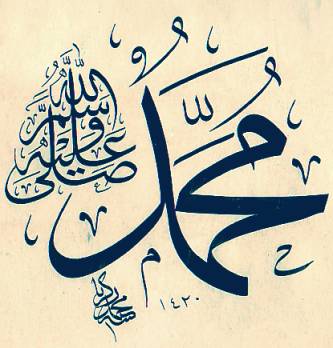
Intention when reciting Salawat
By Naadiyah Ali
Imam al-Haddad preferred to make the following intention when reciting salawat:
“Allahumma I intend by my invocation of salat and salam upon the Prophet to conform to Your Command, to comply with Your Book, and to follow the Sunnah of Your Prophet Muhammad salallahu alaihi wasallam out of love for him, longing for him, and in exaltation of what is due to him; to honour him because he is deserving of this; so accept this from me; by Your Favour and Kindness, and remove the veil of heedlessness from my heart and make me from amongst Your righteous servants.
Allahumma increase him in honour, in addition to the honour You have already conferred upon him, and increase him in glory, to supplement the glory You have given him. Elevate his rank from among the ranks of the Envoys, and his degree from among the degrees of the Prophets. I ask You for your Pleasure and for Paradise, O Lord of the Worlds, and for contentment in the religion, in this world and in the hereafter; and to die whilst living in accordance with the Book, the Sunna and the Jama’a, and by the testimony of faith, without changing or altering it. And forgive me, by Your Favour and Kindness towards me for what I have committed. Indeed, You are the Forgiver and the Merciful.
And bestow salat and salam upon our master Muhammad and his family and companions and give them peace”.
Ameen.
How is your love for me?
By Hatice Baltacı Çolakoğlu
“O Messenger of God, whom do you love most in the world?” He did not always give the same answer to this question for he felt great love for many for his daughters and their children, for Abu Bakr, for Ali, for Zayd and his son Usamah. But of his wives the only one he named in this connection was Aishah. She too loved him greatly in return and often would seek reassurance from him that he loved her.
Once she asked him: “How is your love for me?”. “Like the rope’s knot,” he replied meaning that it was strong and secure.
Every so often ‘Aisha would playfully ask, “How is the knot?”. The Prophet ṣallallāhu ‘alayhi wa sallam would answer, “As strong as the first day (you asked).”
This is such an inspiring conversation. We know that the knot in a rope can be very strong so it is almost impossible to untie. Maybe this is what our Prophet sallaAllahu ‘alayhi wasalam wanted to show us when he answerd Sayyidah Aisha that his love for her was like a knot. Unfortunately, these days we are not that patient in our relationships and do not pay a lot of attention to it, which is maybe the reason for the unhappiness that we go through.
I hope and pray for a better time for the Ummah, where we are trying to reach the love and mercy of our Prophet sallaAllahu ‘alayhi waalam and his belowed wife Sayyidah Aisha.
© Hatice Baltacı Çolakoğlu, Rabi’ al-Awwal 1433/February 2012
By Asma Gill
Allahumma salli ‘ala Sayyidina wa Mawlana Muhammadin wa ‘ala alihi wa sahbihi wa barik wa sallim.
I wanted to share this poem that I feel inspires a love only a true ‘ashiq-e-Rasul can have:
Al-Qadi Yusuf An-Nabahani’s poem praising the Prophet salla-Llahu alaihi wa sallam
I am the slave of the Master of Prophets
And my fealty to him has no beginning.
I am slave to his slave, and to his slave’s slave,
And so forth endlessly,
For I do not cease to approach the door
Of his good pleasure among the novices.
I proclaim among people the teaching of his high attributes,
And sing his praises among the poets.
Perhaps he shall tell me: “You are a noted friend
Of mine, an excellent beautifier of my greatness.”
Yea, I would sacrifice my soul for the dust of his sanctuary.
His favor should be that he accept my sacrifice.
He has triumphed who ascribes himself to him
Not that he needs such following,
For he is not in need of creation at all,
While they all need him without exception.
He belongs to Allah alone, Whose purified servant he is,
As his attributes and names have made manifest;
And every single favor in creation comes from Allah
To him, and from him to everything else.
ALLAHUMMA BARIK ALA MUHAMMADIN WA ALA ALI MUHAMMADIN KAMA BARAKTA ALA IBRAHEEMA WA ALA ALI IBRAHEEMA INNAKA HAMEEDUM MAJEED
A du’a from the Dala’il al Khayrat: Peace be upon you, O Messenger of Allah. Peace be upon you, O beloved of Allah. Peace be upon you, O our master Muhammad ibn ‘Abdullah. Peace be upon you and your pure, good family. Peace be upon you and your wives, the Mothers of the Believers. Peace be upon you and all your Companions. Peace be upon us and on the righteous slaves of Allah.
So, I ask Allah to make my love for His Beloved, a love that is a true love, a sincere love, an everlasting love, an uplifting love, a living love, a love beyond love. Amin!
© Asma Gill, Rabi’ al-Awwal 1433/February 2012
Loving the Beloved
By Tun Wildan
The Prophet, peace and blessing be upon him, said that “None of you will believe until I am more beloved to him than his father, his children and all people.” We hear of this hadith repeatedly and strive to achieve this. This is especially pertinent in this month of the birth of our beloved Prophet. We learn from our teachers that this love needs to shine from within ourselves and spread to its surroundings. Ibn Ataillah Al-Askandari mentioned that the things which are embedded in the recesses of our heart, are manifested in the testimony of our limbs.
Appropriate to this month of the mawlid, I leave you with this beautiful qasida which are sung as a lamentation of the lovers of the beloved throughout the muslim lands – Talama ashku gharami.
For so long I complained my yearning of you, O light of existence,
And I keep calling O Tihami, source of excellent and sublimity.
My hope, my utmost goal is to see you,
As i see As-Salam gate, O He whose essence is purity.
O my brothers, I am a lover, I am infatuated,
Guilty of it, and the praise not-befitting.
O Israfil what a death, the love exhausted me,
I have a strong expectation of the promise, O the loyal of promises.
O light of the prophets, O summit of purity,
O leader of the people of taqwa, my heart is one with you.
Allah invoked peace upon you,
My Lord, Master of all majesty.
It’s enough for me O light of Allah, the separation is too long,
My master, all my life you are my beloved, hasten my meeting with you.
© Tun Wildan, Rabi’ al-Awwal 1433/February 2012
The Resplendent Birth
By Idris Kamal
In the Turkish tradition, the best-known early mevlût was written by the venerable Shaikh Süleyman Chelebi (may Allah sanctify his secret) of Bursa around 1400 CE. It is written in rhyming couplets, a literary form adopted from the Persian.
Its rhythm is simple; the meter is the same as that used primarily in Persian mystical and didactic epics such as Imam Faridu-d Din ‘Attar’s Mantiqu-t Tair and Mevlana Jalalu-d Din Rumi’s Mathnawi. The language is plain, almost childlike, and therefore the poem has not lost anything of its charm even today.
Shaikh Süleyman’s mevlût was often imitated, so that there are about a hundred different versions of mevlût poetry in Turkish; but no other Turkish religious poem can compete with it for the favour of all classes of society. Its first part tells the momentous story of the Prophet’s birth (Allah bless him and give him peace) as Lady Amina (may Allah be pleased with her) experienced it. Full of amazement, she recounts (using traditional imagery) what happened to her at the end of her pregnancy:
Amina Khatun, Muhammad’s mother dear:
From this oyster came that lustrous pearl.After she conceived from ‘Abdallah
Came the time of birth with days and weeks.As Muhammad’s birth was drawing near
Many signs appeared before he came!In the month of Rabi’ al-Awwal then
On the twelfth, the night of Monday, look,When the best of humankind was born-
O what marvels did his mother see!Spoke the mother of that friend: “I saw
A strange light; the sun was like its moth.Suddenly it flashed up from my house,
Filled the world with light up to the sky.Heavens opened, vanquished was the dark,
And I saw three angels with three flags.One was in the East, one in the West,
One stood upright on the Ka’ba’s roof.Rows of angels came from heaven, and
Circumambulated all my house;Came the houris group on group; the light
From their faces made my house so brightAnd a cover was spread in mid-air,
Called ‘brocade’ – an angel laid it out.When I saw clearly these events
I became bewildered and confused.Suddenly the walls were split apart
And three houris entered in my room.Some have said that of these charming three
One was Asiya of moonlike face,One was Lady Mary without doubt,
And the third a houri beautiful.Then these moonfaced three drew gently near
And they greeted me with kindness here;Then they sat around me, and they gave
The good tidings of Muhammad’s birth;Said to me: ‘A son like this your son
Has not come since God made this world,And the mighty one did never grant
Such a lovely son as will be yours.You have found great happiness, O dear,
For from you that virtuous one is born!He that comes is King of Knowledge high,
Is the mine of gnosis and tawhid [monotheism].For the love of him the sky revolves,
Men and djinn are longing for his face.This night is the night that he, so pure
Will suffuse the worlds with radiant light!This night, earth becomes a Paradise,
This night, God shows mercy to the world.This night, those with heart are filled with joy,
This night, gives the lovers a new life.Mercy for the worlds is Mustafa,
Sinner’s intercessor: Mustafa!’They described him in this style to me,
Stirred my longing for that blessed night.”Amina said: “When the time was ripe
That the best of mankind should appear,I became so thirsty from that heat
That they gave me a sherbet in a glass.Drinking it, I was immersed in light
And could not discern myself from light.Then a white swan came with soft great wings
And he touched my back with gentle strength.[As this verse is recited, every participant ever so gently touches his or her neighbour’s back.]
And the King of Faith was born that night:
Earth and heaven were submerged in light!”
Then begins the great Welcome, which all creation extended to the newborn Prophet (Allah bless him and give him peace), whose coming they had expected with such longing, a welcome to the Friend of God in whose intercession at Doomsday all can trust:
Welcome, O high prince, we welcome you!
Welcome, O mine of wisdom, we welcome you!
Welcome, O secret of the Book, we welcome you!
Welcome, O medicine for pain, we welcome you!
Welcome, O sunlight and moonlight of God, we welcome you!
Welcome, O you not separated from God!
Welcome, O nightingale of the Garden of Beauty!
Welcome, O friend of the Lord of Power!
Welcome, O refuge of your community!
Welcome, O helper of the poor and destitute!
Welcome, O eternal soul, we welcome you!
Welcome, O cupbearer of the lovers, we welcome you!
Welcome, O darling of the Beloved!
Welcome, O much beloved of the Lord!
Welcome, O mercy for the worlds!
Welcome, O intercessor for the sinner!
Only for you were Time and Space created…
Adapted from: Schimmel, A. And Muhammad is His Messenger. Kuala Lumpur: Islamic Book Trust, 2008.
© Idris Kamal, Rabi’ al-Awwal 1433/February 2012
Embracing the Prophet ﷺ After Embracing Islam: A Converts Reflection
We were sitting together in a circle in the masjid and today’s talk was about the Prophet Muhammadﷺ. Young men and women, many of whom not born Muslim, moved to sit with us after performing the ‘asr prayer. We had come together to speak about the man whose life was dedicated to teaching us our religion.
One of the young men among us, Jacob, had only embraced Islam a few months earlier and had become immediately passionate about his new faith. As we all sat together Jacob revealed a secret: “I remember when I first embraced Islam,” he said, “I didn’t know that much at all about the Prophet Muhammad, peace be upon him. And, I would see all these people around me just in love with him… I loved Islam… but I did not know why people were so obsessed with him?”
A few other attendees nodded their head in agreement, and a few others cracked a smile. “I know what you mean,” said Nancy, “at first I wondered the same thing.” Nancy, also a convert to Islam, had embraced the religion only a few months prior to Jacob. Having always been interested in religion, she had become interested in Islam after meeting some Muslims, and became open to learning more. Like Jacob she had found in Islam a religion that she could embrace. She liked the dignity that Islam afforded women, the emphasis upon prayer, and the direction that it gave her life; though, like Jacob, at the time of her conversion she knew very little about the Prophet Muhammad ﷺ.
Although I was asked to lead them in the discussion, I was no different from them. When I embraced Islam it was due to the beauty and depth of the Qur’an, which nothing but a light placed in my heart had convinced me to firmly believe to have a divine origin. And, like Jacob and Nancy, I had only known initially that the Prophet Muhammad ﷺ was the one to whom the Qur’an was revealed, and perhaps a few stories about his blessed life.
As we sat there together and continued to share our stories, I realized something I had not before: In each of our personal stories, including my own, the example of the Prophet ﷺ had increasingly taken on a more critical role in our daily lives and in the strength of our faith. Though we did not know that much about him initially, when we were going through a trial a Muslim friend would relate to us a story about Muhammad ﷺ going through a more difficult trial, and so we would try harder to be patient. When we were having difficulties with friends or family, someone would inform us about how the Prophet ﷺ treated other people and we would try harder to be like him. And, as we were learning how to properly worship God, we realized how perfectly the Prophet ﷺ worshiped Him.
Though we each had known little about the Messenger ﷺ when we first embraced Islam, by following Islam his example became increasingly important at each step along the way; and so did our love for him ﷺ. In fact, his life and example taught us, and still teaches us, how to follow the faith we had been moved by God to embrace. While we had known little about the Prophet ﷺ, by embracing Islam we had come to discover–through our striving to achieve (as close as possible) a resemblance to his exalted level of character–that he truly is the one worthy of praise and emulation.
May the peace and blessings of God be upon him and his folk.
© Ibrahim J. Long, Rabi’ al-Awwal 1433/January 2012
Unveiled
By:Mona Haydar
Lovers are veiled from the beauty of a full moon
until they have their beloved’s face and form to compare it to.
It comes to be that there is nothing more magical
nothing more Majestic
than the voice of the beloved
calling their name.
And when they sleep
they see him,
and by day they pray
he will visit them by night
to bless them with his presence-
with beautiful dreams of his radiant face
and his regal countenance-
and so their lives become devoted
to that which pleases him,
so that they may deserve his companionship in a later life,
because in this life
they came too late to be enchanted by his physical light.
Cycles of the moon separate them and yet they yearn for him.
The moon burns and blazes brightly like the beloved’s legacy.
His path, rightly guided with the brilliance of the moon-
like the brilliance of his blessed face
a shining light, gently guiding towards freedom.
Only upon true tawhid is there a chance.
The contingency of this tawhid is that of belief in beloved:
First stemming from a respectful reverence
into a full blown deeply seated love affair,
where the shape of his generously granted smile is memorized
and mesmerized
is all there is.
He is all this world could ever dream to be
and so he came to be
and was
and made way for us.
Made it clear that the path to tawhid
is only through he, the beloved.
Man who consumes waking thoughts
and the dream world too.
Like the moon
he testified to truth.
Found and gifted annihilation
in complete submission.
Like the way he lived
when king was a title within his reach-
instead he reached for hearts,
with his touch so real and deep
he reached into centuries and destinies
and is a hearts to keep.
His legacy burns in hearts,
passionately blazes and lights the way
for those desiring the path.
He shines brighter than the moon,
the moon, which rises and falls
in memory of lighting his noble face.
He had:
wheat colored skin
because he was wholesome.
Solid and secure,
he was fashioned to become
the elegance
that blessed man with etiquette.
A body that shined like silver,
broad and beautifully built.
A toothy pearly brilliant white smile
that his noble face was rarely seen without.
Fully fleshed fingers and feet
and eyes
black like night.
Jabir (r) said: “I once saw RasululLah on the night of a full moon. At
times I looked at the full moon and at times at RasululLah, I came to find that RasululLah was more beautiful and radiant than the full moon.”
Split the moon in two-
and was more beautiful
than two moons could ever be.
So you see,
lovers are veiled from the beauty of a glorious moon
until they have Muhammad’s face to compare it to.
May we be from his blessed lovers.
Peace salutations and blessings be upon him.
© Mona Haydar, Rabi’ al-Awwal 1433/January 2012
A kind soul (may Allah bless this person) shared something a noble Moroccan Shaykh (may Allah bless and preserve him) said:
‘Weeping is a prayer that will surely be answered.’
SubhanAllah! When I read this statement, I was really moved and thought to myself that this again shows the Mercy of our Lord and how He has created so many different ways for our supplications to be answered. Alhumdulilah.
I was further reminded of the famous story of the passing away of the Prophet sallaAllahu ‘alayhi wasalam’s son Ibrahim, when the Prophet sallaAllahu ‘alayhi wasalam wept, and said to the Companions when they were surprised by this:
‘Not this do I forbid. These are the promptings of tenderness and mercy, and he that is not merciful; unto him shall no mercy be shown. O Ibrahim, if it were not that the promise of reunion is sure, and that this is a path which all must tread, and that the last of us shall overtake the first, verily we should grieve for you with a yet greater sorrow. Yet, we are stricken indeed with sorrow for you, O Ibrahim. The eye weeps, and the heart grieves, nor say we anything that would offend the Lord.’ (Martin Lings, Muhammad, p. 325)
So next time when we are overwhelmed by tears, we should remember that they are a form of prayer, and the All-Compassionate, All-Loving, All-Hearing is listening. He understands our tears, and the pain/distress/hurt/sadness/anguish they express. There really is no other comfort other than knowing He knows how we feel, and whether we express that through tears, words or deeds, He is aware. Just like silence can sometimes be the most powerful expression of one’s feelings, so can crying- especially if it means one’s prayer is to be answered through that.
This is dedicated to all my brothers and sisters around the world who are facing tribulation and hardships. May the Most-Loving, Most-Merciful, Most Gentle be with you, ease your pain, remove your hardships and answer your prayers. Amin ya Rabb!

If you can just get through this day,
Drag one foot after the other,
Your broken heart will fade away.
Again you’ll learn the words to say,
Teach yourself how not to suffer,
If you can just get through this day.
Battle through the workplace affray,
Do one task after the other,
Your broken heart will fade away.
The world will cease to seem so grey,
Eyes and smiles will soon recover,
If you can just get through this day.
Clear piles of paper from your tray,
Draw one breath after the other,
Your broken heart will fade away.
I promise you will be okay,
And perhaps forgive that lover;
If you can just get through this day,
Your broken heart will fade away.
“People are like stained-glass windows. They sparkle and shine when the sun is out, but when the darkness sets in, their true beauty is
revealed only if there is a light from within.”
~ Elizabeth Kubler Ross

 Healing Hearts
Recent Comments