
You are currently browsing the category archive for the ‘Prophet sallaAllahu alayhi wasalam’ category.
I received a text message from a special friend a couple of weeks ago. Within the text message, my friend mentioned to me that if you have love for the Prophet sallaAllahu ‘alayhi wasalam in your heart, then calamities are purification for you and not punishment. This poignant reminder really moved me so I asked my friend to elaborate on this. She wrote the following out for me, and with her permission, I am posting it here for everyone to benefit from insha’Allah ta’ala:
……….
Whenever time caused me any distress and I took refuge in him.
I received shelter from him, which was not misused.
I did not ask for the wealth of the two worlds from his hand.
But I received a great gift from the best hand that was ever kissed.
Al-Burdah
There are certain verses from the burdah that keep coming back to me and this is one of them. It seems to come forth in times of calamities and brings peace and tranquillity to the heart. For he sallaAllahu ‘alayhi wasalam is the key to our happiness. He is there for us and he feels our pain. When we remember him it removes our sadness and replaces it with peace. He is the key to Allah and he is the centre of our lives.
Recently I sat in a dars about the 20 benefits of salawat. It was a most blessed gathering and there was not one single eye that didn’t stream with tears.
One of the most poignant things that was said that day for me was that Allah will never punish a heart that contains the love of the Prophet sallaAllahu ‘alayhi wasalam within it. If you suffer calamities or difficulties then know it is purification for you and not punishment. For Allah will never punish you if you have love for his Beloved sallaAllahu ‘alayhi wasalam.
Loving him is better than going for jihad or setting a slave free, and making salawat has more effect than when water is put on a fire.
The other main point taken was that one of the benefits of making salawat is that your name will be mentioned to the Prophet sallaAllahu ‘alayhi wasalam. A special angel on the grave of the shareef will give the names of all of creation. There is no one person who gives salaam without this angel telling the Prophet sallaAllahu ‘alayhi wasalam. He will know you and your father (I think this is something great to think about especially for reverts) as the angel will mention so and so, son or daughter of so and so gives salaams.
It is enough to know that Allah and His beloved know your name. If he mentions your name or remembers you then surely you will go steps towards Allah.
So we undergo distress, sadness, loss and calamities but our shelter is him. To know him, remember him and love him. For some of us reading this, may at one time in our life not even known his name but it is true to say ‘we received a great gift from the best hand that was ever kissed’ when we entered into Islam.
…………
Whilst on the topic of loving the Beloved Prophet sallaAllahu alayhi wasalam, I would also like to share something which Dr. Asim Yusuf (aka Talib al-Habib) narrated to us at the al-Ghazali retreat in Spain last week. Dr. Asim mentioned how when the time came to leave his Shaykh (may Allah elevate his rank) in South Africa, he was feeling really anxious. He said to his Shaykh that he doesn’t know what he will do without him now that he will be going back to the UK, and how they will be so far apart. His Shaykh advised to carry the Beloved sallaAllahu a’alayhi wasalam in your heart wherever you go, and you’ll never be alone. Subhan’Allah! This was a very strong and moving reminder for all of us sat in that gathering. It reminded us of how at times when we feel alone or are going through trials/tribulations, we should only have to look inside our hearts and find RasulAllah sallaAllahu alayhi wasalam to guide and comfort us; for he sallaAllahu alayhi wasalam is our key to the Lord, and it’s only the Lord who can move us from one state to another.
May the Beloved sallaAllahu ‘alayhi wasalam never leave our hearts. May we seek comfort with him in this life and the akhirah; may he be our companion in hardship and ease and may we sincerely humble ourselves in thanks to Allah. Allahumma Amin ya Rabb!
Please may I request you recite al-Fatiha and make du’a for my friend who took time out to share and write the above, and also for Dr. Asim.
THE RAJAB LETTER
by Sidi Amjad Tarsin
This is an excerpt from the book Kanz Al-Najah wa As-Suroor (“The Treasures of Success and Happiness”), a book highlighting the special qualities of each month. As the blessed and holy month of Rajab approaches, hopefully this information will be of use in allowing us all to appreciate it and benefit from it:
So, my dear friend, put forth a great effort in the month of Rajab, may Allah have mercy on you. It is the season of great profits, so take advantage of your time! Whoever is spiritually sick due to their sins – know that the medicine has come. Know that Rajab is a virtuous month in which worship is gloriously rewarded – especially fasting and seeking repentance (istighfar).
Also, making du’a during the eve of the first of Rajab is highly recommended. The Prophet, peace and mercy be upon him, said, “There are five nights in which du’a (supplication) is not rejected: the eve of Rajab, the 15th night of Sha’aban, the eve of Friday, on the eve of Eid Al-Fitr, and on the eve of Eid Al-Adha.” [Al-Suyuti in his Al-Jami’].
On the 27th night of Rajab, the Prophet, peace and mercy be upon him, was taken on the Isra wa Mi’raj (The Night Journey and Ascension to the Heavens). This was a great and glorious night, as is known to most Muslims, in which the Prophet, peace and mercy be upon him, met his Lord and was given the commandment to perform the 5 daily prayers.
Rajab is one of the four sacred months mentioned in the Quran (the four months are : Rajab, Dhul Qi’da, Dhul Hijjah, and Muharram):
{The number of months is twelve according to God, in the decree of God, on the day God created the heavens and the earth; and four of them are sacred} (9:36)
Rajab is Allah’s month in which He pours His Mercy upon the penitent and He accepts the actions that people have done for His sake. The Prophet, peace and mercy be upon him, said, “Rajab is the month of Allah, and Sha’aban is my month, and Ramadan is the month of my Ummah.” (Imam Al-Suyuti in Al-Jami).
Scholars say: Rajab is the month of repentance (istighfar), and Sha’aban is the month of sending peace and mercy (salawat/durood shareef) upon the Prophet, and Ramadan is the month of Qur’an.
One highly recommended act to do is say 70 times after the Fajr and ‘Isha prayers every morning and night of Rajab:
Transliteration: “Allahuma ighfir li wa Arhamni wa tub ‘alayya.”
Translation: Oh Allah forgive me, have mercy upon me, and grant me repentance.
Sayyidna ‘Ali, may Allah be well pleased with him, used to allocate extra amounts of time for worship on four nights – the first night of Rajab, the nights before the two Eids, and the 15th night of Sha’aban.
It is also highly recommended to say the following Prophetic prayer (known as Sayyid Al-Istighfar or the Master of Repentance) 3 times every morning and every evening in Rajab:
Transliteration: Allahuma anta rabi la ilaha illa ant, khalaqtani wa ana ‘abduk, wa ana ‘ala ‘ahdika wa wa’adika ma astata’at, ‘authu bika min shar ma san’at, abu’u laka bi ni’matika ‘allaya wa abu’u bi dhanbi, faqhfir li fa’innahu la yaghfir al-dhunub ila anta.
Translation: O Allah, you are my Lord, and there is no god but you. You created me and I am your servant, and I am upon the convenant to the best of my ability. I seek refuge in you from the evil I have brought upon myself. I admit all the blessings you have given me and I admit my sins, so forgive me, for no one can forgive sins save You.
And success is from Allah
Jazaka’llahu khayran to Ustadah Shamira Chothia from Zaytuna Institute for sending me this beneficial reminder. May we all reap the benefits and blessings of this month, and may it provide us the means of getting closer to Him ta’ala. Amin ya Rabb!
I was going through some very old e-mails and came across a very touching poem which a beautiful friend had forwarded to me a few years back. I believe the original poem was written by Mary Stevenson; this poem has been edited and the beloved Prophet sallaAllahu ‘alayhi wasalam has been added to it.
“One night I had a dream. I dreamed I was walking in the Blessed City of Madinah with my Beloved Prophet sallaAllahu ‘alayhi wasalam. Across the beautiful sky flashed scenes from my life. For each scene, I noticed two sets of footprints in the sand, one belonging to me and one to my Beloved Prophet sallaAllahu ‘alayhi wasalam. When the last scene of my life flashed before me, I looked back at the footprints in the sand. I noticed that many times along the path of my life there was only one set of footprints. I also noticed that it happened at the very lowest and saddest times of my life when I was suffering from anguish, sorrow or defeat. My heart was grieved by this immensely. I turned to my Beloved Prophet sallaAllahu ‘alayhi wasalam and, with tears in my eyes, humbly asked, “Ya Rasoolullah, sallaAllahu ‘alayhi wasalam you promised me that if I followed you, you would walk with me always, and never leave my side. But I have noticed that during the most trying times of my life there is only one set of footprints. I don’t understand why, when I needed you most, you would leave me.” My Beloved Prophet sallaAllahu ‘alayhi wasalam held me close and whispered with his sweet, fragrant breath, “My precious child, I love you and would never leave you. During your times of trial and suffering when you see only one set of footprints, it was then that I carried you.”
May Allah grant us the honour and blessing of meeting RasulAllah sallaAllahu ‘alayhi wasalam in our dreams and in a waken state, and may we be granted his sallaAlahu’alayhi wasalam’s intercession on the day of judgement. Amin ya Rabb!
I was going through my journal (I basically keep a book where I jot down any gems, words of wisdom, profound quotes/stories etc I pick up from influential writers, scholars, poets etc) and came across some points I had noted whilst listening to one of Shaykh Husain Abdul Sattar (may Allah preserve him) lectures a few years ago. I thought I’d share the points here as it’s something which I’ve been currently reflecting on.
“Understanding Sabr”
The noble Shaykh begins the talk quoting the following verse from the Qur’an al-Karim:
In Allaha ma’a al-sabireen (Verily Allah is with those who have sabr).
The Shaykh talks about the people of Sabr (patience). He mentions that there are three types of patience that a person who believes in Allah ta’ala exhibits; and when they exhibit all three types of patience, irrespective of the situation that they face, that is when the truest meaning of the verse (In Allaha ma’a al-sabireen ) comes within their lives.
Types of patience:
1. Sabr on the good deeds that we do. If we are doing good deeds for the sake of Allah ta’ala, we need to be patient on the deed itself, and be regular in how we do it. We find this in the Sunnah of the Prophet sallaAllahu ‘alayhi wasalam; if he sallaAllahu ‘alayhi wasalam prayed a particular prayer, he would continue with that and not give it up. The Shaykh advised that we must be careful in what we add to our schedule; once we add it, we need to be consistent and keep up with it until we meet our Lord ta’ala.
2. Once we have implemented a certain deed and have added it to our schedule, we continue and wait patiently for its effect. For example, if we decide to do tasbi after Fajir, we must be patient with the results of it.
3. We must have Sabr when Allah ta’ala bestows a difficult situation on us, and that we are content with it. We shouldn’t complain, instead realise that the difficulties that undergo in this world are to purify us. We cannot worship all the time or stay away from so much sin; however if we remain patient, Allah ta’ala draws us closer to Him!
Overall, we must remember that whatever we are going through is from Allah ta’ala. Permanent difficulty is distance from Allah ta’ala, and that is what we have to complain about! Thank Allah ta’ala for the difficulties, and know that Allah ta’ala is with the people who have Sabr!
The above is just food for thought and reflection for myself (first and foremost.), and may it benefit all those who read this blog entry, inshaAllah ta’ala. Please note that these are just some of the points which I made whilst listening to the lecture, therefore please do not take them as direct quotes from the Shaykh- I’ve paraphrased! I would strongly recommend listening to the actual lecture which can be found here.
 “17 Benefits of Tribulation” is a remarkable talk given by Shaykh Hamza Yusuf many years ago, based on the treatise of the seventh century scholar Al-`Izz Ibn `Abdus-Salam – Sultan of the `Ulama’ (may Allah be pleased with him).
This must be one of the talks I actually listen to quite often, especially when I’m feeling down. All of Shaykh Hamza’s talks leave a strong impact on one’s heart; however after listening to this specific talk, it leaves the person with a deeper sense of inspiration and himmah to snap out of the “feeling low” state and to invigorate the high aspirations one has set themselves.
One of the profound analogies Shaykh Hamza makes in the talk, and which I love is:
…we/you are all in the ocean of this duniya; if you panic or have anxiety about things or situations, you will drown. Just RELAX, and you will float because you are in good hands!…. [Paraphrased]
Shaykh Hamza focuses on the hardships the Prophet sallaAllahu ‘alayhi wasalam went through but never allowed any of those afflictions to perturb him. After listening to this lecture, I can say for sure that one will have a different attitude and outlook on calamities and hardships; and it will heal the broken or agitated heart no doubt.
The 17 Benefits of Tribulation are listed below:
- You realize the power of Lordship over you.
- You realize your object servanthood and your complete state of resignation and brokenness before the will and power of God.
- Sincerity to God; one has no place of return in putting off or defending against the calamity except to Him. It makes you sincere because the muhsin is the one who call on God without any shirk. A moment of ikhlas in this world is enough to save a person.
- He returns to God and suddenly is fervent in his desire of his Lord.
- It leads to a humbled state before God and it leads to prayers (du’a) that you call on God.
- You’re forbearing towards the One who has afflicted you.
- You forgive the one who has wronged you.
- To be patient during the tribulation.
- To be happy about what’s happening because of those benefits.
- To be grateful for it.
- Purification that these calamities have towards peoples’ wrongs and sins.
- Compassion that God enables you to show to people who are in tribulation and to help them.
- Tribulation gives you the blessing of having true knowledge of the extent of well-being.
- God has prepared rewards for the calamities that you’ve beared patiently or with contentment.
- What is hidden inside the folds of these calamities are blessings.
- Tribulations prevent you from arrogance.
- Contentment. Tribulation afflicts the good and the evil (people), whoever doesn’t like it, it’s on Him, he’s lost the dunya and the akhira. Those who are pleased with it, it’s because he knows it, because paradise is better than anything in this world and if these tribulations are what it takes for him to get to paradise, then he’s content with it.
[Courtesy of ihsaan.wordpress]
I strongly recommend everyone to buy a copy of this lecture and listen for themselves.
May Allah elevate Shaykh Hamza’s rank in both worlds, and protect him from all harm and evil. May we use each trial and tribulation as a means of reaching closer to Him Ta’ala.
Forgiving someone is not always easy, especially if they have hurt us quite deeply. Very often, it’s our egos which get in the way of forgiving someone.
I was listening to one of Ustadha Asra Adiba’s (may Allah subhanahu wa’ tala bless and preserve her) podcasts where she mentions the following quote, which I found incredibly profound:
“It may be infinitely worse to refuse to forgive than to murder, because the latter may be an impulse of a moment of heat, whereas the former is a cold and deliberate choice of the heart.” ~ George MacDonald
In other words, George MacDonald is saying that to refuse to forgive is worse than murder and a COLD and DELIBERATE choice of the heart!! The words Cold and Deliberate striked me, and really made me sit back, think and reflect. It made me think about the times I found it so difficult to forgive someone immediately.
Over time and through experience, we learn that in effect it’s better for us to actually forgive a person than to carry resentment in our hearts. I recall one of our beloved shayukh saying how our emotions are heavy baggage and prove to be obstacles in our journey to Allah subhanahu wa’ tala . The lighter our bags, the quicker we shall reach Allah subhanahu wa’ tala; the more emotion (anger, hatred, sadness, jealousy, envy etc) we have within us, the more it will slow down our journey to Allah subhanahu wa’ tala as we will waste a lot of time dealing with and overcoming such issues. Therefore we must quickly forgive, close that chapter and move on!
Let’s not forget, our beloved Prophet sallaAllahu alayhi wasalam was the most forgiving person, and regardless of how he was treated sallaAllahu alayhi wasalam, he was always ready to forgive. So in essence, forgiving others is the prophetic way and being the followers of our beloved Prophet sallaAllahu alayhi wasalam, it’s something that we should strive to embody within our characters. (Reminder to myself first and foremost)
May Allah soften our hearts and may we find it easy to follow the prophetic way of forgiving each other easily.
Ustadha Asra Adiba is a hidden gem, and her podcasts are absolutely brilliant as she covers a plethora of topics which affect our daily lives. I would highly recommend listening to them. May Allah bless and preserve her, and allow us to benefit from her. Allahumma Amin ya Rabb!
The Islamic year of 1430 is about to start in a day or so (depends where you are located on the globe!); so will the Gregorian calendar year of 2009. As the New Year approaches, it’s time to turn over a new leaf.
It’s good to leave each day behind,
like flowing water, free of sadness.
Yesterday is gone and its tale told.
Today new seeds are growing.
~Mawlana Rumi
The new Islamic year begins with the blessed month of Muharram. Our beloved Prophet sallaAllahu alayhi wasalam said:
“The best of fasts besides the month of Ramadhan is the fasting of Allah’s month of Muharram.” (Sahih Muslim)
Aunty Noor has posted some beneficial information regarding the significance of this very special month- check it out!
May the New Year bring much joy, peace and serenity to our hearts. May Allah subhanahu wa’ tala bring ease, openings and success to all those who have been afflicted with hardships and trials. Over and above all, may we live each day, each second in His remembrance, and in gratitude to Him; and may we be closer to Him subhanahu wa’ tala, and our beloved Prophet sallaAllahu alayhi wasalam. Allahumma Amin ya Rabb!
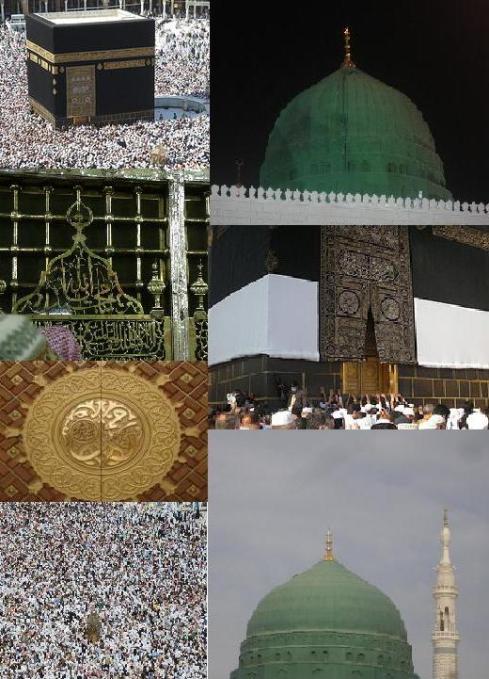 Exactly one year ago, I arrived back home after my experience of a lifetime: the Hajj. Not a day goes past where I don’t think about the Hajj; what it felt like, and what we did on the day of Arafat; the night we spent in Muzdalifah; staying at Mina; pelting the Satan and so on. As each day goes past, the yearning to go back increases.
I sorely miss sitting near and gazing at the Kaaba; circumblating the Kaaba; visiting the Rawda of our beloved Prophet sallaAllahu alayhi wasalam and conveying salams; sitting outside the dome of felicity in the middle of the night, feeling the soothing breeze of Madinah and sending salawats upon our beloved Prophet sallaAllahu alayhi wasalam.
I still haven’t quite figured out where I’ve left my heart; whether it’s at the Kaaba, or at the Rawda, or perhaps it’s somewhere in the dust of Madinah- I just don’t know, but I don’t really care, as long as it remains somewhere in the blessed sanctuaries. The yearning will take us all back there sometime soon inshaAllah ta’ala. In the meantime, I guess we just have to keep our experiences alive in our hearts.
When I returned from Hajj last year, I was advised that the best way to keep the spirit of Hajj and experience alive in the heart was to share as many stories of the Hajj experience as possible (not the really personal ones of course!). Therefore I wrote a short journal of my experience. Alas, I didn’t have a blog then, but our beloved aunty Noor very kindly posted it on her amazing blog back at the time.
In spirit and remembrance of the Hajj again, I thought I’d post it here. I pray we all are invited to the blessed lands soon and often!
Amin ya Rabbil ‘alameen!
The Hajj Experience (2007)
The journey begins from home
The much anticipated day arrived, the day we were leaving everything behind to depart to the blessed lands to perform Hajj- the journey of a lifetime. The thought of being chosen and invited by the Almighty Allah to perform the pilgrimage at such a young age was quite overwhelming. By the grace of Allah Ta’ala, I was fortunate enough to attend the Deen Intensive Rihla in Madinah and Makkah last year, where I also had the opportunity to perform my first Umrah, therefore I was confident that I would still be familiar with the Umrah rituals, and surrounding areas in Madinah and Makkah. However, I decided to erase my Rihla and Umrah experience from my mind temporarily, as I knew Hajj was going to be a totally different experience. I wanted to embark on my journey with no expectations whatsoever, and to avoid making comparisons between both experiences.
Although I didn’t have much time to prepare for my Hajj trip, I managed to study the Hajj course on SunniPath with Shaykh Sohail Hanif. The course did prepare me to a certain extent of what Hajj will involve, and the rituals that we must perform in order to fulfil the obligations of Hajj. However, I knew I wasn’t going to fully know what Hajj is all about until I practically experienced it myself.
My heart was feeling really heavy for some reason and I couldn’t decipher why. I embraced my mother and father tightly, and was really sad to leave them, because I knew that they were going through a very tough time. We (my brother, his wife and I) then met up with the rest of the group at Aylesbury Mosque, and we all made our way to Heathrow Airport.
The waiting around at Heathrow airport enabled us to bond with fellow pilgrims. Although I knew some of the people from our group like Mas’ud bhai & family, some fellow companions I met for the first time in my life, which resulted in interesting introductions! By this time, my excitement for Hajj was increasing, I just could not wait to get on board and start my pilgrimage! Furthermore, I was really looking forward to seeing and meeting our beloved Aunty Noor in Madinah again.
We had a rather long routed flight: Heathrow, Cairo, Sanaa (Yemen), Jeddah and then Madinah. The view from the aeroplane when we were flying into Sanaa airport was quite interesting; all we could see were high mountains, which were very dry. We stayed at Sanaa airport for approximately 3 hours. I remember saying to Mas’ud bhai that it would be brilliant if we see any of the Haba’ib Shayukh at the airport. We knew they would be going on Hajj as well, so there could have been a possibility. But sadly, the dream didn’t come true.
When we got to Jeddah airport, we had prepared ourselves mentally to be stuck at immigration for a few hours at least, but by the grace of Allah Ta’ala, we all cleared within an hour. However, there was a change of plan; we were initially supposed to fly from Jeddah to Madinah but due to some complications, we had to go via bus.
Madinah
So after nearly three days of travelling, we reached Madinah, the city of our Beloved Prophet sallallahu ‘alayhi wa sallam. Alhumdulilah, we felt like true pilgrims. I reflected on how in the olden days, people would set off for Hajj weeks and months in advance, and the trials they had to face during their travels. Despite the exhaustion, I was really eager to see the green dome of felicity, pray inside the mosque, and visit the Rawdah of our Beloved Prophet sallallahu ‘alayhi wa sallam. However, I didn’t want to meet our Beloved Prophet sallallahu ‘alayhi wa sallam, looking really tired and messy! I felt it was really bad adab to go in such a state, so thought it was necessary to look afresh and tidy. I also arranged to meet aunty Noor shortly after; I just couldn’t wait any longer!
As I walked through the courtyard of our Beloved Prophet sallallahu ‘alayhi wa sallam’s mosque, my heart was dancing with joy and I still couldn’t believe where I had finally arrived. The place was overcrowded with people from all different nations and cultures. The view was quite extraordinary; I had never in my life seen so many different people, different in their physique and attire, but the fact that we all worshipped the same God, we are visiting the same Prophet sallallahu ‘alayhi wa sallam, and the fact that we are all the same in the eyes of the Almighty Allah, it was a powerful thought and feeling indeed.
I felt really emotional as soon as I stepped inside the mosque, but prayed my 2 rakats and then engaged in Du’a. I really wanted to visit the Rawdah of our Beloved Prophet sallallahu ‘alayhi wa sallam, but it wasn’t open for the women at the time. Soon after I met up with aunty Noor and we spent hours together. The Rawdah was normally open for women after Isha prayers, so aunty Noor agreed to take me to the Rawdah the same evening after 9pm. When we got to the Rawdah, it was just congested with women, and in order to get inside, we had to go with a group. The groups were allocated according to the country you came from, or language you spoke. There was a lot of pushing going on, and we decided not to proceed further, as we didn’t want to dishonour our Beloved Prophet sallallahu ‘alayhi wa sallam, by pushing and hurting fellow Muslims. Aunty Noor and I went and sat outside the Green Dome of Felicity instead, and made Du’as for everyone. It was really beautiful sitting there; feeling the breeze of Madinah, and knowing how physically close you are to the Prophet sallallahu ‘alayhi wa sallam’s, grave, it was all quite overwhelming.
I was unsuccessful in getting into the Rawdah on a couple of occasions, mainly because it was flooded with women, and I did not want to be pushed, or push any one. On one occasion, the female guards refused to let me go with the Pakistani group! They insisted on me to go with the Iraqi group, and would not listen to me when I affirmed I’m Pakistani! I even tried conversing in Urdu with them so they would believe I was Pakistani, but still they were convinced I was of Iraqi origin! I didn’t want to cause any further argumentation, so went to the back of the queue, and sat there. I started conveying my Salams to our Beloved Prophet sallallahu ‘alayhi wa sallam, from where I was sat. I thought that the Prophet sallallahu ‘alayhi wa sallam, is already aware of who is here and who is not, who is at the Rawdah, and who cannot get inside the Rawdah, no doubt he sallallahu ‘alayhi wa sallam, will hear my Salams. Shortly after, they allowed the Pakistani group of women to enter the Rawdah. I thought to myself that there is no harm in trying again; the worst that will happen is that they will refuse to let me go in, but I was prepared for that. By the grace of Allah, and the Prophet sallallahu ‘alayhi wa sallam’s, invitation, I somehow managed to walk pass the security guards without being questioned or stopped! As soon as I got onto the green carpet, I started praying my 2 rakats, but I was pushed from women behind me, and from both sides. They continued to do this until I was right at the front! Alhumdulilah I thought, but equally I was sad to have had to broken my prayer because of being pushed. I started reading my two rakats again, without being pushed this time. We were given about 15-20 minutes inside the Rawdah, all of the guards were telling women off for making supplications and saying how it was a ‘bida’ to say Salams to the Prophet sallallahu ‘alayhi wa sallam, but everyone ignored their pleas! Tears were flowing everywhere, the women were conveying their Salams, and showing their love to the Prophet sallallahu ‘alayhi wa sallam.
Leaving the Rawdah was heart-breaking, I just wanted to spend more time there talking to our Beloved Prophet sallallahu ‘alayhi wa sallam, and making lots of Du’as.
We were in Madinah for only 5 days, we begged our Hajj tour operator to extend our stay in Madinah, but due to logistical reasons, they were unable to. Everyone was quite emotional to leave Madinah, but equally grateful to have visited the Beloved sallallahu ‘alayhi wa sallam, before performing Hajj.
Now it was time to move onto the next stage in our journey: Makkah to perform Umrah and then Hajj after a few days.
Makkah
We got to Makkah slightly before Fajir, but were faced with some unexpected inconveniences which outraged everyone in the group. I was as equally disappointed and annoyed with the situation, but felt that nothing was going to be resolved any time soon, so decided to go and perform my Umrah in the interim.
I managed to perform the Umrah with ease, although I decided to do Tawaf on the 2nd floor to avoid the crowds, and concentrate on my supplications. When I saw the Kaaba for the first time on this trip, my feelings and emotions were somewhat different than seeing the Kaaba the very first time in my previous trip. In fact, there was a different feeling each time I laid my eyes on the Kaaba, something which is beyond words; a very deep and personal connection which I simply cannot express and share. Its intensity is something which an individual has to experience themselves in order to really know what it feels like, but the feeling should most definitely be treasured.
We had 6 days in Makkah before we were to depart to Mina for the actual days of Hajj. During the 6 days, we were advised to do as many Tawafs as we can around the Kaaba, but at the same time try not to over do it, as we needed a lot of energy and strength during the actual days of Hajj. I found doing Tawaf round the Kaaba downstairs really difficult because it was just overcrowded with people. Also I felt that I couldn’t actually concentrate on my supplications because I would constantly be in fear of being pushed and squashed by people. This got worse as the days of Hajj drew closer; crowds were getting larger and larger, day by day. In order to avoid the crowds, I did most of my Tawafs on the 3rd floor, the roof of Masjid Haram. Initially I thought it would take me twice as long, but in effect it’s the same distance as doing Tawaf on the second floor. I felt doing the Tawaf on the 3rd floor more beautiful because it was less crowded, and the view was just spectacular. I was able to see pilgrims from the top performing Tawaf round the Kaaba downstairs, and at times I couldn’t even spot an empty space! SubhanAllah, you could really feel the intensity of being at such a place.
Just like in Madinah, there were people from all different nations and cultures in Makkah as well. The Malaysians and Indonesians looked really cute as they all dressed the same, according to their respective groups, but no matter what happened, they would not let go of each others hands! This proved to be quite dangerous for the poor souls who were actually trying to get through, but I guess it’s the way they had been trained. I also noticed how they were really calm in their conduct towards others, and displayed good adab, along with the Turkish people. If they accidentally stepped on you, they would come back and kiss your hand (I’m talking about the women kissing hands of other women!). I found this gesture really beautiful, and it showed their compassion for other fellow Muslims. On the other hand, I would bump into people who were really rude and aggressive in their conduct, and I witnessed a lot of selfishness, which was really sad. But then I realised that this is the true state of our Ummah; in the real world, it’s all about me, me and me! Getting through these crowds required a lot of patience. We were taught that no matter what happens, we must not retaliate or show any aggression. This for me was a great lesson in enduring patience, and improving ones character and relations towards others.
I also witnessed people who were not in a good form physically, but I was moved to see their struggle, determination and commitment to Almighty Allah. They were all working as hard as they could, despite not being physically fit/well, just to please the Almighty Allah. It really did make me realise of the blessings Allah subhanahu wa’ tala has bestowed upon me, and how I realised that there is more to life than just the outward form. I know our Shayukh have always taught us this, but to accept it was quite difficult, especially since the culture and society we come from, pays so much attention to the necessity of the outward form being beautiful/attractive.
I was happy to have met up with one of my really close friends, “F” in the Kaaba. She lives miles away from me, and I never get to see her so it was a great blessing from Allah Ta’ala that we happened to be on Hajj the same year and in Makkah at the same time.
I was really disturbed to see all those sky scrapers just outside the Kaaba. I had read articles in the past regarding them, but wasn’t really sure what people were debating about until I witnessed it all myself. For some reason, I was really missing Madinah even in Makkah. The only thing I loved in Makkah was the Kaaba itself. I felt at peace when I was inside Masjid Haram and around the Kaaba. It was really sad to see such commercialism just outside the blessed sanctuary; it kind of makes you lose that spiritual connection you build yourself up to feeling.
Mina
On the 8th Dhul Hijjah, all pilgrims proceeded towards Mina. Half of our group went to Mina the night before on the bus as they had children with them, or were physically unable to walk. I decided to walk with the other half of our group. We left after Fajir, and it took us 2 hours to reach Mina by foot. I really did feel like a pilgrim walking to Mina, whilst reciting the Talbiyya! I reflected on how our Beloved Prophet sallallahu ‘alayhi wa sallam, walked to Mina, and it’s an honour for us to even be following his footsteps.
We prayed 5 Salats in our tents in Mina, before proceeding to Arafat the following day. We then returned to Mina on the 10th Dhul Hijjah and stayed in the tents until the 12th. Although I got along with everyone in our Hajj group, I had spent little time with them as I wanted to do my rituals and Ibadah alone; i.e I would go to the Kaaba or Masjid Nabi by myself, where as other women in the group would go in small groups together. Therefore, in Mina I had the opportunity to spend time and bond with the women from our Hajj group. Everyone got on really well, Alhumdulilah and there were no arguments or fights! Mas’ud bhai’s little daughter and I bonded really well. Masha’Allah she had been a brave and patient little soul throughout the journey, but was missing her brothers a lot. She would often sing songs saying their names. Whenever she would spot me, she would come and sit on my lap and play with me, however she couldn’t say my name so decided to name me Maryam! 🙂 And what a beautiful name she chose indeed, Alhumdulilah!
Arafat
The actual day of Hajj finally arrived. It was manic trying to get onto the bus and get to Arafat, but Alhumdulilah we managed to get there before midday. We went straight into our respective tents as soon as we got to Arafat. A lot of people wanted to go to Jabal Rahma, but we were advised not to go there because it was going to be too crowded, and could prove to be dangerous. The weather was quite hot on the day of Arafat, but nonetheless, we were not going to waste a minute complaining, as it was the most important day. Our Prophet sallallahu ‘alayhi wa sallam, said that “Hajj is Arafat”.
I remember Shaykh Sohail Hanif advising us to find a quiet spot and just engage in making Du’a. I found myself a nice spot underneath a tree just outside our tent, and spent the day supplicating to Allah subhanahu wa’ tala; it was just me and my Lord, and I was supplication to Him. I made my supplications with convictions that they will be answered. It was the most beautiful and special day. Everyone was just immersed in making Du’as, and seeking forgiveness.
Just before Magrib, we had a short speech by an Imam and then he made a Du’a, which really moved us. The Imam then congratulated everyone on becoming “Hajjis”, and asked everyone to embrace and congratulate their fellow pilgrims. Everyone was really emotional, and it was a very touching moment I think in every pilgrim life.
We then moved onto the next stage: spending the night at Muzdalifah.
Muzdalifah
It took us about 20 minutes to get to Muzdalifah from Arafat. Since our group left Arafat quite late, the view as we entered Muzdalifah was quite amazing. You could just see the flow of pilgrims, where the majority were dressed in white. As soon as we got to our spot in Muzdalifah, we prayed Magrib and Isha in Jamaat with our group Imam, and then the search for pebbles to hit the Satan with began. Collecting the pebbles is a form of Ibadah, as taught by our teachers so it’s something which I did enjoy. After collecting 70 pebbles (you only need 49, but to be on the safe side, it’s better to have extra) we slept underneath the stars. It was a very humbling experience, but the best sleep I ever had, even though I only slept for 2 hours.
Some groups left before Fajir, but I was grateful to be at Muzdalifah after Fajir because I remembered Shaykh Sohail teaching us that we must make a special supplication to Allah subhanahu wa’ tala after Fajir and before Sunrise. The supplication was to ask Allah subhanahu wa’ tala to take care of the rights that we owe to fellow men. It is said that Allah subhanahu wa’ tala will not forgive us until the people we have hurt or offended have forgiven us, but Shaykh Sohail said that, on Hajj at Muzdalifah after Fajir and before sunrise, it is the only time that Allah subhanahu wa’ tala will accept this supplication and forgive you. Allahu ta’ala Alim.
After sunrise, half of our group decided to walk to the Jamarat, where as the other half decided to wait for the bus to come.
Jamarat, Sacrifice, and Day of Eid.
There were 15 of us walking together from Muzdalifah to the Jamarat, and it was quite a long walk indeed. It took us 2 hours to walk to the Jamarat, where as it took the other half of our group, 2 hours to get on the bus and back to Mina. Walking to the Jamarat was the first time in Hajj I saw and felt the intensity of the crowd, and the fact that I was amongst 3 million people! I knew how many people were on Hajj, but didn’t witness the crowds until the Jamarat because everyone was in their respective tents in Mina and Arafat.
The Jamarat was the only thing on Hajj I had some apprehension in my heart for. The Jamarat is notorious for being the place where so many people meet their death, although dying on Hajj would have been such an honourable death*, but the thought still did scare me. As we were walking up the Jamarat, my heartbeat was getting faster and faster. We walked passed the small Jamarat, then the middle one, and then we approached the big Jamarat, which was the only one we had to stone the first day. By the grace of Allah subhanahu wa’ tala, I managed to get to the front with ease and stone the Jamarat. As soon as I finished, I just wanted to get out. The stoning was quite an experience, but what I was really shocked to see was people throwing the stones from such a distance where they were not even hitting the wall, rather hitting the pilgrims.
After the stoning, we decided to treat ourselves to some lovely Al-Baik chicken, which out of convenience was located right opposite the Jamarat. After indulging on yummy chicken, and having regained our energy from all the walking and stoning, we proceeded back to our hotel in Makkah. Once our sacrifices were done, we exited out of Ihram and went to perform the Fard Tawaf. Some people had to do the Saee (walk between Safa and Marwa) as well after the Tawaf. I managed to do my Saee the night before departing for Mina so I would avoid the crowds of people.
It was also the day of Eid for the majority of Muslims around the world, but for the pilgrims it honestly did not feel like Eid at all because we were just so busy trying to complete all the Hajj rituals.
After everyone had performed their Tawaf and Saee, we all made our way back to Mina, which ended up being quite an expedition indeed!
Most of the Hajj rituals were completed by now for most pilgrims. The only thing left was the Jamarat on 11th and 12th Dhul Hijjah. On these two days, we had to stone all three pillars which proved to be really testing, especially on the third day when it was terribly overcrowded with pilgrims. In order to stone all three pillars, you really have to be quick and fast. It’s like playing tennis but your speed has to be 5 times faster! I was amazed to see how the old and disabled people managed to do it; my heart really did go out to them and their struggle, but Allah subhanahu wa’ tala is the one who gives courage and makes it easy. There was an occasion where I felt people would fall on top of each other and I will trip and die with them! Seriously, that’s how intense and difficult it was.
After the stoning was finished, I was really relieved, Alhumdulilah. I was so grateful that Allah subhanahu wa’ tala gave me the opportunity to perform Hajj, especially the Jamarat when they had made the stoning really easy for pilgrims. I really did wonder, and commend the people who did it when the Jamarat didn’t have the one way traffic system.
By the 12th of Dhul Hijjah, everyone was exhausted, and the walk back to Makkah proved to be quite taxing. Fortunately the Saudi authorities have made one way systems for all pedestrian, so in essence it was safe to walk, where as in the past there used to be so many deaths due to the walking traffic coming from both sides.
Farewell Tawaf
Since we were leaving Makkah to come back home two days after Hajj was over, it was important for us to get our Farewell Tawaf done as soon as possible. The Farewell Tawaf was quite poignant for me because the realisation of having completed Hajj, and actually going back home really struck me then. I prayed Allah subhanahu wa’ tala accepted mine and all the Hujjaj’s Hajj as Hajj Mabroor- A righteous Hajj, and that we would be blessed and honoured to visit the holy sanctuaries again and again.
Masud bhai, Bhabhi (Mas’ud bhai’s wife), their daughter and I were invited for dinner by our friends Cheikhna and Habeeba in Jeddah, where we were also blessed to meet and give Salams to Shaykh Abdullah Bin Bayyah. It was wonderful to see Shaykh, and he was looking really well despite his accident a few months ago. (May Allah Ta’ala preserve and protect him). So it was a perfect ending to a very fascinating Hajj trip. All praise is due to Allah subhanahu wa’ tala.
The journey back home
The journey back home was slightly easier than the journey there, well I think it was. Then again, I just remember dozing off as soon as the aircraft lifted off in Jeddah, and I woke up a little while before it landed in Heathrow!
Overall, the Hajj is a journey of a lifetime and I pray everyone gets invited, especially when they are young and have their health. Throughout the days leading up to and during Hajj, I was unable to think and reflect on my experience. Everything is just so busy out there and you seriously do not get the time to reflect deeply on what you have accomplished. However, I was told by friends who had performed Hajj that the true realisations and lessons you pick up from Hajj do not actually strike you until you are back home, and have recovered from your tiredness. Allahu Ta’ala Alim.
I personally think everyone is at different stages in their lives and in their faith when they set off to perform Hajj, therefore the realisation and after effects of Hajj is different for everyone. Some managed to determine what directions to take in life whilst they were out there, where as some needed to come back, settle into the daily routines of life before realising the changes Hajj had made for them, and what else they wanted to achieve.
I just pray that the Hajj experience brings good changes within us, and we maintain the spirit of our Ibadah that we had during Hajj in our lives over here as well. May Allah subhanahu wa’ tala continue to invite us all again and again to the blessed lands, and may all the Hujjaj’s Hajj, Du’as, Ibadah be accepted. May we all be united in Paradise without reckoning, where we will be granted the company of our Beloved Prophet sallallahu ‘alayhi wa sallam, the Awliya, the Righteous, all our loved ones, and with closeness to Allah subhanahu wa’ tala.
Amin ya Rabbil ‘alameen!
(2nd January 2008)
“Truly amazing is the believer’s affair. Everything transpiring in his life is good for him. This is something that only occurs for the believer. If a blessing is his lot, he gives thanks for it, and this is good for him. And if he is afflicted with hardship, he patiently endures it, and this is good for him.”
~ Prophet Muhammad (sallaAllahu alayhi wasalam)
“To completely trust in God is to be like a child who knows deeply that even if he does not call for the mother, the mother is totally aware of his condition and is looking after him.”
~ Imam al-Ghazzali
“You disobey Him using His favors, yet disobedience does not make Him withhold His favors.
How can you love other than this Generous God? Or how could you disobey this Compassionate Lord?”~Imam al-Haddad
“A calamity that makes you turn to Allah is better for you then a blessing which makes you forget the remembrance of Allah”
~ Shaykh Ibn Taymiyyah
A very touching an inspiring story of one of the greatest female companions of our beloved prophet sallaAlahu alayhi wasalam
When we are afflicted with hardships and tests, or simply do not get something we anticipated or hoped for, then the story of Umm Salamah (radiAllahu anha) brings much comfort to the heart. It also encourages us to build up our own strength and increase our trust in Allah subhanahu wa tala, for surely He is the best of planners and providers.
…
When Abu Salamah (my husband) decided to leave for Madinah, he prepared a camel for me, hoisted me on it and placed our son Salamah on my lap. My husband then took the lead and went on without stopping or waiting for anything. Before we were out of Makkah, some men from my clan stopped us and said to my husband:
“Though you are free to do what you like with yourself, you have no power over your wife. She is our daughter. Do you expect us to allow you to take her away from us?”
They then pounced on him and snatched me away from him. My husband’s clan, Banu Abdul-Asad, saw them taking both me and my child. They became hot with rage. “No! By Allah,” they shouted, “we shall not abandon the boy. He is our son and we have a first claim over him.”They took him by the hand and pulled him away from me. Suddenly, in the space of a few moments, I found myself alone and lonely. My husband headed for Madinah by himself, and his clan had snatched my son away from me. My own clan, Banu Makhzum, overpowered me and forced me to stay with them.
From the day when my husband and my son were separated from me, I went out at noon every day to that valley and sat at the spot where this tragedy occurred. I would recall those terrible moments and weep until night fell on me.
I continued like this for a year or so until one day a man from the Banu Umayyah passed by and saw my condition. He went back to my clan and said:
“Why don’t you free this poor woman? You have caused her husband and her son to be taken away from her.”
He went on trying to soften their hearts and play on their emotions. At last they said to me, “Go and join your husband if you wish.”
But how could I join my husband in Madinah and leave my son, a piece of my own flesh and blood, in Makkah among the Banu Abdul-Asad? How could I be free from anguish and my eyes be free from tears were I to reach the place of hijrah not knowing anything of my little son left behind in Makkah?
Some realized what I was going through and their hearts went out to me. They petitioned the Banu Abdul-Asad on my behalf and moved them to return my son.
I did not now even want to linger in Makkah until I found someone to travel with me, and I was afraid that something might happen that would delay or prevent me from reaching my husband. So I promptly got my camel ready, placed my son on my lap and left in the direction of Madinah.
I had just about reached Tan’im (about three miles from Makkah) when I met Uthman ibn Talhah. (He was a keeper of the Ka’bah in preIslamic times and was not yet a Muslim.)
“Where are you going, Bint Zad Ar-Rakib?” he asked.
“I am going to my husband in Madinah.”
“And there isn’t anyone with you?”
“No, by Allah. Except Allah and my little boy here.”
“By Allah, I shall never abandon you until you reach Madinah,” he vowed.
He then took the reins of my camel and led us on. I have, by Allah, never met an Arab more generous and noble than he. When we reached a resting place, he would make my camel kneel down, wait until I dismounted, lead the camel to a tree and tether it. He would then go to the shade of another tree. When we had rested he would get the camel ready and lead us on.
This he did every day until we reached Madinah. When we got to a village near Quba (about two miles from Madinah) belonging to Banu Amr ibn Awf, he said, “Your husband is in this village. Enter it with the blessings of God. ”
He turned back and headed for Makkah.
Their roads finally met after the long separation. Umm Salamah was overjoyed to see her husband and he was delighted to see his wife and son.
Great and momentous events followed one after the other. There was the battle of Badr, in which Abu Salamah fought. The Muslims returned victorious and strengthened. Then there was the battle of Uhud, in which the Muslims were sorely tested. Abu Salamah came out of this wounded very badly. He appeared at first to respond well to treatment, but his wounds never healed completely and he remained bedridden.
Once while Umm Salamah was nursing him, he said to her:
“I heard the Messenger of God saying. Whenever a calamity afflicts anyone he should say, “Surely from Allah we are and to Him we shall certainly return,” (inna lillahi wa inna ilayhi rajioon). And he would pray, “O Lord, give me in return something good from it which only You, Exalted and Mig hty, can give.’”
Abu Salamah remained sick in bed for several days. One morning the Prophet came to see him. The visit was longer than usual. While the Prophet was still at his bed-side, Abu Salamah passed away. With his blessed hands, the Prophet closed the eyes of his dead companion. He then raised these hands to the heavens and prayed:
“O Lord, grant forgiveness to Abu Salamah. Elevate him among those who are near to You. Take charge of his family at all times. Forgive us and him, O Lord of the Worlds. Widen his grave and make it light for him.”
Umm Salamah remembered the prayer her husband had quoted on his deathbed from the Prophet and began repeating it, “O Lord, with you I leave this my plight for consideration . . .” But she could not bring herself to continue … “O Lord give me something good from it”, because she kept asking herself, “Who could be better than Abu Salamah?” But it did not take long before she completed the supplication.
The Muslims were greatly saddened by the plight of Umm Salamah. She became known as “Ayyin al-Arab”–the one who had lost her husband. She had no one in Madinah of her own except her small children, like a hen without feathers.
Both the Muhajirun and Ansar felt they had a duty to Umm Salamah. When she had completed the Iddah (three months and ten days), Abu Bakr proposed marriage to her, but she refused. Then Umar asked to marry her, but she also declined the proposal. The Prophet then approached her and she replied:
“O Messenger of Allah, I have three characteristics. I am a woman who is extremely jealous and I am afraid that you will see in me something that will anger you and cause Allah to punish me. I am a woman who is already advanced in age and I am a woman wh o has a young family.”
The Prophet replied:
“Regarding the jealousy you mentioned, I pray to Allah the Almighty to let it go away from you. Regarding the question of age you have mentioned. I am afflicted with the same problem as you. Regarding the dependent family you have mentioned, your family is my family.”
They were married and so it was that Allah answered the prayer of Umm Salamah and gave her better than Abu Salamah. From that day on Hind al Makhzumiyah was no longer the mother of Salamah alone but became the mother of all believers, Umm al-Mu’mineen.
…
Umm Salamah’s du’a is also narrated in Muslim:
“Umm Salamah (May Allah be pleased with her) reported: I heard the Messenger of Allah (Allah bless him and grant him peace) saying, “When a person suffers from a calamity and utters: `Inna lillahi wa inna ilaihi raji`un. Allahumma ujurni fi musibati, wakhluf li khairan minha (We belong to Allah and to Him we shall return. O Allah! Compensate me in my affliction, recompense my loss and give me something better in exchange for it), then Allah surely compensates him with reward and better substitute.” Umm Salamah (ra) said: When Abu Salamah (ra) died, I repeated the same supplication as the Messenger of Allah (Allah bless him and grant him peace) had commanded me (to do), so Allah bestowed upon me a better substitute than him [Muslim].

 Healing Hearts
Recent Comments