
You are currently browsing the tag archive for the ‘Prophet Muhammad’ tag.
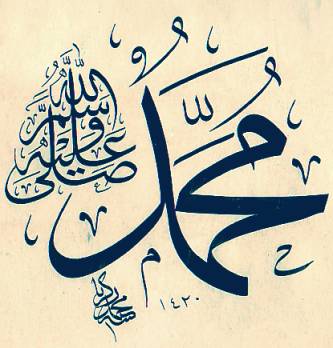
Muhammad, the Beloved (peace be upon you)
Muhammad, the Beloved (peace be upon you)
Silently you came into this world and modestly you left.
Honoring the earth with each step you took and with every breath.
You humbled the sun and moon with the light emanating from your eyes.
You crumbled the mountains to grains of sand as they listened to your cries.
The stars were luminous until your smile captured their light.
The sky never felt such weakness until it saw your might.
The battlefield was intense with fear each time you rose your sword.
You were fearful of no one, but always in awe of your Lord.
You are worthy of praise, above any other creation indeed.
The door to success awaits us all and you are the only key.
No one has yet to cross this earth who can compare in any way.
You are the Beloved, Muhammad, peace be upon you, we pray.
© Hosai Mojaddidi, January 2012
Why Is the Prophet’s Character Described as Being Tremendous?
In the Qur’an, the Prophet is addressed directly, “Truly, you are of tremendous character.” [Qur’an, 68.4] This Qur’anic verse intrigued Muslim scholars, early and late, especially the Qur’anic exegetes and the masters of the spiritual path, especially as the Prophet Muhammad (Allah bless him and give him peace) himself emphasized that, “I was only sent to perfect noble character,” [Ahmad] and said, “The believers most perfect in faith are those best in character.” [Tirmidhi]
What is good character?
Good character, Ghazali explains in his Ihya’, is an inward disposition that causes one to incline towards praiseworthy inward traits and praiseworthy outward actions.
How is good character manifest?
Ibn Rajab al-Hanbali and others relate that the sum of Prophetic teachings is that good character is manifest in five matters:
(1) Fulfilling the rights of others
(2) Avoiding hurting or harming others
(3) Being cheerful and positive in one’s dealing with others
(4) Recognizing the good of others and reciprocating
(5) Responding to the wrong of others with nothing but the good.
These five manifestations of good character don’t only summarize the Prophetic teachings on good character, but they also summarize the Prophet Muhammad’s own character and conduct.
First. As for fulfilling the rights of others, the Prophet (Allah bless him and give him peace) emphasized that, “Give everyone who has a right their due right,” [Bukhari] and he warned against non-fulfillment of others’ rights, “Injustice shall become manifold darkness on the Day of Judgment.” [Bukhari]
Second. Avoiding hurting or harming others is a corollary of fulfilling the rights of others. However, sometimes one can fulfill others’ rights in ways that hurt them; or we follow the follow the fulfillment of rights with hurtful reminders; or strive to fulfill rights, without considering how others feel or may consider our efforts.
Third. Being cheerful and positive in one’s dealings with others. The Prophet is described as always having been full of concern, yet he was always cheerful.
Fourth. Recognizing the good of others entails not only thanking and reciprocating those who do obvious acts of good to one, but to reflect, consider, and appreciate the less-obvious (but significant) good that countless people to for one–both directly and indirectly. We owe our very lives to our parents. When did we last thank them? Our teachers, whether at school or university, have taught us so much. When did we last thank them? The Prophet (Allah bless him and give him peace) cautioned that, “Whoever is not thankful to people is not thankful to God.” [Ahmad, Tirmidhi, and Abu Dawud]
Fifth. The greatest test of character is responding to the wrong of others with nothing but the good. This tests one’s character because one’s personal urge would customarily be to reciprocate; and one’s negative urge would be to affirm oneself. However, the way of Prophets is to respond with nothing but the good.
Upon Entering Mecca, Victorious
When the Prophet Muhamamad (peace and blessings be upon him) entered Mecca as a victor, people expected that he would seek revenge two decades of opposition, wrong, and injustice from his people. The Meccans were fearful, and some hastened to declare that, “Today is a day of slaughter.” The Prophet responded that, instead, “Today is a day of righteousness and loyalty,” and he forgave them in public address, saying, “I say to you today as Joseph said to his brothers,’There is no blame on you today. May God forgive you, and He is the Most Merciful of the merciful.’ [Qur’an, 12.92] Go! For you are free.” [Salihi, Subul al-Huda wa’l Rashad]
A bedouin once came to the Prophet, seeking some money. Without introduction or greetings, he said, “Muhammad! Give me, for you’re not giving me from your money or your father’s money.”
Despite the man’s rudeness, the Prophet gave him, and asked, “Have I pleased you?” The bedouin replied, “No, and you haven’t done me good.”
The Muslims who were standing around them were angered and surrounded the bedouin. The Prophet signaled for them to restrain, and he entered his house.
He asked for the bedouin to be invited in. When he entered, the Prophet gave him some money, and asked, “Are you pleased?” He replied, “No.” The Prophet gave him more, and asked, “Are you pleased?” The bedouin responded, “Yes, we are pleased.”
The Prophet told him, “You came to us and asked us. We gave you, and then you said what you said. As a result, there is something in the hearts of the Muslims regarding that. If you were to say in front of them what you said to me, that might remove those feelings from their hearts.” The man agreed, and mentioned the Prophet with praise and thanked him in front of the Prophet’s Companions. [Salihi, Subul al-Huda wa’l Rashad]
The Prophet was unaffected by the man’s words. His concern was for the good of the man himself and the feelings of his Companions. Why? This returns to the understanding why the Prophet character was described as being “tremendous” in the Qur’an.
Imam Junayd al-Baghdadi, one of the foremost authorities of Islamic spirituality (tasawwuf) and others have explained that, “The Prophet’s character was termed tremendous because his concern was for God alone.” [Qurtubi, Jami Ahkam al-Qur’an] What moved the Prophet was the pursuit of His Lord’s pleasure, both in acting and in responding.
This was manifest in small matters, too. Once a woman brought a baby for the Prophet to bless him. The Prophet placed him on his chest, and the child urinated. The mother reached out for the child, anxious. The Prophet signalled to let the child finish first. After that, the Prophet (peace and blessings be upon him) calmly rinsed the area lightly. He didn’t want to alarm the child, nor make the mother feel bad.
It is also related that though he was the busiest of people, young girls in Medina would take the Prophet’s hand and would take him wherever they went–and he wouldn’t let go of their hand until they let go of his. [Bukhari, Sahih]
Lessons in Mercy
We see from this that the Prophetic example is nothing but a manifestation of mercy. And any understanding of religion lacking in mercy is lacking in true understanding. After all, the Prophet Muhammad (Allah bless him and give him peace) having been, “sent only as a mercy to all creation.” [Qur’an, 21.107] The Prophet (peace and blessings be upon him) himself emphasized that, “I was only sent as a gift of Mercy.” [Bazzar and Tabarani]
The Prophet (Allah bless him and give him peace) explained, too, that, “The merciful are shown mercy by the All-Merciful. Be merciful to those on earth and the Lord of the Heavens will be merciful to you.” [Tirmidhi and Abu Dawud, from Abd Allah ibn Amr; rigorously authentic] It is a sign of the way of traditional Islamic scholarship that this is the first Hadith (Prophetic teaching) traditionally conveyed by a scholar to their students.
This mercy, manifest in good character in one’s dealings with people, is the test and barometer of faith. After all, “The believers most perfect in faith are those best in character,” as the Prophet affirmed. [Tirmidhi]
It once happened that some non-Muslims greeted the Prophet (peace and blessings be upon him) with an insult. His wife, A’isha, insulted them back. But the Prophet (peace and blessings be upon him) did not. Rather, he simply replied, “And upon you,” which is the standard reply to the greeting of, “Peace be upon you.” Then, he said to his dear wife, “A’isha! Allah is gentle and loves gentleness in all matters.” [Bukhari, from Ai’sha] And he also taught that, “Gentleness is not found in anything except that it makes it beautiful; and gentleness is not taken out of anything except that is makes it ugly.” [Muslim and others, also from A’isha]
The Key to All Relations
The Prophet made clear that the key to all relationships is upholding good character and maintaining it, even when tested. He said, “Deal with people on the basis of good character,” [Tirmidhi] and affirmed that, “Forbearance is the very best of character.”
Forbearance is for one not to be moved by anger or negative emotion–but to make one’s response based on reason and (for a believer) Revelation. Forbearance is, ultimately, intelligence, as it is the capacity to respond in the best of ways to each situation.
This restraint and concern for excellence and the greater good that underly excellence of character–and that made the Prophet Muhammad’s character “tremendous”–are virtues each of us would do well to strive for in our own lives and relationships, both as individuals and communities.
*Shaykh Faraz Rabbani has contributed this beautiful article to the Light Reflections series on Healing Hearts. The article was originally published in Islamica Magazine.
In Praise of the Beloved of Allah
The mawlid, or the birth of the blessed Prophet Muhammad, Allah bless him and grant him peace, is considered by Muslims to be the single greatest event in humankind’s history. Indeed, it was a momentous cosmic event. Ibn Kathir, the accomplished muhaddith (hadith master), muffasir (Qur’anic exegete), historian and qadi (judge), noted in his multi-volume work, al-Bidaya wa al-niyaha, that it was an occasion in which “Paradise and the skies were decorated and the angels moved about in continuous processions. The palace of Chosroes was shaken and the fire of 1000 years ceased to burn.” The Prophet himself often recounted to his companions the moment of his birth, describing how his blessed mother Amina marvelled at being able to see distant castles in Damascus by the light that emanated from her. The Prophet’s uncle, al-‘Abbas ibn ‘Abd al-Muttalib, Allah be well pleased with him, described the moment of the Prophet’s birth in prose, exclaiming: “[W]hen you were born, a light rose over the earth until it illuminated the horizon with its radiance. We are in that illumination and that original light and those paths of guidance — and thanks to them we pierce through.”
Muslim theologians and poets throughout history concluded that it is almost impossible to describe the qualities of the Prophet Muhammad or praise him as he should be praised. The poet’s inability to praise the Prophet stemmed from the fact that he is mentioned in the Qur’an with words of praise, and since the Creator and the Lord of all the worlds utters blessings upon him, humans must be wholly incapable of praising him as he so deserves. The Spanish author Lisan al-din pondered over this dilemma and frustratingly admitted that since “the verses of the Holy book have praised you/How could the poem of my eulogy possibly praise your greatness?” Imam Muhammad al-Busiri concludes in his Hamziyya that the inability of tongues to describe the Prophet is one of his true miracles.
The Prophet’s companion, Hassan ibn Thabit, often captured the Prophet’s magnanimity in his poems, once stating: “I witness with Allah’s permission that Muhammad is the Messenger who is higher than heaven.” Even after the Prophet’s earthly departure, Hassan ibn Thabit defiantly proclaimed: “I shall never cease to praise him. It may be for so doing I shall be forever in paradise.” It is this precedent of extolling praise of the Prophet that following generations of Muslims emulate. None other than the hadith master, the Shaykh al-Islam (“The Senior of Islam”) al-Hafiz Ibn Hajar al-‘Asqalani, well-known and respected for his commentary on Sahih al-Bukhari, expressed these sentiments centuries later, when he lamented: “By the gate of your generosity stands a sinner, who is mad in love/Best of mankind […] Praise of you does not do you justice/ But perhaps, in eternity, its verses will be transformed into mansions. My praise of you shall continue for as long as I live, For I see nothing that could ever deflect me from your praise.”
Today, the most often recited and valued expression of praise of the Prophet is a poem entitled al-Burda (“the poem of the cloak”) written by Imam al-Busiri. He wrote this poem after suffering from a stroke. In anguish and in misery, he turned to the Prophet to compose a poem in his honour. The Messenger of Allah, Allah bless him and grant him peace, appeared to Imam al-Busiri in his dream and cast his cloak (“burda”) over him, just as the Prophet had once done to Ka’b ibn Zuhair, after listening to his poem honouring the Messenger of Allah. Imam al-Busiri was healed by the touch of the Prophet’s cloak and in the morning discovered that he could move once again.
For the companions, it was not enough to recite honorific poetry in his name; they used to cherish anything that was associated with him. Indeed, we know from the authentic hadith collections that they used to collect the Prophet’s hair (often using it to cure ailments) and tying strands to their caps. They would also kiss the hands of other companions that had touched the Prophet. Imam al-Dhahabi, arguably the greatest of all hadith masters, summarised the manifestations of the companions love for the Messenger of Allah, explaining that
[…] they enjoyed his presence directly, kissed his very hand, nearly fought each other [for] the remnants of his ablution water, shared his purified hair on the day of the greater pilgrimage, and even if he spat, it would virtually not fall except in someone’s hand so that he could pass it over his face […] Don’t you see the Companions in their intense love for the Prophet, Allah bless him and grant him peace, asked him, “should we not prostrate to you?” and he replied “no,” and if he had allowed them, they would have prostrated to him as a mark of utter veneration and respect, not as a mark of worship, just as the Prophet Joseph’s brothers prostrated to Joseph, upon whom be peace.
His birth is a blessing for all those who rejoice and celebrate it. We know that Abu Lahab, the “father of the flame” rejoiced at his nephew’s birth and freed his slave with his fingers, only to gain reprieve from his punishment in the grave for this single act of happiness. We also know that a dead palm tree trunk moaned when the Prophet Muhammad moved a slight distance away from it to deliver his Friday sermon in his mosque. The blessed Prophet walked over to it and consoled it. If a dead tree cries when distanced from the Prophet, what about a human being?
In addition to reciting poetry in praise of the habib Allah (the Beloved of Allah), the mawlid should move us to ponder and reflect upon the ethical nature and moral message of the Prophet Muhammad. Described by Allah as a “mercy for all of mankind,” the mawlid reminds us of the qualities we should strive to implement on a daily basis. Summarising his readings of the traditions that describe the Prophet’s character, Thomas Cleary refers to him as someone who was “[B]rilliantly spiritual, stern in matters of right yet compassionate and clement, rich in dignity yet extremely modest and humble […] a manly and valorous warrior who was most kind and gentle with women and children.” In countless sayings, the Prophet reminded his followers to be gentle, compassionate, and above all, merciful. It was related that he said:
[Allah] is Compassionate and loves those who are compassionate. He is Gentle and loves those who are gentle to others. Whoever is merciful to creatures, to him is Allah merciful. Whoever does good for people, to him will Allah do good. Whoever is generous to them, to him will Allah be generous. Whoever benefits the people, Allah will benefit him.
Thus, the mawlid is an event whereby Muslims not only have an opportunity to come to know the Prophet, pause and reflect on their character and check themselves against the behaviour of the Prophet Muhammad, but it also gives us an opportunity to come to love him. After all, the Prophet told us: “None of you believes until he loves me more than he loves his children, his parents, and all people.” The blessed Prophet once told a Bedouin (who had said that he hadn’t prepared much for the Day of Judgement, but he loved the Prophet) that “You will be with those whom you love.” Muslims, scholars and lay people alike have celebrated the mawlid throughout the ages to instil this love in us and offer us the hope of intercession. In the words of Jalal al-din al-Suyuti, the polymath, mujtahid Imam and mujadid (Renewer) of the tenth Islamic century, the person who celebrates the mawlid is “rewarded because it involves venerating the status of the Prophet and expressing joy at his honourable birth.”
© Aftab A. Malik, January 2012
 Daily reflections, reminders and stories about our beloved Prophet Muhammad sallaAllahu ‘alayhi wasalam throughout the blessed month of Rabi’ al-Awwal 1433 on Healing Hearts.
Contributions by: Shaykh Faraz Rabbani, Shaykh Walead Mosaad, Imam Tahir Anwar, Ibrahim Long, Idris Kamal, Aftab. A. Malik, Aaron Sellars, Mona Haydar, Umm NoorBilal Petersen, Hosai Mojaddidi, Mas’ud Ahmed Khan, Mazen Atassi, Adil Hussain, Asma Gill, Naosheen Pervez, Zakia Khan, Ata’ul Khabir, Naadiyah Ali, Zahraa Kazee, Sarah Soliman, Yousaf Seyal, Zeshan Zafar, Farhat Khan, Jamilah Bashir, Mohammad Ghilan, Asme Fahmi, Tun Wildan, Taslim Rashid, Hatice Baltaci Colakoglu, Nayyar Ddin
May we all benefit from this special series, and may it be a source and means of increasing our understanding, love and connection to the beloved Prophet sallaAllahu ‘alayhi wasalam.
A big thank you to all the contributors! May Allah the Most Generous reward you all in abundance. (Please keep all the contributors and their families in your blessed prayers.)
Since it’s Ramadan, I thought I’d share some notes relating to the benefits of fasting, eating less etc, from “Breaking the Two Desires” class we had with Shaykh Abdal Hakim Murad on the Rihla this year.

- The way of the fitra is to keep things in balance.
- The 2 main desires are: gluttony (obsession with food) and lust (sexual desires)
- The dangerous of sins is gluttony, for by means of this desire, Allah expelled Adam and Hawa from the abode of permanence to the abode of humiliation and neediness. In so far they had been forbidden the tree, but their desires overcame them and they ate from the tree. Desire for food is the primal desire which kick starts the whole process of what expelled Adam out of al-Jaanah in the first place.
- The belly is the fountainhead of desire and the seabed of sickness and defect. It is followed by the desire by sexual relations. The desire for food and physical relations is followed by strong desire for status and wealth, as these provide more opportunities for sexual enjoyment and gluttony. Once we have stuffed ourselves with food, we fill ourselves with other desires. By acquiring wealth and prestige, the vice of ostentation, boasting, pride and arrogance then follows. This then leads to hatred, rancor, envy and other things; which then leads the person who has these vices into oppression and other ugly acts. All of this comes from not paying attention to the stomach and what goes in it.
- The halal we eat, the adab and attitude towards food is very important. We need to get our attitude right towards food and then the other things will all fall into place.
- Get two things right:
1. Eat what is in front of you and be less fussy
2. Don’t be obsessed by food and desire less
If you get these two things right, you will find the rest of the deen will become a lot easier.
- Imam al-Ghazali talks about the sunnah of food and eating in the Ihya, but its something which we do not want to think about.
- We are not designed biologically to eat in a 5 star hotel! We are designed to eat less…
- The holy Prophet salla’Allahu ‘alayhi wasalam shows us the alternative. His way is a way of zuhd, and not being very interested in a whole lot of food.
- Fasting helps, eating not too much helps, and not being inwardly attached to food helps overcome the beast within us.
- We need to be less interested in what is provided, and more grateful for what Allah ahs provided us, i.e being in that maqam of shukr.
- Allah created our bodies in balance, but we have eating disorders and dieting disorders. People over-eat for many reasons, such as anxiety, fear. The disorder in this world is to do with gluttony.
- Allah created enough for us to eat but due to greed, we are destroying the planet by eating too much!
- The holy Prophet sallAllahu alayhi wasalams’ hunger was so great that he would tie stones to his belly. The sacrifices he made when he could have been the lord of the Queresh are unimaginable, and he only made those sacrifices for us. Where as we can be in this hotel and all we do is complain about the buffet!
- The lives of the awliya have always been focused on the principle of eating less. It’s the quality of the awliya.
- Through fasting, we are constantly knocking on the door of paradise.
Imam al-Ghazali talks about the benefits of fasting/eating less and making the stomach hurt (Shaykh Abdal Hakim Murad went through these benefits in detail but I have summarised only a few below)
1. Purification of the heart and helping one’s perception to be more penetrating. If you don’t eat so much, you will be more perceptive; your basira (insight) will go much further. Ramadan is hard work, but towards the end of it, we do feel that things in deen are coming to us with more ease. We can feel we are detached from duniya and the hunger you feel, you get used to it so you don’t even notice it much or think about it. You are no longer distracted by hunger, and are in a state of greater purity.
2. Brokenness, humbleness and ending of pride and exuberance. The pride we get into after eating good food, if we are hungry our pride is broken. We experience this in Ramadan. In Ramadan if you have been fasting for 10-12 hours, it is harder to be proud, we are broken a little bit. Pride is deadly of the deadly sins and hunger helps suppress that.
3. Through hunger we do not forget Allah’s trials and tribulations. The one who is always full ignores the one who is hungry and ignores the reality of hunger. However, when we fast, we empathise with those who are hungry.
4. Breaks everyone of the desire for sins, and helps control the nafs- the beast that is within us.
5. Helps us worship more.
6. No need to earn so much if we eat less. If you eat less, you can spend less, and that extra money you are saving can go towards sadaqa.
- Imam al-Ghazali talks about rejecting the imbalance, he doesn’t say abandon food completely but instead watch what we eat.
- Ramadan is all about sabr- patience.
- To be in a maqam of aboodiya (servanthood) shows us that we are always in need of Allah.
- Allah is active in every moment. He is constantly creating and re-creating. Everything is the unique consequence of Him.
- Allah didn’t just wind the clock at the beginning of the time and sat back to see everything unwind; our needs which we are not even aware of, He fulfills them.
- The benefits of physical discomfort like eating less is that we are in a constant state of absolute need, absolute dependence on Allah. He doesn’t need us, but we need Him for everything!
- When we start to recognise everything is from Allah and He is al-Wakil, we will find tranquillity. People who have always been in hardship will always be in a state of calmness and ease, then those who always have things their way.
- Sometimes to be woken up, we need to be slapped!
~ Shaykh Abdul Hakim Murad, ‘Breaking the Two Desires’ class, Rihla 2011, Bursa, Turkey (Paraphrased)
More gems to follow inshaAllah ta’Ala……
(Photos courtesy- Ibrahim Varachia. Please keep him in your prayers. Please do not re-use or save the photo without permission. )
 * The holy Prophet sallaAllahu ‘alayhi wasalam passed through so many situations of abandonment, loss, disappointments. But “with hardship there comes ease” As individuals we may feel as if we are in a state of crisis. The holy prophet has already been there; we are in very good company and should not despair. Allah brings the greatest good out of those times of darkness. We only experience true light when we have been through the tunnel. Its only when we have been right down, we can appreciate the beauty of being in the light. It’s part of the human condition. It’s only through the dark times the good times come.
* Allah’s creation is beautiful. Ugliness is only the creation of human beings.
* Our lives are His gifts; everything is His gift.
* Allah protects us. He veils our frustrations, our inward desires, our faults. Allah knows everything! He hides them. Allah has prevented us from seeing the inward ugliness of others.
* Our security shouldn’t come from anyone else or our deeds, but it should come from Allah’s Mercy.
*Serenity opens the door to paradise….
~ Shaykh Abdul Hakim Murad , Rihla 2011, Bursa, Turkey (Paraphrased)
More gems to follow inshaAllah ta’Ala……
(Photos courtesy- Ibrahim Varachia. Please keep him in your prayers. Please do not re-use or save the photo without permission. )
The Virtues Tour- 2011

Shaykh Ibrahim Osi-Efa (UK), Shaykh Yahya Rhodus (USA) and Shaykh AbdulKarim Yahya (US/Yemen)
16th February 2011- Luton
As-salamu’alaykum!
Please be aware that these are my notes; I was unable to write down everything, but what I have, I pray it’s of some benefit to the readers. Any mistakes, errors or misinterpretations of words are from me alone, so please do forgive and overlook my shortcomings! You are welcome to share these notes but *please* do not just copy and paste the notes without referencing where you got them from; I do not want my notes to be taken out of context or misinterpreted. Also, the photos have been provided by Ahqib Hussain, please do not save and re-use them without his permission. Keep him in your prayers!
May Allah reward all those at Fountain Institute who assisted in organising and facilitating this blessed event. May Allah Most Merciful elevate the ranks of our Shayukh, bless and protect their families and teachers. Amin!
——————————————————————————————————————————————————————————–
 Introduction by Shaykh Ibrahim Osi-Efa
– Alhumdulilah, we praise Allah subhananhu wa’tala for the blessing He has bestowed upon us. (Shaykh Ibrahim then quoted the verse from surah Ibrahim) “And if you should count the favor of Allah , you could not enumerate them” [14:34]
– The blessing of Allah subhananhu wa’tala is the Prophet Muhammad sallaAllahu alayhi wasalam, and from that great blessing, every other blessing that Allah subhananhu wa’tala extends towards us comes from him sallaAllahu alayhi wasalam.
– It is imperative for each and every single one of us in this crazy age we live in, for us to become of those who are more acquainted and familiar with the prophet salla’Allahu alayhi wasalam. By that we do not just mean in terms of his great outward disposition and how how he looked in this world. What is more important for us are the attributes of the prophet sallaAllahu alayhi wasalam came to complete his virtues. That is why the prophet sallaAllahu alayhi wasalam said, as quoted in the Muwatta of Imam al Malik, ‘that the only reason I was sent was to complete the noble virtues of character’.
– The prophet sallaAllahu alayhi wasalam praised the book of Allah, the Quran. He brought the sunnah himself. The prophet sallaAllahu alayhi wasalam was the walking Qur’an, like our mother Aisha radiAllahu anha informed us. Hence when we approach the Qur’an, we should approach it in order to see what the reality of the prophet sallaAllahu alayhi wasalam was.
– Those great virtues Allah subhananhu wa’tala bestowed upon the Prophet sallaAllahu alayhi wasalam were the cause of reason why the prophet was named Muhammad, sallaAllahu alayhi wasalam, the one who possesses great and abundance virtues qualities. And for that reason Allah praised the Prophet sallaAllahu alayhi wasalam and refered to him sallaAllahu alayhi wasalam as someone who has tremendous character (surah Rum).
-What do we know about the prophet sallaAllahu alayhi wasalam? As Muslims, as well as non-Muslims, the project begins to understand the most important individual, sallaAllahu alayhi wasalam.
– We hope to share on this blessed night that we should understand that whenever we are in the praise of Allah subhananhu wa’tala it is blessed; whenever we are in the praise and remembrance of the prophet sallaAllahu alayhi wasalam, it is blessed.
– The purpose is to get to know the prophet sallaAllahu alayhi wasalam. Not in an abstract sense just so we can get information about who he is, but in the real sense so we can embrace that which he came to complete, which are attributes that are beloved to the Lord of existence, subhananhu wa’tala.
– We will look at the nature of the virtues of the prophet sallaAllahu alayhi wasalam from the perspective of the human character.
– Wisdom will be the greatest topic because it’s the property of the believer. Likewise, we will look at the great quality of temperance, which comes by desire; the appetite of the human being is placed into a state of moderation and becomes virtuous. And the third topic we will look at is the issue of anger, and how when anger is brought into a state of balance, it becomes a great prophetic quality. All of these will help us give a greater understanding of who the prophet sallaAllahu alayhi wasalam was and about who Allah subhananhu wa’tala wants each and every single one of us to be. We ask Allah subhananhu wa’tala not to treat this gathering as a gathering of entertainment but we treat this as a gathering of sacred engagement. (Amin!)
 Shaykh AbdulKarim Yahya
– Alhumdulilah for the blessing of Muhammad sallaAllahu alayhi wasalam, that one part that encompassed all of Allah subhananhu wa’tala’s creation of mercy. And he sallaAllahu alayhi wasalam was an example for humanity of magnificent character; such that Allah praised him – ‘And indeed, you are of magnificent character’ [68:4]. Allah revealed this verse in the context of reputation of a slander that was made by his sallaAllahu alayhi wasalam enemies who called him a madman. The understanding, which was understood from this is that a madman cannot have a magnificent character because no one has a magnificence character expect those who posses a magnificent ‘aql’- intellect or reason. And that is the capacity as Shaykh Ibrahim mentioned, the quality of the magnificent ‘aql’, which stems the quality of wisdom, and other qualities which also stem like courage and temperance. Allah praised the prophet sallaAllahu alayhi wasalam intellect as magnificent.
-Part of the make up of human character is the faculty of intellect or reason- ‘aql’, and also at times, Imam al Ghazali calls this ‘knowledge’. This capacity (aql), if it is refined by connection to revelation, bears the fruit of hikmah- wisdom. Its refinement is through learning. And if this quality of intellect is refined through revelation then it bears the fruit of wisdom and wisdom is the head of all those other noble characteristics.
– No one reached perfection in these noble characteristics except the prophet sallaAllahu alayhi wasalam. He sallaAllahu alayhi wasalam is the example for anyone who wishes to be characterised by these qualities. To the extent to which we are near to him sallaAllahu alayhi wasalam in these qualities, we are nearer to Allah; and to the extent we are distant to him sallaAllahu alayhi wasalam in these qualities, we are distant from Allah.
– The refining of this capacity of intellect is through knowledge. In our case, it is through learning, and in his sallaAllahu alayhi wasalam’s case, Allah Himself refined him. The prophet sallaAllahu alayhi wasalam would say that ‘My Lord taught me adab and did so well’.
-If we look at many of the Qur’anic verses related to character which were directed to him, all of them were revealed to him initially and through all of these verses, Allah refined him sallaAllahu alayhi wasalam and shaped him and he embodied the Qur’an. His sallaAllahu alayhi wasalam’s character was the Qur’an, and with the Qur’an he taught us sallaAllahu alayhi wasalam.
– Surah Hujarat- ‘The believers are only the ones who have believed in Allah and His Messenger and then doubt not but strive with their properties and their lives in the cause of Allah . It is those who are the truthful’ [49:15]. In this verse Allah subhananhu wa’tala mentions these qualities; the quality of knowledge, and that is the belief in Allah and his Messenger sallaAllahu alayhi wasalam and that which is unshakeable; they believe in Allah and his Messenger sallaAllahu alayhi wasalam and then they have no doubt; knowledge of Allah and yakeen and certainty which is the extent of hikmah-wisdom.
– In the case of hikmah (wisdom), we want to look at the life of the prophet sallaAllahu alayhi wasalam in which it shows his hikmah, his intellect which was refined, and directed and led by revelation, producing in him an excellent management and penetrating insight. Also encompassing things and seeing them through the light of knowledge, and seeing them through inner sight, and dealing all of that in context of his certitude and his certainty in Allah which was the extent of Hikmah. An example of this was the hijra of the prophet sallaAllahu alayhi wasalam. After 13 years in Makkah, a large group of the Ansaar came and gave an oath to defend him sallaAllahu alayhi wasalam as they defended themselves, their wives and children. At that point, he sallaAllahu alayhi wasalam gave permission to his companions to make hijrah. Until this happened he sallaAllahu alayhi wasalam waited, and that was from his excellence management and complete certitude and reliance upon Allah subhananhu wa’tala. He sallaAllahu alayhi wasalam himself waited behind until Allah subhananhu wa’tala commanded him to leave Makkah. When the Quraysh saw that the believers were making hijrah, they conspired to kill the prophet sallaAllahu alayhi wasalam. At that point Gibril alayhi salam descended with revelation and informed the prophet sallaAllahu alayhi wasalam of their plan and instructed him to make hijrah. The prophet sallaAllahu alayhi wasalam took measures. He sallaAllahu alayhi wasalam managed and organised, and used his penetrating intelligence, and told Sayyidina Ali to lay in his bed and gave him his shawl to wrap over him. Again he sallaAllahu alayhi wasalam used his insight and connection to Allah’s book and he left his house reciting the verses of surah Yasin, from the beginning up until the verse where Allah says they see not:
‘And We have put before them a barrier and behind them a barrier and covered them, so they do not see.’[36:9]
He sallaAllahu alayhi wasalam understood from this verse that it essentially blinded them (the Quraysh) from him so they could not see him sallaAllahu alayhi wasalam when he exited. He then sallaAllahu alayhi wasalam went to Sayyiduna Abu Bakr. There were many measures of planning that were taken for the hijrah, for example Abu Bakr prepared two camel mounts that were in excellent condition for the journey. They then departed from Makkah. The prophet sallaAllahu alayhi wasalam, as he was departing Makkah looked at the Kaaba and spoke to Makkah. He sallaAllahu alayhi wasalam said ‘Indeed you are the most beloved of Allah’s lands to Allah and you are the most beloved of Allah’s lands to me and were you people not to have driven me from you, I would not have left.’
They went to the mount Thawr in which there was a cave and they stayed there for 3 nights. During their stay, again they had a well-organised plan. Things were placed in their proper places but their reliance wasn’t on the plan, but on Allah subhananhu wa’tala which is part of hikmah, that is connected to revelation and yakeen- that one plans and organises, but above everything is Allah!
As we all know, Allah willed that a spider created a web over the cave, and 2 wild doves laid their nests outside. Despite all of this, the disbelievers got very close to the cave. They got to the point where they were standing immediately outside of the cave. At this point, the person who’s aql is limited to that which is measurable and is material, and right in front of his 5 senses, they will feel that ‘now my plan has failed’. That’s is! However the person whose heart and insight is ignited and wisdom is connected to revelation, has certitude of Allah subhananhu wa’tala.
In a hadith we hear Sayyidina Abu Bakr say to the prophet sallaAllahu alayhi wasalam that if ‘they (Quraysh) looked at their feet, they will see us’ – the prophet sallaAllahu alayhi wasalam showed his yakeen (certainty) to the extent which is this hikmah, by saying that ‘what do you think of the 2 where Allah is their 3rd? So my plan isn’t because of this cave, or this mountain or the provision we brought, the mount we used etc, my plan is because I am dependant upon Allah and I know that He is with me!’ That was the response of the Messenger of Allah.
And this is a lesson for all of us in our mind and our planning, that we never divorce our relationship from Allah subhananhu wa’tala and that we do not depend or rely upon ourselves and our planning, but we depend and rely upon Allah subhananhu wa’tala.
The deeper wisdom is that the one who truly relies on Allah and is stripped of everything; the one who has knowledge and faith in Allah knows that this is his best state. The poet said- ‘From entrusting ones affairs to Allah, causes super abundance of what one would hope for.’ So this might have been the best state for the prophet sallaAllahu alayhi wasalam because he knows that this is not my plan, this is Allah’s plan and Allah is with us. That was how they were in the cave, in a state of absolute certitude and in a state with Allah and that was the fruit of his intellect, his wisdom that was defined by revelation and instructed directly by Allah. They stayed in the cave for 3 days. After the 3rd day, they hired a Bedouin guy, but it shows again the wisdom and management of the prophet sallaAllahu alayhi wasalam because the Bedouin was non-Muslim and he sallaAllahu alayhi wasalam didn’t know if he would embrace Islam. Regardless, the prophet sallaAllahu alayhi wasalam took the means that were shown to him and hired a non believer to lead him because that person had skills in that area and knew the route well. He took the means but relied on Allah. Then they made their way to Madinah.
-We want to have Madinan hearts; hearts that the full moon rises over them!
-If we want our hearts to be refined, we have to embrace the Messenger. The Ansar sheltered the Messenger. We have to shelter him sallaAllahu alayhi wasalam in our hearts and if we do that, then that will be the cause of noble character.
– This quality of ilm, or aql or wisdom, or reason, is Allah’s Messenger sallaAllahu alayhi wasalam!
-What about you and I? How are we going to refine this faculty of ours so we have hikmah?
– Imam al- Ghazali in the Ihya says that this is refined through learning, however through its proper conditions and etiquettes. We should follow him sallaAllahu alayhi wasalam and look at him as our teacher.
– He sallaAllahu alayhi wasalam was taught by Allah directly. Allah gave him sallaAllahu alayhi wasalam knowledge but he still begged him for more knowledge – ‘Rabbi zidni ilma!’ O my Lord increase me in knowledge.
– Each of us need to be in active pursuit of knowledge. We can’t think about hikmah without knowledge. If we wish to have knowledge, we have to respect and adhere to the conditions which are iklaas, humbleness etc.
-Imam al- Haddad gave 3 counsels to strengthen our Yakeen (certainty) in the Book of Assistance:
1. Listening to His words and the sayings of the prophet sallaAllahu alayhi wasalam where His attributes are mentioned. We have to not only listen to the Book, but to the one upon whom it was revealed to, sallaAllahu alayhi wasalam. There has to be a connection to that initial heart and mind that was refined and illuminated, i.e the prophet sallaAllahu alayhi wasalam.
2. Reflection. Using our 5 senses to reflect on the wonders of Allah’s creation.
3. Striving and acting according to the knowledge we have learnt.
We ask Allah to grant us a connection to the prophet sallaAllahu alayhi wasalam! (Amin!)
 Shaykh Yahya Rhodus
-Alhumdulilah. There are 2 blessings I would like to mention that Allah has given us in order to be here tonight and experience what we are experiencing:
1. Blessing of gathering together of this sort and if the only thing we were to do was to gather together and sit in this room and just look at each other without saying anything, we would benefit immensely from just that. When believers gather there are very powerful and important things that happening; some of them are related to the outward and some are related to the inward. But just the mere gathering of Muslims for the sake of Allah subhananhu wa’tala, and no one here came for any ulterior motive, except for the contentment of Allah is important; especially if we think about the great prophet sallaAllahu alayhi wasalam of ours we are speaking of lived over 1400 year- the fact we are still here in Luton and are mentioning him!
2. The blessing that as Muslims, we still know how to live. That we are some of the only people left on the earth that know how to live. When we are talking about the different stations we are trying to reach as shaykh Ibrahim was mentioning early, about these different states and that in order to be religious people we have to be rational people, and to be rational people we have to be human beings and there is type of maqam, a station in our times to actually be human!
– We live in a time where we see a consumer society; you can sum up modernity as an economic system. From the time we wake up in the morning and go to sleep in the evening, we are susceptible and in this never-ending process of consumerism that is trying to captivate our mind, body and soul. Trying to subjugate that to turn us into a consumer. This whole idea which is being created that your happiness is through consumption! This is a complete lie!
– We believe Allah subhananhu wa’tala can provide for us in ways which are unexpected. Ways that don’t even come to our mind.
– The trait of temperance that we will be speaking about is very important and practical.
– As a believer you should realise you have something to offer to the world; that you can offer a practical example of the synthesis of this great trait in your life. This is the trait of temperance.
-The whole idea of temperance is self-restraint, it’s an idea of abstaining and moderation.
– Temperance as defined by one the scholars is a state that overtakes the heart, that forbids one from having desire overcoming them.
– Imam al Ghazali gives us a hierarchy of desires:
1. Base desire- first desire, which is eating and drinking. This begins when we are very young.
2. Desire for the opposite sex. This comes as we grow a bit older.
3. As one gets older, another desire is to have status, to be renowned.
4. Last desire is for us to want to know everything.
– The whole state of believers ,and to be of balance and exercise self- restraint, we have to understand all of these desires and how they relate to human being. We have to understand we were not created to be consumed. We were created a live uprightly and morally for the sake of Allah subhananhu wa’tala
– If you look at the life of our prophet sallaAllahu alayhi wasalam, you will find the most beautiful examples of someone who lived outwardly in the world but completely abstaining from it in terms of his heart.
– Hadith- where the prophet sallaAllahu alayhi wasalam never once ate bread and meat unless there were other people eating with him. He sallaAllahu alayhi wasalam never ate like that when he was on his own. If he ate lunch he wouldn’t eat dinner and if he ate dinner he would not have had lunch. His poverty was by choice; the only time he indulged was when other people were with him. This life he sallaAllahu alayhi wasalam lived of renunciation, if we believers have this understanding and just cut back, we will see the benefit of it.
– Temperance, when this quality is in a state of balance, it produces good qualities and when imbalance it produces bad qualities.
– When you see any picture of the grave of the prophet sallaAllahu alayhi wasalam, you will see 3 verses written on the top right hand corner. Within that, there is a line of poetry from Imam al-Haddad. It says: ‘The prophet sallaAllahu alayhi wasalam whose character is the character that the All-Merciful has magnified in His book.’ It could have been about him praying or his struggles or knowledge, but what is there is about his character.
– No matter how much knowledge you have, if you do not have a state or know how to interact with people, you will never be accepted or successful.
– Every single person you come into contact with, it is an absolute obligation that you represent your prophet sallaAllahu alayhi wasalam when you interact with them. You have to interact with them in a prophetic manner.
-One of the worst things you can do to someone is force them out of Islam.
– It doesn’t matter what they write about you, but if you interact with every single person in a prophetic way, none of that would matter because they would know regardless of what a Muslim is.
– Temperance is the ability to have self-restraint. It’s the ability to control your desires according to your intellect and the sacred law, which all comes from learning.
-We are an ummah of knowledge. We all have to learn from the cradle to the grave and we have to continue to learn.
– Zuhd- definition Imam al-Ghazali gives is: ‘Its’ for you to divert your desire for something to that which is better than it!’
– Direct your desire towards something that should be worth it. You will never be able to remove desire but instead you direct it elsewhere.
– When you have the ability to restrain yourself and attach your heart to Allah, then this is the way to attain Divine Love and become beloved to Him.
 Shaykh Ibrahim Osi-Efa
– Alhumdulilah. Any topic that we discuss that brings us closer to the prophet sallaAllahu alayhi wasalam is a topic that is worthy of discussion. Especially when that topic will in view inshaAllah in us the attributes that are not only beloved to the prophet sallaAllahu alayhi wasalam but are beloved to the Lord of the prophet Muhammad sallaAllahu alayhi wasalam.
– Hadith- the closest to me on the day of judgement are those in character. As we heard our dear brother and Shaykh Yahya allude to the various stages the human being, the soul of the human being goes through as it engages the physical realm, that there will be attributes that will manifest. The attribute of desire. It’s the first desire, this faculty of appetite. The need and want of man, we see that evident inside the child. The lower self, the nafs is similar to a child. The child is full of desire.
– We see the manifestation of anger in and around the age of 7. Many of us when we were youngsters had a fight in school because we wanted something. When we are pre 7, we are cute, we get everything we want. But when we are no longer cute, we realise we cannot get what we want, we throw tantrums. We get angry.
– The faculty of anger links to the faculty of intellect.
– The 3 faculties: faculty of desire, faculty of anger and faculty of intellectual and rational, these are the 3 essential elements of what we call character human character.
– Once we have developed the faculty of intellect, then we reach or attained that age they call puberty, Allah sends different types of forces. By this point, every single faculty is negative. At this point Allah sends 2 forces upon man; a good force and an evil force. The angelic forces are the good forces and the evil forces are the demonic forces. Both are going to seek to take control of the battlefield, the war begins and the war ultimately is a war that gives problems because the negative forces have already taken control of the battlefield. And usually the one who gets into the battlefield first, wins. And that is why we are fighting an uphill struggle.
– Our topic is the topic of anger. Topic of anger is important because by virtue of master over the faculty of anger, we thereby master all of what the virtues the prophet sallaAllahu alayhi wasalam came to complete.
– That is why when one of the sahaba (companions) came to the prophet sallaAllahu alayhi wasalam for advice, he said ‘do not get angry’. He kept repeating the question and the prophet sallaAllahu alayhi wasalam kept replying ‘do not get angry.’
– Imam al-Ghazali said that it is impossible for us to not become angry because anger is inbuilt into us. It’s a created inward reality and we cannot get rid of a part of you. What the prophet sallaAllahu alayhi wasalam was saying was CONTROL your anger.
– The sahaba were from an environment of intense anger, intense rage and jahiliiya, age of ignorance and wanton recklessness. Wanton violence, where anger is out of control.
– Arabs were not cowards. They were very angry people. Arabs were extremely violent people, therefore for us it is important to understand what the prophet sallaAllahu alayhi wasalam did and what he achieved?
– He tamed those who were believed to be untameable. He brought to a middle point those who where believed to be reckless, impossible to bring them to a middle point.
– The mission of the prophet sallaAllahu alayhi wasalam was to tame the intense rage and anger that Allah crafted the Arabs upon!
– Arabs still know how to get angry, just like we saw recently in Egypt and Tunisia.
– When the prophet sallaAllahu alayhi wasalam asked the sahaba about who is the strong and powerful one? The sahaba replied that the one who is skilled in the art of wresting, in fighting etc. He sallaAllahu alayhi wasalam said no, the one who is able to control his rage and anger and when his rage and anger is provoked is strong and powerful. That is why Allah not only praises the one who can suppresses rage, but the one who can suppresses rage, forgive and forget those who or what provoked the rage inside them.
– Allah does not give us abstract words, He wants to take us higher so each and every single one of us sees paradise! It’s a difficult task.
– Sayyinduna Umar was the personification of anger. He was a very angry man. He said that in the days of jahiliyya before he became Muslim, his anger was for his nafs, to gain the things he desires. But when he became Muslim, he became angry for Allah! That is the taming of the faculty of anger!
– Allah subhananhu wa’tala sends us a being who taught us practically how to suppress rage, his name was Muhammad sallaAllahu alayhi wasalam!
– We should ponder that; we should reflect on that. If we were to switch off the lights and sit and reflect, everyone would disappear. We don’t know how to go to the deeper meanings. How do we in relation to Muhammad sallaAllahu alayhi wasalam who came to perfect every single attribute for you, we should personalise the YOU.
– Allah’s pleasure will not be granted to someone who’s anger in out of control.
– When the sahaba asked the prophet sallaAllahu alayhi wasalam what is the most feared reality, he sallaAllahu alayhi wasalam replied that its ‘the anger of Allah!’. They asked, ‘Ya RasullaAllah how do we not occur the anger of Allah?’ He replied, ‘you control your anger. If you control your anger, He will control His anger towards you’.
– As you treat others, Allah subhananhu wa’tala will likewise treat you.
– And that is why we see in the prophet sallaAllahu alayhi wasalam himself was someone who came to teach us how to suppress rage. Because when we suppress rage and anger and we bring it to this median point between two extremities of excess and deficiencies, it brings forward a beautiful quality called courage.
– Why did Sayyidina Ali ibn Talib say the prophet sallaAllahu alayhi wasalam was the most courageous of people? It’s because the prophet sallaAllahu alayhi wasalam defined the reality of courage.
– People go into excess. We have on the one hand, people of extreme anger. Then we have the opposite extreme of cowards- we are people of laxity of anger, laxity of intellect, laxity of desire.
– But the prophet sallaAllahu alayhi wasalam came with balance, came with moderation and we are an ummah of moderation.
– The prophet was tested. The reality of bravery manifests when one is tested. One of us can claim we are brave but when we have to stand on a battlefield, we can be tested.
– Bravery can be tested. When we see the atrocities over the world, the blood of man is being spilt that manifest the negative qualities….
– We either have too much anger or we have those who are cowards!
– The intellect has to take control over anger. The intellect plays an important role in putting the anger in check.
– The prophet salla’Allahu ‘alayhi wasalam was somebody who in each and every moment was in tribulation. How would you feel if you were born without a father? How would you feel if you were given to a stranger when just 2 weeks old and then taken to the dessert? Children become traumatic when placed in the hands of those they are not familiar or their natural parents- it’s a trauma for a child, how would you feel? Allah subhananhu wa’tala sent blessed beings to ensure the child (the prophet sallaAllahu alayhi wasalam) is not traumatic but something that is nurturing. but what was it that was nurturing him? In the dessert, in those early years, he was given the great blessed attribute which relates to anger, it controls anger. Its called Hilm, that is why he is Ibn Halima!
– The nature of hilm is the ability to control your anger and respond to the one who provokes anger in you by doing that which is beautiful. Somebody who does wrong to you and you only respond by doing good to them- that is prophecy. This was recognised by anyone who interacted with the prophet sallaAllahu alayhi wasalam.
– The prophet sallaAllahu alayhi wasalam met Sayyidina Abu bakr wondering the streets of Madinah and asked him what has brought you here in the middle of the night. He says I left my house just to see the face of the Messenger of Allah. I left my house in the middle of the night – Abu bakr couldn’t sleep! Abu bakr yearns for the prophet sallaAllahu alayhi wasalam in the middle of the night, not just crying and yearning in the house, but a yearning that forces him out of the house in the middle of the night just to see the Messenger of the Allah sallaAllahu alayhi wasalam. He found him and gazed upon the face of the prophet sallaAllahu alayhi wasalam. “I’m yearning for the prophet” he used to say to his blessed wife.
– He came with the ability to control rage and anger. We see the difficulties of his sallaAllahu alayhi wasalam‘s life in each and every single moment but he responds to them in beautiful way.
– Clemency is the ability not to just forgive; not just to forgive and forget; but it is to forgive, forget and to act beautifully to the one who does you wrong.
– One of the beautiful names of Allah- He is al-Ghafir- the Forgiver, and al-Ghaffur, the one who forgives in abundance. Allah is also al-Haleem the One who when people do Him wrong, He only does them right. That is Allah!
———————————————————————————————————————————————————————————–
Jaza ‘Llahu anna Sayyidina Muhammadan sallaAllahu alayhi wasalam ma huwa ahluhu
Jaza ‘Llahu anna Sayyidina Muhammadan sallaAllahu alayhi wasalam ma huwa ahluhu
Jaza ‘Llahu anna Sayyidina Muhammadan sallaAllahu alayhi wasalam ma huwa ahluhu
Subhana Rabbika Rabbi l’izzati amma yasifun, wa salamun ala l’mursalin, wal-humdulillahi Rabbi l’alamin.
The items that the Prophet, salla’Allahu ‘alayhi wasalam preferred for iftaar were dates and water.
Anas bin Malik narrates:
“The Prophet salla’Allahu ‘alayhi wasalam, performed iftaar with fresh dates, if there weren’t any then with dried dates and if there weren’t any then with water.” (Abu Dawud)
” The tree does not withdraw its shade from the woodcutter. So, love even those who hurt. They’ll realise your worth someday.”
A beautiful friend sent me the above quote which really made me think and reflect. To still love those who hurt us takes a lot and very often its easier said than done. It reminds me of our beloved Prophet salla’Allahu ‘alayhi wasalam and how some of his loved ones really hurt him and chose to reject him as a Messenger of Allah. The hurt and grieve they gave him salla’Allahu ‘alayhi wasalam, didn’t deter him from his mission. Just like the tree who does not withdraw its shade from the woodcutter, the Prophet salla’Allahu ‘alayhi wasalam still gave and showed love, compassion, mercy and kindness to all those who hurt, ridiculed and harmed him. These noble qualities which he demonstrated in his conduct, softened the hearts of those who opposed him; they realised his worth and his uniqueness, thus accepted Islam. Those unfortunate souls who did not realise his worth during his lifetime will realise his worth on the day of judgement. Loving those who hurt us is a prophetic characteristic, and may we all aspire to achieve this; whether those who hurt us realise our worth in this life or not, Allah does and that’s all that really matters at the end of the day….
I came across this on YouTube; Shaykh Hamza Yusuf speaks about the last moments of the Prophet salla’Allahu ‘alayhi wasalam’s life. One cannot help but cry whilst listening to this really moving and beautiful speech. May our love and attachment to the prophet salla’Allahu ‘alayhi wasalam increase, and may we be granted his company in al-jaanah. Amin!

 Healing Hearts
Recent Comments